English
 Français
 Español
 русский
 عربى
Green Ohm
Green Ohm
Green Ohm
Green Ohm
Green Ohm
Green Ohm
Green Ohm
Green Ohm
Green Ohm
Content
- 1 Why Wind Power Cables Require Specialized Sheathing Materials
- 2 Product Overview
- 3 Performance Advantages Over Conventional Sheathing Options
- 3.1 Balanced Mechanical Strength and Flexibility
- 3.2 Improved Resistance to Environmental Stress Cracking
- 3.3 Reliable Flame-Retardant Performance
- 3.4 Outdoor Weatherability
- 3.5 Waterproof and Moisture-Resistant Protection
- 3.6 Low-Temperature Resistance
- 3.7 Thermal Stability and Heat-Deformation Resistance
- 3.8 Electrical Insulation Properties
- 4 Technical Data and Representative Results
- 5 Twin-Screw Compounding and Manufacturing Strengths
- 6 Processing Considerations for Cable Manufacturers
- 7 Applications in Wind Power Systems
- 8 Quality Control and Technical Support
- 9 Advantages for Buyers and Cable Producers
- 10 Environmental and Safety Considerations
- 11 Selection Guidance for Project Engineers
- 12 Frequently Asked Questions
- 12.1 What is this product used for?
- 12.2 How is the material supplied?
- 12.3 What makes it suitable for wind power cables?
- 12.4 What is the typical tensile strength?
- 12.5 What is the typical elongation at break?
- 12.6 Does the material provide flame retardancy?
- 12.7 Is the material halogen-free?
- 12.8 Can it be used in cold climates?
- 12.9 How does it perform after heat aging?
- 12.10 Does the compound resist environmental stress cracking?
- 12.11 What are the heat-deformation results?
- 12.12 Can it be used for offshore wind projects?
- 12.13 Who manufactures the compound?
- 12.14 What manufacturing technology is used?
- 12.15 Does the supplier offer customized materials?
- 12.16 What should be confirmed before commercial production?
- 13 Conclusion
- 14 References
- 15 Product: Flame Retardant Polyethylene (PE) Sheathing Material for Wind Power Generation
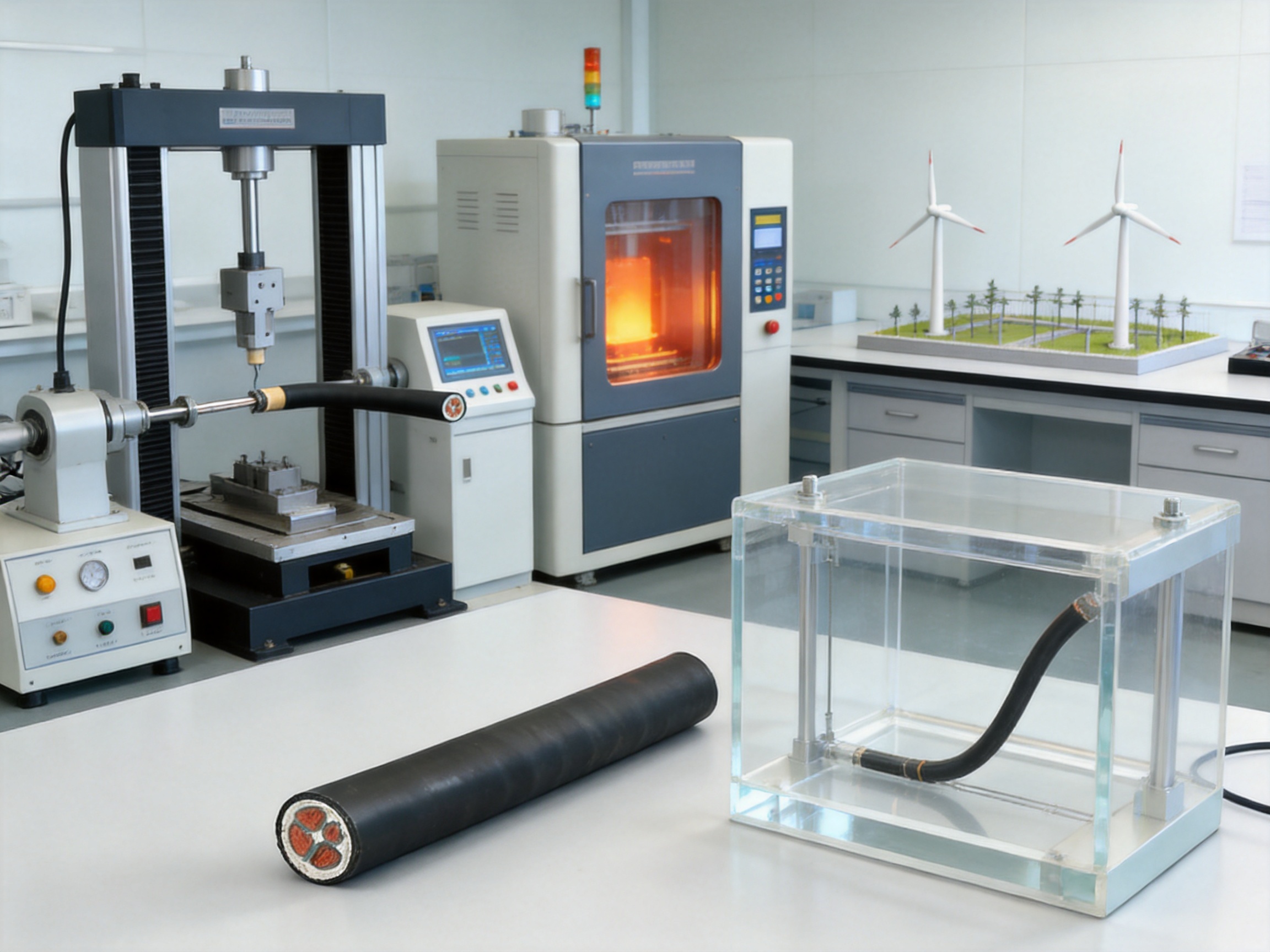
Wind power cables operate in one of the most demanding environments in the electrical and energy industries. They may be installed inside nacelles, towers, cable loops, underground transition sections, outdoor cable trays, and exposed sections connecting turbines to collection systems. During service, the cable sheath can be subjected to rain, condensation, ultraviolet radiation, salt-containing air, temperature fluctuations, mechanical abrasion, repeated movement, impact, thermal stress, and long-term aging. A cable compound selected for this application must therefore deliver more than basic insulation and flame retardancy. It must offer a balanced combination of waterproof performance, tensile strength, elongation, crack resistance, low-temperature flexibility, thermal stability, electrical resistance, and resistance to outdoor deterioration.
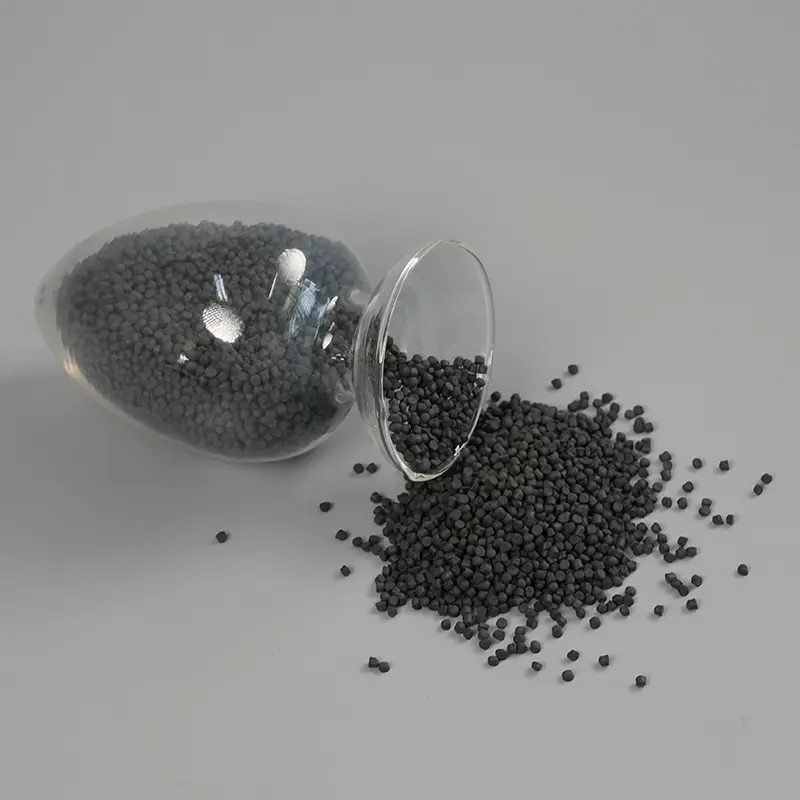
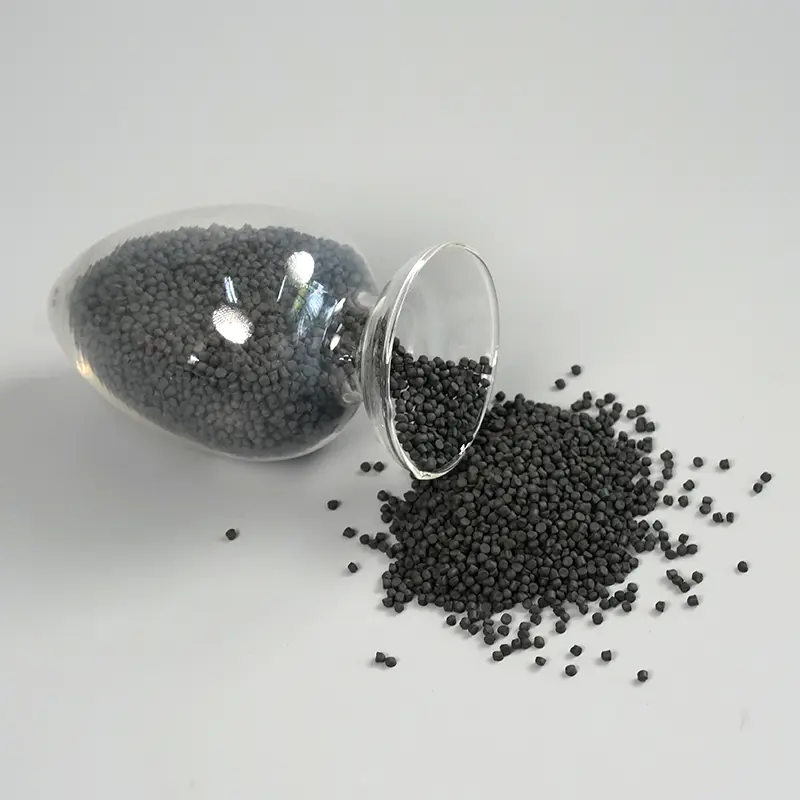
The flame-retardant polyethylene sheathing material for wind power generation described in this article is a thermoplastic low-smoke, halogen-free compound developed for demanding cable applications. It is manufactured in granulated form through twin-screw compounding technology. The formulation is designed to provide a stable processing profile together with strong mechanical performance, flame-retardant capability, environmental stress-cracking resistance, wear resistance, ultraviolet resistance, and aging resistance.
Its performance profile is particularly suitable for wind power cables that must maintain reliable protection over long service periods. The material combines a polyethylene-based structure with a flame-retardant system and carefully selected functional additives. This combination enables cable manufacturers to produce sheaths that can withstand harsh outdoor climates while helping reduce the formation of corrosive halogen-containing gases during fire conditions.
The compound is produced by Jiangsu Duoshang New Materials Technology Co., Ltd., a specialist manufacturer of polyolefin cable compounds based in Nantong, Jiangsu Province, China. The company develops and supplies materials for power, communications, renewable energy, rail transit, marine cables, locomotives, photovoltaics, and other technically demanding industries.
Why Wind Power Cables Require Specialized Sheathing Materials
A wind turbine cable does not operate in a static indoor environment. The cable may experience continuous vibration generated by the turbine, movement caused by yaw and pitch systems, bending in cable loops, and tension associated with installation and maintenance. In addition, the cable can be exposed to sunlight, wind-driven moisture, airborne dust, salt spray, and rapid changes between hot and cold conditions.
The tower environment creates additional challenges. Cables routed through a tower may be exposed to condensation and significant vertical installation distances. They must tolerate contact with supports, cleats, guides, and other cable-management components. In offshore or coastal wind farms, the presence of salt and moisture can increase the risk of surface degradation and corrosion of adjacent components if the sheath does not provide sufficient environmental protection.
At the nacelle and hub, cables may be exposed to elevated temperatures, restricted ventilation, vibration, and repeated mechanical movement. A material that performs acceptably in a conventional fixed cable may not perform equally well in a wind turbine. The sheath must retain flexibility and toughness without becoming excessively soft at high temperature or brittle at low temperature.
Flame performance is another important consideration. Wind turbines contain electrical equipment, control systems, power electronics, hydraulic equipment, and lubricants. A sheath compound should help limit flame spread and should produce low levels of corrosive gases during combustion. Low-smoke, halogen-free materials are therefore increasingly preferred where personnel safety, equipment protection, and environmental considerations are important.
These requirements explain why a specialized wind power cable compound can provide advantages over general-purpose polyethylene or standard halogen-containing polymer materials. The material must be engineered as a complete performance system rather than optimized for only one property.
Product Overview
The material is a thermoplastic low-smoke, halogen-free polyethylene sheathing compound for wind power generation cables. It is supplied as granules for extrusion processing. Cable manufacturers can use the granulated compound in suitable sheath-extrusion equipment, subject to their own process validation, die design, line-speed requirements, and product standards.
The compound is designed to provide the following principal characteristics:
• Good waterproof performance for protection against rain, condensation, and environmental moisture.
• High tensile strength and elongation for resistance to installation stress and operational movement.
• Flame-retardant performance supported by an oxygen index of at least 26 percent.
• Environmental stress-cracking resistance, with representative testing showing successful performance at 50°C for at least 500 hours.
• Resistance to thermal deformation and thermal shock.
• Low-temperature impact performance at approximately minus 40°C.
• High volume resistivity to support electrical insulation and sheath reliability.
• Low halogen acid gas content, with hydrochloric acid and hydrobromic acid content controlled to no more than 0.5 percent according to the stated requirements.
• Suitable pH and conductivity results for a low-smoke, halogen-free material system.
• Resistance to ultraviolet exposure and outdoor aging.
• Good wear resistance for contact with cable supports, guides, and installation equipment.
This range of properties makes the material appropriate for applications in which the sheath must function as a mechanical barrier, environmental seal, electrical protection layer, and fire-safety component at the same time.
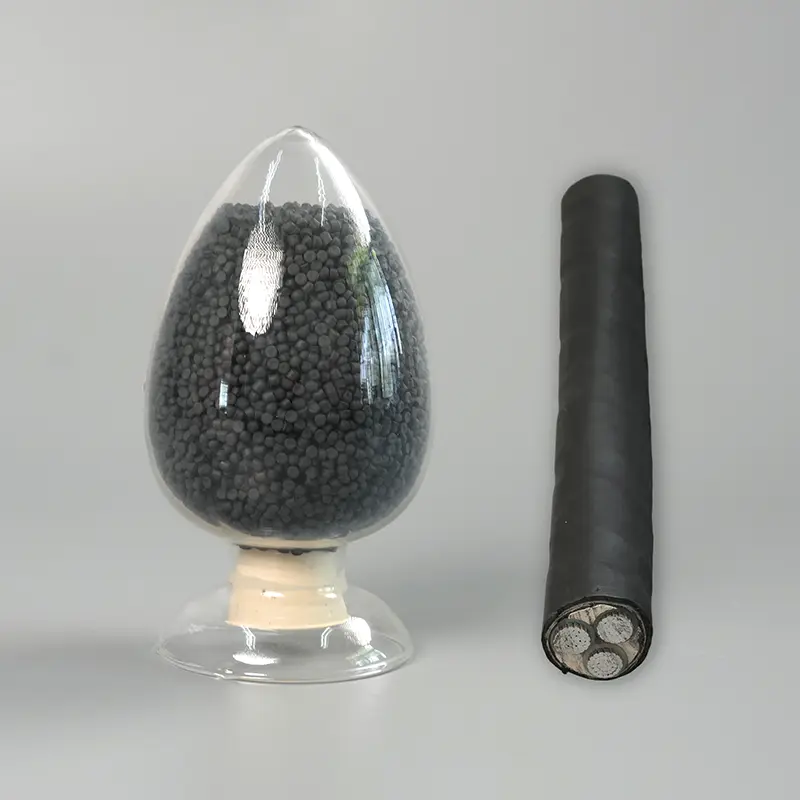
Flame Retardant Polyethylene (PE) Sheathing Material for Wind Power Generation
Performance Advantages Over Conventional Sheathing Options
Balanced Mechanical Strength and Flexibility
Many cable-sheathing materials require a compromise between tensile strength and elongation. A material that is highly rigid may resist deformation but become difficult to install or vulnerable to cracking during bending. A very soft material may offer flexibility but lack sufficient resistance to abrasion, pulling force, and dimensional deformation.
The wind power polyethylene sheathing compound is formulated to achieve a more balanced profile. The stated requirement for tensile strength is at least 13 MPa, while typical values for the listed grades range from 14.5 to 15.5 MPa. Typical elongation at break ranges from 450 to 480 percent, substantially above the minimum requirement of 320 percent.
High elongation is valuable during cable installation, especially when cables must be routed through confined spaces or around a controlled bend radius. It also provides a degree of tolerance against local stress concentrations. The combination of tensile strength and elongation helps the sheath remain intact when subjected to pulling, bending, vibration, and movement.
Compared with a lower-grade material that may meet a basic tensile requirement but offer limited elongation, this compound provides a wider mechanical operating margin. For cable manufacturers, that margin can contribute to improved process reliability and reduced risk of sheath damage during handling or installation.
Improved Resistance to Environmental Stress Cracking
Environmental stress cracking is a major concern for polyethylene-based products exposed to mechanical stress, heat, moisture, and chemical or atmospheric contaminants. A sheath may appear intact immediately after extrusion but develop fine cracks after prolonged exposure to stress and temperature. These cracks can permit water ingress, reduce mechanical protection, and accelerate damage to the cable core.
The stated test requirement for environmental stress-cracking resistance is at least 500 hours at 50°C, with the typical results recorded as pass for the listed material grades. This indicates that the formulation has been designed to resist crack development under a prolonged and controlled stress-cracking test condition.
This capability is particularly relevant to wind power installations, where a sheath can be exposed to repeated bending and tension while also encountering heat, moisture, and outdoor contaminants. Improved resistance to stress cracking supports longer-term sheath integrity and helps reduce the risk of premature failure caused by small defects developing into larger splits.
Reliable Flame-Retardant Performance
Fire safety is an important factor in renewable energy installations. A wind turbine contains multiple electrical circuits, switching components, converters, transformers, and auxiliary systems. If a fire occurs, the cable sheath should not unnecessarily contribute to flame propagation.
The compound has a stated oxygen index requirement of at least 26 percent. Typical oxygen index values for the listed grades are 30, 28, and 26 percent. The oxygen index indicates the approximate oxygen concentration needed to sustain combustion under a defined test method. A higher value generally indicates greater resistance to continued burning in the test environment.
Flame retardancy is not the only measure of fire performance, and final cable compliance depends on the complete cable construction and applicable testing standards. Nevertheless, an oxygen index at this level provides a useful indication that the compound has been engineered for enhanced flame resistance compared with ordinary polyethylene sheath materials.
The material also addresses the low-smoke, halogen-free requirements increasingly used in safety-conscious cable applications. Controlling hydrochloric acid and hydrobromic acid content helps reduce the potential release of corrosive acid gases when the material is exposed to fire. This can be valuable for protecting electrical equipment, metallic structures, and sensitive control components in enclosed or semi-enclosed areas.
Outdoor Weatherability
Wind power cables are frequently exposed to direct or indirect sunlight, moisture, wind, dust, and seasonal temperature changes. Ultraviolet radiation can break down polymer chains and additives at the sheath surface, eventually causing discoloration, embrittlement, cracking, or loss of mechanical properties.
The material is designed with ultraviolet resistance and aging resistance for outdoor use. Its polyethylene base provides a suitable foundation for weather-resistant sheath construction, while the additive system is selected to support durability under outdoor conditions. Good weatherability helps the sheath retain its protective function over extended periods rather than deteriorating rapidly after installation.
For wind farms located in coastal regions, weatherability is especially important. Salt-containing moisture and continuous wind can accelerate surface wear and expose weak points in a less suitable material. A weather-resistant sheath can help maintain cable protection in both onshore and offshore-related applications, although project-specific testing remains advisable for severe marine environments.
Waterproof and Moisture-Resistant Protection
Moisture can affect cable performance in several ways. It may reduce insulation resistance, promote corrosion of metallic components, create pathways for electrical degradation, and increase the risk of freeze-thaw damage in cold climates. A sheath with good waterproof performance provides an important first barrier against rainwater, condensation, and groundwater.
The polyethylene-based construction is naturally suitable for moisture-resistant cable protection when properly extruded. The compound is intended to provide a dense and continuous sheath with good resistance to water penetration. Its performance is further supported by high volume resistivity values and low conductivity results.
Manufacturers should still control extrusion conditions carefully. A high-quality compound cannot compensate for voids, surface defects, poor centering, inadequate cooling, or contamination during cable production. When the material is processed correctly, its waterproof characteristics can support reliable operation in tower interiors, outdoor cable routes, buried transition zones, and other moisture-prone locations.
Low-Temperature Resistance
Wind power projects are installed in a wide range of climates, including cold northern regions, mountain locations, and areas with large day-to-night temperature differences. Cable sheaths that become brittle at low temperatures may crack during transportation, installation, bending, or impact.
The listed impact brittleness temperature requirement is minus 40°C, and the representative results for the grades are recorded as pass. This low-temperature performance supports installation and operation in cold conditions. It can be particularly useful during winter construction, where a cable may be handled before the surrounding temperature has increased.
Low-temperature resistance also works together with the material’s high elongation. A sheath that remains flexible and tough at low temperature is better positioned to withstand movement and mechanical disturbance without developing visible cracks.
Thermal Stability and Heat-Deformation Resistance
Wind turbine cable systems may experience elevated temperatures caused by current loading, restricted airflow, solar heating, or proximity to electrical equipment. Excessive softening or deformation can reduce the thickness and uniformity of a sheath, especially where the cable is compressed or supported under load.
The material’s heat-deformation requirement is no more than 50 percent at 110°C under an 8.8 N load. Typical results are 12, 16, and 15 percent, demonstrating a considerable margin relative to the stated limit. Lower deformation helps the sheath preserve its geometry when exposed to elevated temperature and mechanical pressure.
The compound also passes the stated thermal shock resistance test at 130°C for one hour under a 5 kg load without cracking. Thermal shock performance is valuable because cable components may experience rapid temperature transitions during operation, shutdown, maintenance, or environmental changes.
Electrical Insulation Properties
Although the primary role of the product is sheathing, electrical properties remain important. The sheath must help isolate the cable from moisture, grounded structures, adjacent cables, and external conductive paths. High volume resistivity supports the overall electrical reliability of the cable construction.
The requirement for volume resistivity at 20°C is stated as 5.0 × 10¹⁴ ohm-centimeters. Typical values for the three listed grades are approximately 9.1 × 10¹⁵, 9.0 × 10¹⁵, and 9.5 × 10¹⁵ ohm-centimeters. These results are substantially above the stated requirement.
The material also records typical conductivity values of 0.50 and 0.43 microsiemens per millimeter for the available entries, compared with a requirement of no more than 10 microsiemens per millimeter. Together with the pH results of 5.1 and 5.2, these values support the low-smoke, halogen-free positioning of the compound.
Technical Data and Representative Results
The following table reorganizes the available technical information into a clear product-performance summary. The typical values are representative data for the listed DS-ZPE grades and should not be interpreted as a replacement for a project-specific certificate of analysis or final cable qualification.
| Test Item | Unit | Requirement | Typical Value 1 | Typical Value 2 | Typical Value 3 |
|---|---|---|---|---|---|
| Specific gravity | g/cm³ | ≤ 1.35 | 1.30 | 1.28 | 1.28 |
| Tensile strength | MPa | ≥ 13 | 14.5 | 15.0 | 15.5 |
| Elongation at break | % | ≥ 320 | 450 | 470 | 480 |
| Oxygen index | % | ≥ 26 | 30 | 28 | 26 |
| Tensile-strength change after air aging at 110°C for 240 hours | % | ≤ 25 | +5 | +7 | +7 |
| Elongation retention after air aging at 110°C for 240 hours | % | ≥ 300 | 410 | 420 | 425 |
| Environmental stress-cracking resistance at 50°C | h | ≥ 500 | Pass | Pass | Pass |
| Heat deformation at 110°C under 8.8 N | % | ≤ 50 | 12 | 16 | 15 |
| Thermal shock resistance at 130°C for one hour under 5 kg | Visual result | No cracking | No cracking | No cracking | No cracking |
| Impact brittleness temperature | °C | -40 | Pass | Pass | Pass |
| Volume resistivity at 20°C | ohm·cm | 5.0 × 10¹⁴ | 9.1 × 10¹⁵ | 9.0 × 10¹⁵ | 9.5 × 10¹⁵ |
| Hydrochloric acid and hydrobromic acid content | % | ≤ 0.5 | Not listed | < 0.5 | < 0.5 |
| pH value | pH | ≥ 4.3 | Not listed | 5.1 | 5.2 |
| Conductivity | microsiemens/mm | ≤ 10 | Not listed | 0.50 | 0.43 |
The data demonstrates several meaningful performance margins. The tensile-strength values are above the minimum requirement, while elongation values are significantly higher than the required 320 percent. Heat deformation remains well below the 50 percent limit, and electrical resistivity is considerably higher than the stated minimum.
The air-aging results are also notable. After 240 hours at 110°C, tensile-strength changes remain between plus 5 and plus 7 percent, within the maximum permitted change rate of 25 percent. Elongation retention remains between 410 and 425 percent, exceeding the required retention value of 300 percent. These results indicate that the material preserves a strong level of mechanical performance after accelerated thermal exposure.
Twin-Screw Compounding and Manufacturing Strengths
Controlled Raw-Material Dispersion
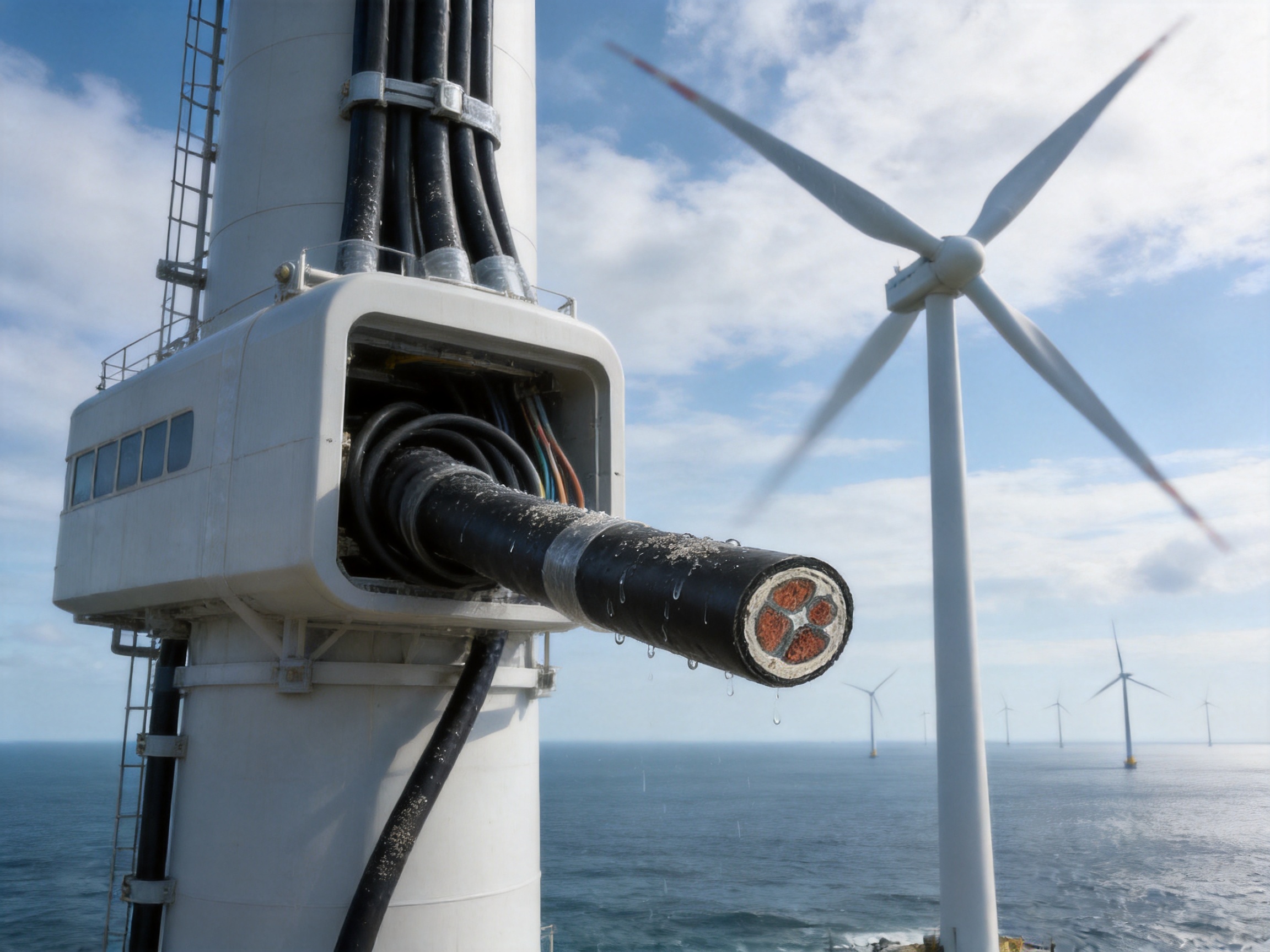
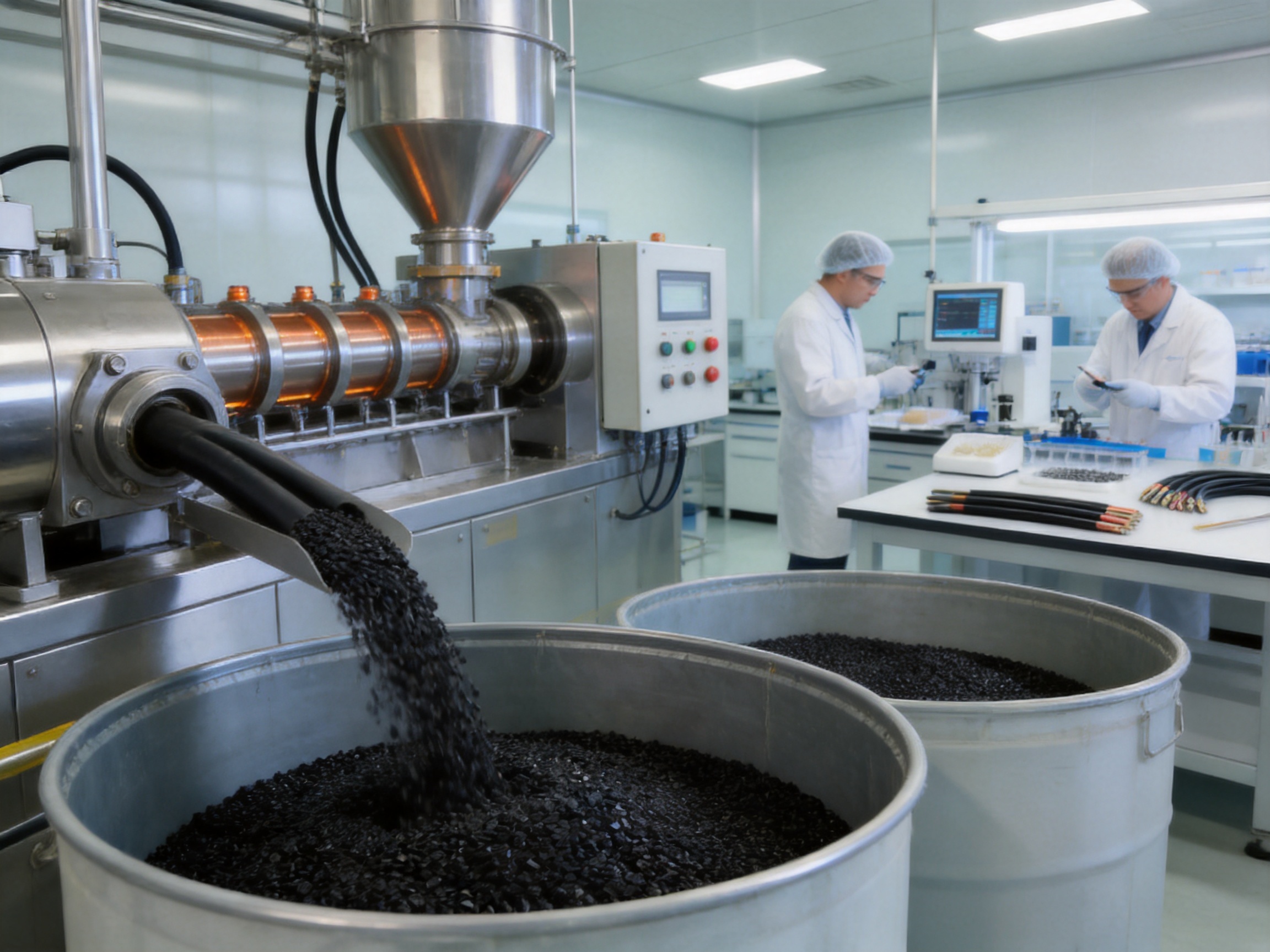
The product is granulated through twin-screw compounding. This manufacturing method is widely used for technically formulated polymer compounds because it provides continuous mixing, efficient dispersion, and flexible control of temperature, residence time, shear, and feeding conditions.
Flame-retardant cable compounds often contain a polymer base, mineral or inorganic flame-retardant components, stabilizers, processing aids, pigments, and other functional additives. Uniform dispersion is essential. If flame-retardant ingredients are not distributed evenly, the final sheath may show variation in flame performance, mechanical properties, surface quality, and extrusion behavior.
A properly configured twin-screw line allows the manufacturer to introduce ingredients at controlled points and to adjust the compounding profile according to their melting behavior and sensitivity to heat. The process can improve the consistency of the finished granules and reduce the risk of localized additive concentration or polymer-rich areas.
Stable Granule Quality
Granulation provides a convenient and consistent form for cable manufacturers. Uniform pellets can be packaged, transported, stored, and fed into extrusion equipment with relatively predictable behavior. Consistent pellet size and bulk density support stable feeding and help reduce fluctuations in output.
Stable granule quality is particularly important for high-speed cable extrusion. Variations in feeding can affect sheath thickness, surface appearance, pressure, melt temperature, and line speed. Through controlled compounding and pelletizing, the material supplier can help cable manufacturers establish a repeatable processing window.
Integrated Research and Development Capability
Jiangsu Duoshang New Materials Technology Co., Ltd. operates a research and development center of more than 3,000 square meters. The center is equipped with research equipment valued at more than RMB 35 million and supported by a professional research and development team of more than 30 members, including five doctors and recipients of provincial and municipal talent awards.
This technical structure supports the development of application-oriented cable compounds rather than relying solely on standard formulations. A dedicated research team can study polymer compatibility, additive interactions, flame-retardant mechanisms, extrusion behavior, aging performance, and customer-specific requirements.
For wind power cable applications, this capability is important because different cable constructions may require different balances between flexibility, hardness, flame resistance, abrasion resistance, and thermal performance. A material supplier with research resources can work with cable manufacturers to adjust grades or provide technical recommendations according to the actual design.
Multiple Production Bases and Production Lines
The company operates two production bases covering more than 15,000 square meters, with more than 10 production lines for polyolefin cable compounds. This production structure provides a foundation for capacity, product diversification, and supply continuity.
Manufacturing scale can be an important advantage over small suppliers that depend on a single production line. Multiple lines and production bases may support better scheduling flexibility, separation of product families, maintenance planning, and response to large or recurring orders. For cable manufacturers serving renewable energy projects, stable supply is often as important as laboratory performance.
The company’s product portfolio includes UV-crosslinked compounds, silane cross-linkable compounds, irradiation cross-linked compounds, thermoplastic low-smoke, halogen-free flame-retardant compounds, polyethylene sheath compounds, and other specialized materials. This broad portfolio allows customers to source multiple cable-material categories from a supplier with relevant polymer-compounding experience.
Processing Considerations for Cable Manufacturers
The compound is supplied for thermoplastic extrusion, but processing parameters should be established through trials using the customer’s specific extruder, screw design, die, cooling system, and cable construction. The optimum melt temperature, screw speed, line speed, die gap, draw-down ratio, and cooling conditions may vary by equipment and sheath dimensions.
Before production, the material should be stored in clean, dry conditions and protected from contamination. Packaging should remain sealed until the compound is ready for use. Any handling procedure should prevent foreign particles, moisture, oil, and incompatible polymer residues from entering the feed system.
During extrusion, manufacturers should monitor melt pressure, melt temperature, motor load, sheath diameter, wall thickness, concentricity, surface appearance, and cooling behavior. Consistent process control helps ensure that the material’s laboratory performance is reflected in the finished cable.
Because flame-retardant formulations may contain a significant loading of functional additives, screw configuration and mixing conditions should be selected carefully. Excessive shear or unnecessary residence time may increase melt temperature and affect the compound. On the other hand, insufficient mixing may reduce dispersion and surface quality. A balanced process profile is therefore essential.
Cooling conditions should also be managed carefully. Rapid or uneven cooling can contribute to internal stress, dimensional variation, or surface defects. The cable manufacturer should validate the cooling trough arrangement and line speed for each cable size.
The compound may be used in different sheath constructions, including single-layer or multi-layer designs, depending on the cable’s electrical, mechanical, and environmental requirements. Compatibility between adjacent layers should be evaluated before commercial production, particularly if the cable includes insulation shields, bedding layers, tapes, binders, or other polymeric components.
Applications in Wind Power Systems
Tower Cables
Cables installed inside wind turbine towers require protection from vibration, moisture, installation stress, and contact with support hardware. The compound’s tensile strength, elongation, waterproof performance, and abrasion resistance make it suitable for sheath applications in this environment.
Nacelle and Hub Cables
Nacelle and hub cables may be exposed to movement, restricted space, elevated temperature, and maintenance-related handling. The combination of flexibility, thermal resistance, and environmental durability helps support cable reliability in these areas.
Power Collection Cables
Wind farms use power collection cables to connect individual turbines with substations and wider grid infrastructure. Depending on the cable design, these products may be installed in trays, conduits, underground routes, or transition sections. The compound can provide an environmental sheath layer for cable constructions requiring flame retardancy and outdoor durability.
Offshore and Coastal Wind Projects
Coastal and offshore-related wind projects expose materials to moisture, salt-containing air, ultraviolet radiation, strong wind, and temperature variation. The product’s weather resistance, waterproof characteristics, low-temperature performance, and stress-cracking resistance are relevant to such conditions. For direct marine exposure or specialized submarine applications, however, complete system qualification and application-specific testing should be performed.
Renewable Energy and Auxiliary Cables
The same performance characteristics can be valuable in photovoltaic plants, battery-energy storage systems, charging infrastructure, and other renewable-energy installations. Wherever cables require low-smoke, halogen-free flame retardancy together with outdoor mechanical durability, a thermoplastic polyethylene compound may be considered as part of the cable design.
Quality Control and Technical Support
Material quality is determined not only by the formulation but also by the consistency of production and testing. A robust quality program should include incoming raw-material verification, process monitoring, pellet inspection, laboratory testing, batch traceability, and retained samples.
Key tests for this type of material include density, tensile strength, elongation at break, oxygen index, heat aging, environmental stress-cracking resistance, heat deformation, thermal shock, low-temperature impact, volume resistivity, acid gas content, pH, and conductivity. The listed product data covers these major performance areas and provides customers with a basis for preliminary grade selection.
Technical documentation is also important. Cable manufacturers may require product specifications, safety information, recommended processing guidance, batch certificates, compliance statements, and test reports. The supplier’s focus on technical documentation and testing support can assist customers during product development and qualification.
Duoshang states that it provides application-oriented solutions, research and development support, testing support, stable supply capacity, technical documentation, and customized material solutions for customers worldwide. This service model is useful when a cable manufacturer needs more than a standard pellet product and requires help with material selection, extrusion trials, or performance optimization.
Advantages for Buyers and Cable Producers
For cable producers, the principal advantage of this compound is the combination of multiple properties in one thermoplastic system. Instead of selecting a material solely for flame retardancy and then compensating for weak mechanical or environmental performance, manufacturers can evaluate a compound designed to address the complete wind power application.
The product’s high typical elongation can provide processing and installation tolerance. Its tensile-strength values support mechanical durability. Its resistance to environmental stress cracking helps protect against long-term crack formation. Its low-temperature impact performance supports cold-climate use, while its heat-deformation and thermal-shock results support operation under elevated or changing temperatures.
Compared with conventional non-flame-retardant polyethylene, the material offers a significantly more application-specific fire-performance profile. Compared with some rigid or highly mineral-filled flame-retardant formulations, its high elongation and polyethylene-based flexibility may provide benefits during cable handling and bending. Compared with halogen-containing sheath materials, its low-smoke, halogen-free design can reduce concern about corrosive gases during fire exposure.
These comparisons should be understood as performance-direction advantages rather than universal claims. The best material depends on the cable standard, construction, installation environment, and required certification. Final selection should always be confirmed through actual cable testing.
The company’s manufacturing scale provides another advantage. More than 10 production lines and two production bases can support recurring orders, product-family management, and supply planning. Its research center and experienced technical team can also support grade development when a customer needs a specific balance of flame retardancy, flexibility, abrasion resistance, color, hardness, or processability.
Environmental and Safety Considerations
Low-smoke, halogen-free cable materials are selected in many applications because they can help limit the release of smoke and corrosive halogen acid gases during fire conditions. This is particularly relevant in facilities where fire visibility, equipment protection, evacuation, and post-fire recovery are important.
The product’s hydrochloric acid and hydrobromic acid content is specified at no more than 0.5 percent, while typical results for two listed grades are below 0.5 percent. The pH and conductivity values further support the material’s low-corrosivity positioning. However, fire behavior depends on the complete cable assembly, including conductor, insulation, fillers, tapes, screens, and sheath thickness.
Polyethylene is also valued for its processability and durability. A durable cable sheath can reduce the frequency of replacement and maintenance caused by environmental cracking or premature mechanical damage. Longer service life can contribute to lower material consumption over the life of a wind power project.
Responsible material use requires appropriate manufacturing controls, safe handling, and compliance with relevant environmental and occupational requirements. Customers should obtain current safety information and verify the suitability of the compound for their intended application and jurisdiction.
Selection Guidance for Project Engineers
When selecting a sheath compound for a wind power cable, engineers should begin by defining the installation environment. Important factors include expected minimum and maximum temperature, ultraviolet exposure, moisture level, salt exposure, cable movement, bend radius, abrasion sources, installation tension, fire requirements, and expected service life.
The required cable standard should be identified before grade selection. Different markets and projects may specify different flame, smoke, halogen, mechanical, electrical, aging, and dimensional requirements. The compound should be tested as part of the complete cable rather than evaluated only as a loose material.
Engineers should also consider processing compatibility. A compound with excellent laboratory properties may not be suitable if it cannot be processed consistently on the available extrusion line. Trial extrusion should examine surface finish, die build-up, melt stability, dimensional control, adhesion to adjacent layers, and high-speed production behavior.
For long-term projects, supply capability and technical support should be evaluated together with material performance. A supplier with multiple production lines, laboratory resources, product documentation, and customization capability can reduce the risk associated with qualification and scale-up.
Frequently Asked Questions
What is this product used for?
It is a thermoplastic, low-smoke, halogen-free polyethylene sheathing compound designed for wind power generation cables and other demanding outdoor cable applications.
How is the material supplied?
The compound is supplied in granulated form. It is manufactured through twin-screw compounding and is intended for thermoplastic cable-sheath extrusion.
What makes it suitable for wind power cables?
It combines waterproof performance, mechanical strength, high elongation, flame retardancy, environmental stress-cracking resistance, thermal stability, low-temperature resistance, ultraviolet resistance, wear resistance, and aging resistance. These properties address the vibration, movement, moisture, sunlight, temperature changes, and mechanical stress found in wind power systems.
What is the typical tensile strength?
The stated requirement is at least 13 MPa. Typical values for the listed grades range from 14.5 to 15.5 MPa.
What is the typical elongation at break?
The requirement is at least 320 percent, while typical values range from 450 to 480 percent.
Does the material provide flame retardancy?
Yes. The oxygen index requirement is at least 26 percent, with typical values of 30, 28, and 26 percent for the listed grades. Final flame performance must be confirmed through testing of the complete cable construction under the applicable standard.
Is the material halogen-free?
It is positioned as a low-smoke, halogen-free compound. The stated hydrochloric acid and hydrobromic acid content requirement is no more than 0.5 percent, with typical results below 0.5 percent for two of the listed grades.
Can it be used in cold climates?
The listed impact brittleness temperature requirement is minus 40°C, and the representative grades are recorded as passing. The customer should still validate installation and operating conditions for the specific project.
How does it perform after heat aging?
After air aging at 110°C for 240 hours, the listed typical tensile-strength changes are plus 5, plus 7, and plus 7 percent. Typical elongation retention values are 410, 420, and 425 percent, compared with a requirement of at least 300 percent.
Does the compound resist environmental stress cracking?
Yes. The requirement is at least 500 hours at 50°C, and the listed typical results are recorded as pass for all three grades.
What are the heat-deformation results?
The requirement is no more than 50 percent at 110°C under an 8.8 N load. Typical results are 12, 16, and 15 percent.
Can it be used for offshore wind projects?
Its waterproof, weather-resistant, low-temperature, and stress-cracking properties are relevant to coastal and offshore-related environments. However, direct marine exposure, submarine sections, salt-spray conditions, and project-specific standards should be evaluated through complete cable qualification.
Who manufactures the compound?
The compound is manufactured by Jiangsu Duoshang New Materials Technology Co., Ltd., a Chinese producer specializing in polyolefin cable compounds and related polymer materials.
What manufacturing technology is used?
The material is granulated using twin-screw compounding technology. This process supports controlled feeding, melting, mixing, additive dispersion, and pelletizing.
Does the supplier offer customized materials?
The company states that it provides customized material solutions, application-oriented research and development, technical documentation, testing support, and stable supply capacity for customers worldwide.
What should be confirmed before commercial production?
Customers should confirm the applicable cable standards, required approvals, extrusion conditions, compatibility with adjacent layers, final cable fire performance, dimensional requirements, environmental aging results, and batch-specific documentation.
Conclusion
Flame-retardant polyethylene sheathing material for wind power generation must withstand a demanding combination of mechanical, thermal, electrical, environmental, and fire-related stresses. The product described here addresses these requirements through a balanced thermoplastic formulation produced by twin-screw compounding.
Its principal advantages include typical tensile strength of 14.5 to 15.5 MPa, elongation at break of 450 to 480 percent, oxygen index values up to 30 percent, successful environmental stress-cracking performance at 50°C for at least 500 hours, low-temperature impact performance at minus 40°C, strong heat-deformation results, no cracking in the stated thermal shock test, high volume resistivity, and low halogen acid gas content.
These characteristics offer a practical alternative to conventional sheathing materials that may provide only general-purpose mechanical protection or basic flame resistance. The compound is designed to support outdoor durability, low-smoke and halogen-free performance, cable flexibility, and long-term environmental protection in wind power installations.
Its value is further supported by the manufacturer’s twin-screw production technology, research and development center, professional technical team, multiple production bases, more than 10 polyolefin-compound production lines, and broad experience across power, communications, photovoltaics, rail transit, marine, locomotive, and renewable-energy cable applications.
For cable manufacturers and project engineers, the material offers a strong starting point for wind power cable development. Final approval should be based on complete cable testing, customer processing trials, applicable industry standards, and the environmental conditions of the intended installation. When properly selected and processed, the compound can help create cable sheaths capable of protecting wind power systems in harsh outdoor climates for many years.
References
1. Product technical information for flame-retardant polyethylene sheathing material for wind power generation, including representative DS-ZPE grade data.
2. General principles of thermoplastic twin-screw polymer compounding and additive dispersion.
3. General test methods for tensile strength and elongation of polymeric cable materials.
4. General test methods for oxygen index and flame-retardant polymer performance.
5. General evaluation methods for environmental stress-cracking resistance of polyethylene materials.
6. General procedures for accelerated air thermal aging of cable compounds.
7. General methods for measuring volume resistivity and conductivity of electrical insulating materials.
8. General principles for low-smoke, halogen-free cable material evaluation.
9. Manufacturer-provided information regarding research and development facilities, production bases, product categories, and technical support capabilities.