English
 Français
 Español
 русский
 عربى
Green Ohm
Green Ohm
Green Ohm
Green Ohm
Green Ohm
Green Ohm
Green Ohm
Green Ohm
Green Ohm
Content
- 1 The Role of Low-Smoke Halogen-Free Sheathing Materials
- 2 Product Composition and Formulation Concept
- 3 Advanced Twin-Screw Compounding and Pelletizing
- 4 Fire Performance and Classification Applications
- 5 Low Smoke, Low Corrosiveness, and Improved Safety
- 6 Mechanical Performance for Reliable Cable Sheaths
- 7 Resistance to Thermal Shock, Ozone, and Low Temperature
- 8 Electrical Insulation and Environmental Indicators
- 9 Comparison with Conventional and Less-Optimized Materials
- 10 Product Data Summary
- 11 Application Areas
- 12 Manufacturing Strengths and Technical Support
- 13 Processing Guidance for Cable Manufacturers
- 14 Quality Control and Qualification Approach
- 15 How to Select the Appropriate Grade
- 16 Frequently Asked Questions
- 16.1 What are B1 and B2 low-smoke halogen-free sheathing materials?
- 16.2 What cable applications can use these materials?
- 16.3 Are the materials halogen-free?
- 16.4 What is the difference between B1 and B2 grades?
- 16.5 Do the compound grades have the same mechanical properties?
- 16.6 Which grade has the highest typical oxygen index?
- 16.7 Which grade has the lowest typical smoke density?
- 16.8 Can the material be used outdoors?
- 16.9 Can the material be customized?
- 16.10 What information should a customer provide when requesting a quotation?
- 16.11 Who supplies these materials?
- 17 Conclusion
- 18 References
- 19 Product: B1 and B2 low smoke halogen-free sheathing materials
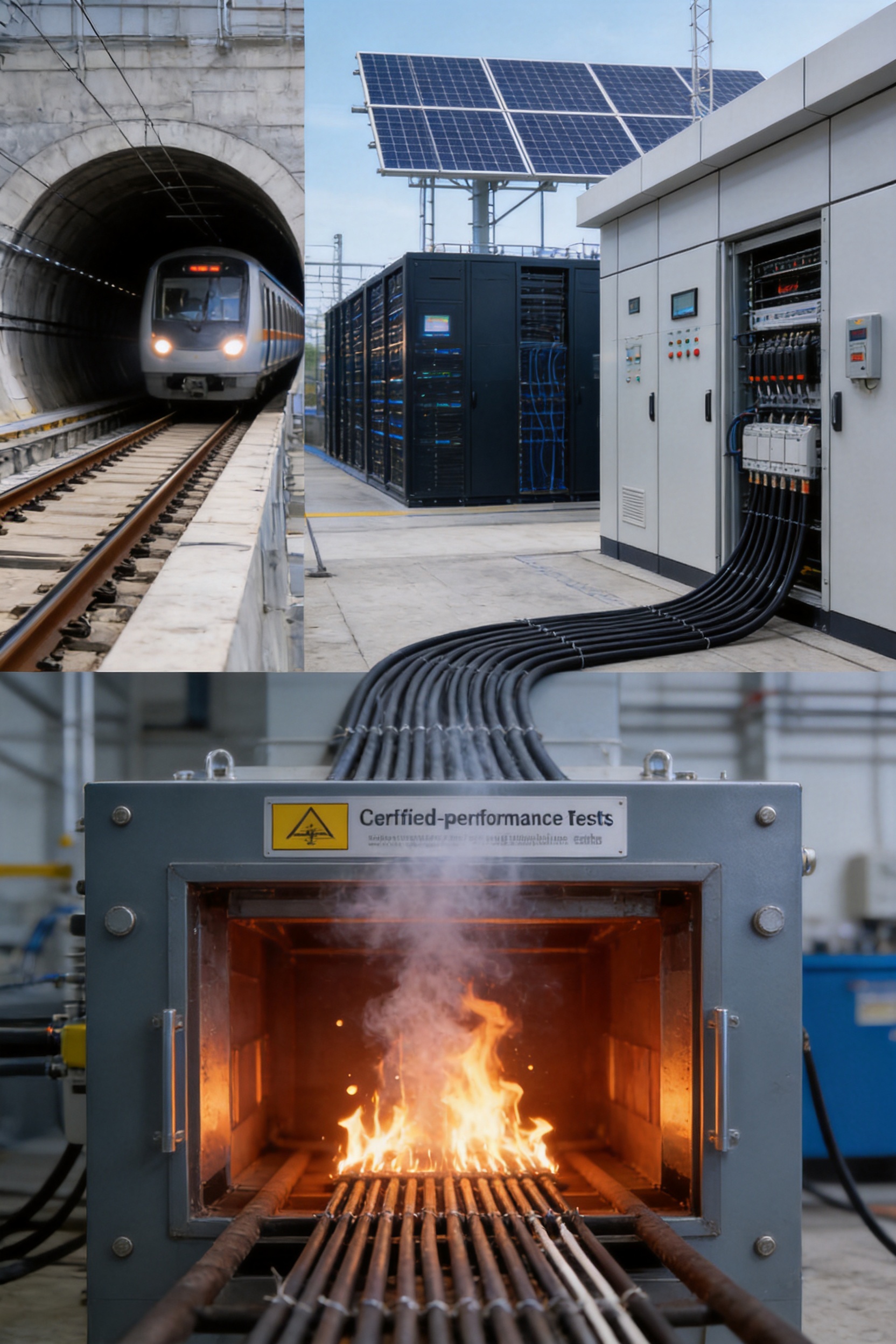
Modern cable systems must do more than transmit electrical power or data. They must also help protect people, equipment, and buildings when exposed to fire. In transportation networks, public buildings, data centers, industrial facilities, renewable-energy installations, communication systems, and high-density commercial construction, the performance of the cable sheath can influence smoke visibility, corrosion, flame spread, mechanical reliability, and the safety of evacuation routes. For these demanding environments, B1 and B2 low-smoke halogen-free sheathing materials provide a specialized solution designed to combine flame retardancy with reduced smoke, low corrosiveness, and reliable mechanical performance.
The B1 and B2 low-smoke halogen-free sheathing materials described in this article are polyolefin-based cable compounds developed for a wide range of cable constructions and specifications. Their formulation combines polyolefin resin with high-efficiency flame retardants, synergistic flame-retardant components, carbonization agents, antioxidants, and carefully selected processing additives. After compounding and pelletizing through a twin-screw extrusion process, the material is designed to meet demanding requirements for flame resistance, smoke control, low acidity and corrosiveness, dimensional stability, and resistance to dripping, cracking, and environmental stress.
These characteristics make the material suitable for cable manufacturers seeking a balanced compound rather than a formulation that achieves flame retardancy by sacrificing flexibility, processability, electrical insulation, or long-term reliability. Four product grades are available in the stated technical data: DS-WDZH-B1, DS-WDZH-X-B1, DS-WDZH-W-B1, and DS-WDZH-B2. Each grade offers a similar basic performance platform while providing variations in selected properties, allowing cable producers to select a material according to application requirements, processing conditions, and fire-performance targets.
The Role of Low-Smoke Halogen-Free Sheathing Materials
A cable sheath is the outer protective layer that surrounds insulated conductors, optical elements, fillers, screens, or other internal components. It must withstand mechanical handling, bending, installation stress, temperature variation, moisture, and contact with the surrounding environment. In a fire, the sheath must also resist ignition and flame propagation while limiting the production of smoke and corrosive gases.
Conventional halogen-containing materials can provide effective flame retardancy, but their combustion products may include acidic and corrosive gases. These gases can irritate the respiratory system, damage sensitive electrical equipment, and increase the risk of secondary losses in enclosed spaces. Dense smoke can also reduce visibility, obstruct evacuation, and complicate firefighting operations. Low-smoke halogen-free compounds address these concerns by using a non-halogenated formulation intended to produce lower levels of smoke and corrosive emissions under specified test conditions.
The material described here is designed around four complementary objectives. The first is high flame retardancy, supported by a compound system that includes complex flame retardants and synergistic components. The second is low smoke generation, with both flaming and flameless smoke-density values controlled according to the listed typical performance. The third is low corrosiveness, supported by low hydrogen chloride and hydrogen bromide content, pH performance, and conductivity values. The fourth is mechanical and thermal reliability, including tensile strength, elongation, heat aging, thermal deformation, thermal shock resistance, ozone resistance, and low-temperature brittleness performance.
A high-quality LSZH formulation must balance these requirements. Increasing the concentration of mineral or functional flame-retardant components can sometimes affect elongation, melt strength, surface quality, or extrusion stability. Conversely, a formulation optimized only for flexibility may not deliver adequate fire performance. The value of a professionally engineered compound lies in the integration of these properties into a stable, processable material suitable for industrial cable production.
Product Composition and Formulation Concept
The primary polymer matrix is polyolefin resin. Polyolefins are widely used in cable applications because they offer a useful combination of electrical insulation, chemical resistance, processability, and mechanical performance. The polymer matrix also provides the foundation for adjusting hardness, flexibility, melt flow, tensile properties, and compatibility with different cable designs.
High-efficiency flame retardants are incorporated to reduce the tendency of the sheath to ignite and sustain combustion. These components can promote flame inhibition, heat absorption, protective residue formation, or other mechanisms that reduce the intensity of burning. The precise formulation architecture is application-oriented: the compound must provide flame-retardant performance while maintaining acceptable extrusion behavior and physical properties.
Flame-retardant synergists are used to strengthen the effectiveness of the principal flame-retardant system. A synergist can improve char formation, reinforce the protective residue, support condensed-phase action, or enhance the overall efficiency of the flame-retardant package. This approach may help achieve the desired fire performance without relying solely on a high loading of one individual additive.
Carbonization agents contribute to the formation of a protective carbonaceous layer during combustion. A stable char layer can act as a barrier between the polymer and the heat source, limiting the movement of combustible decomposition products and reducing heat transfer. It can also help resist flame spread and reduce the likelihood of continued burning after removal of the ignition source.
Antioxidants are included to protect the polymer and selected additives during processing and service. Cable compounds are subjected to heat and shear during extrusion, and they may experience long-term exposure to elevated temperature and oxygen. An effective antioxidant system helps limit oxidative degradation, which can otherwise cause discoloration, embrittlement, loss of tensile strength, or reduced elongation.
Processing additives help maintain stable production behavior. They can support dispersion, melt homogeneity, surface finish, die release, and throughput. For a cable manufacturer, a compound is not valuable only because of its laboratory test values. It must also be capable of running consistently through industrial extrusion equipment, producing a uniform sheath around the cable core with stable dimensions and a reliable surface.
Advanced Twin-Screw Compounding and Pelletizing
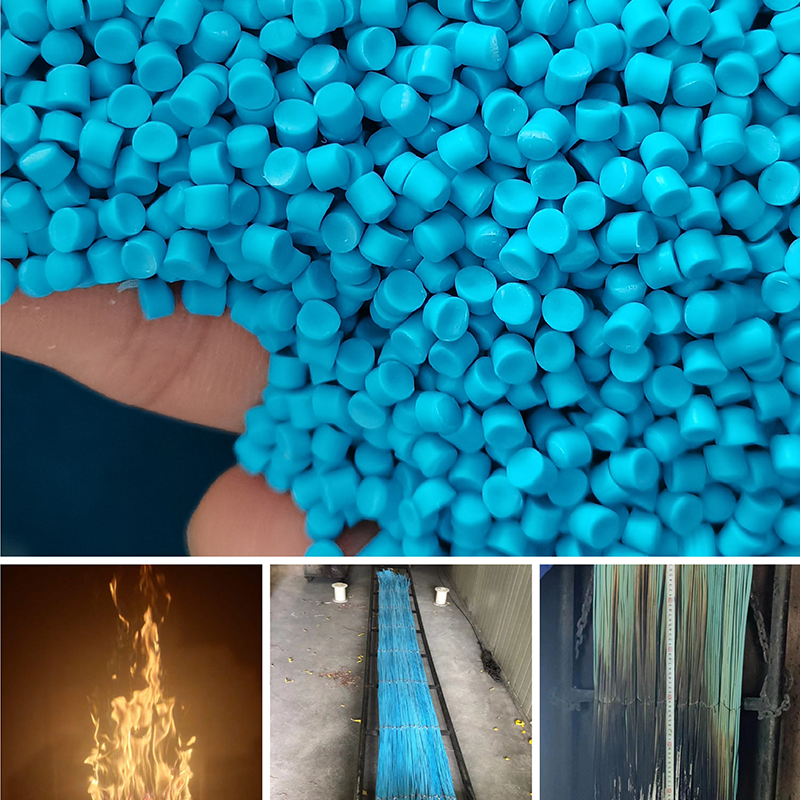
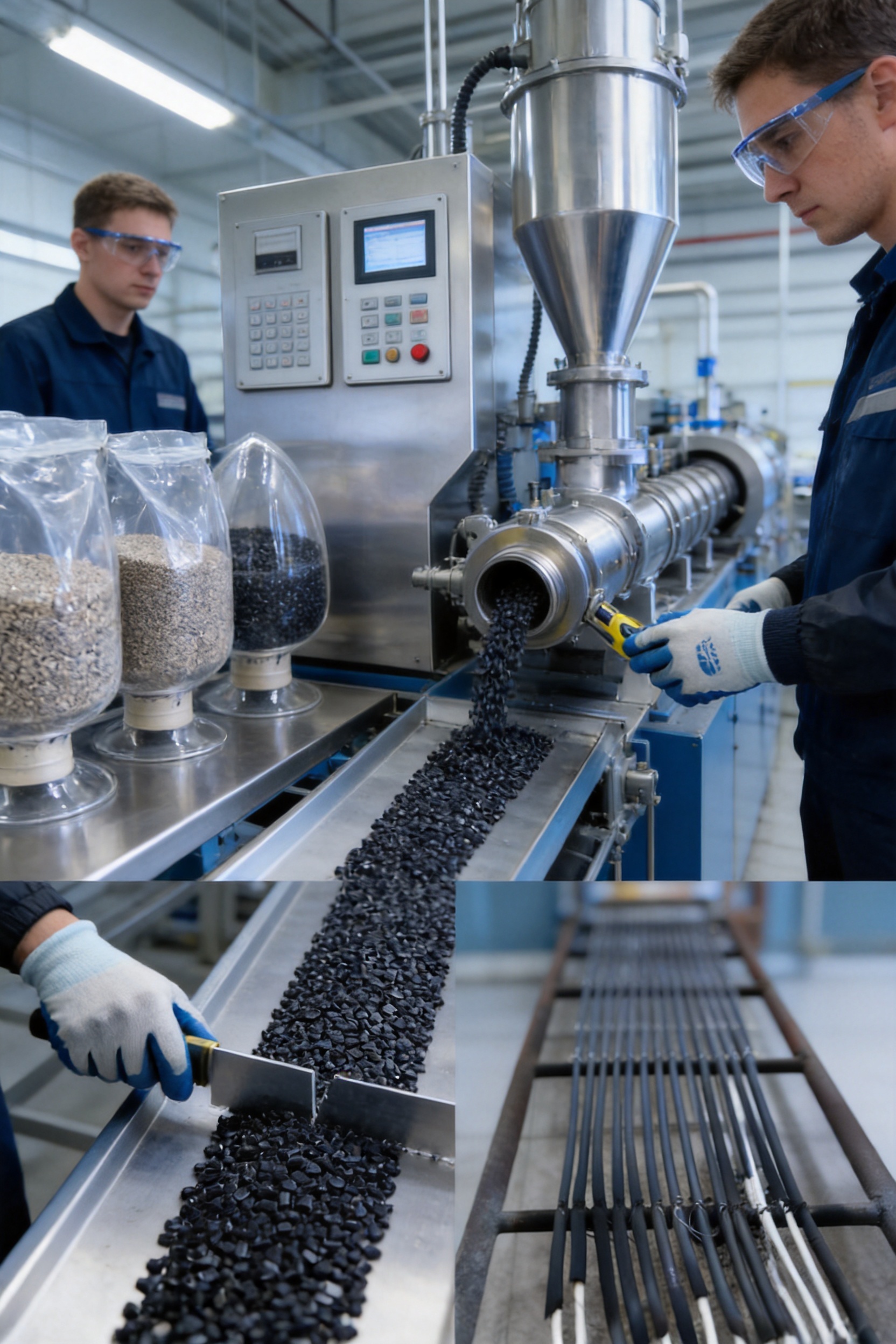
The material is mixed and granulated using a twin-screw extrusion process. Twin-screw compounding is widely used for advanced polymer formulations because it provides controlled feeding, intensive distributive and dispersive mixing, and flexible process-zone management. These features are particularly important for LSZH compounds, which may contain a polymer matrix together with substantial quantities of flame-retardant and functional additives.
During compounding, the polymer resin is melted and combined with the flame-retardant system, carbonization agents, antioxidants, and additives. The screws transport and knead the material through a series of controlled zones. Process conditions such as temperature profile, screw configuration, rotational speed, feed rate, residence time, and vacuum degassing can influence the final quality of the compound.
Uniform additive dispersion is essential. Poor dispersion can create weak points, inconsistent flame performance, rough sheath surfaces, unstable extrusion pressure, and variation between test specimens. A controlled twin-screw process helps distribute the functional components throughout the polymer matrix, supporting a more consistent material structure and more predictable performance.
Pelletizing provides a practical form for storage, transport, and downstream processing. Uniform pellets can be fed into cable extrusion lines more consistently than irregular or poorly mixed material. Stable pellet geometry and controlled moisture management also help reduce feeding fluctuations and processing interruptions.
The manufacturing process is supported by the company’s broader production and technical infrastructure. Jiangsu Duoshang New Materials Technology Co., Ltd. operates two production bases covering more than 15,000 square meters and has more than 10 production lines for polyolefin cable compounds. Its research and development center covers more than 3,000 square meters and is equipped with research equipment valued at more than RMB 35 million. The technical organization includes more than 30 professional R&D personnel, including five doctors and recipients of provincial and municipal talent awards.
This combination of formulation development, process engineering, production capacity, and testing support is important for cable-compound customers. It provides a foundation for improving formulations, investigating application issues, optimizing extrusion conditions, and maintaining product consistency as order volumes increase.
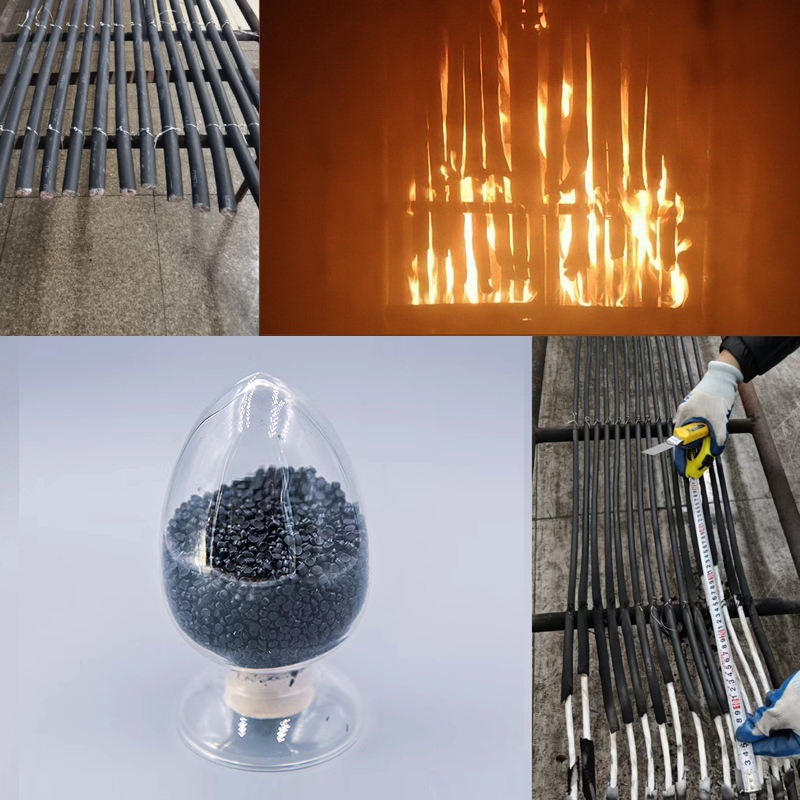
B1 and B2 low smoke halogen-free sheathing materials
Fire Performance and Classification Applications
The stated product description identifies the material as suitable for cables of various specifications and indicates compliance with the B1 and B2 classification combustion standards in GB 31247-2014. It also identifies applicability to B1ca, B2ca, and Cca classification levels under EN 13501-6. These classifications are relevant to cable fire performance and should be considered alongside the complete cable construction, installation configuration, test method, and certification documentation.
B1 and B2 classifications represent demanding levels of flame performance within the applicable Chinese classification framework. In European cable classification terminology, B1ca, B2ca, and Cca are reaction-to-fire classes used for cables under the Construction Products Regulation framework. The final classification of a finished cable is not determined by the compound alone. It depends on the cable design, sheath thickness, insulation materials, conductor arrangement, fillers, screen structure, manufacturing quality, and test results from the complete cable.
For this reason, cable manufacturers should validate the compound in the intended cable construction. The material supplier’s typical values provide an important starting point, but finished-product testing remains essential whenever a specific fire class, project approval, or regulatory declaration is required. Processing conditions should also be documented because excessive residence time, unsuitable temperature, insufficient dispersion, or moisture-related defects can influence the performance of the finished sheath.
The formulation is designed to resist dripping and cracking during fire-related performance evaluation. No-dripping behavior is important because flaming droplets can contribute to secondary ignition or spread fire to materials below the cable. Crack resistance is also important because a damaged sheath may expose internal components, reduce mechanical protection, or allow flames and heat to reach combustible elements inside the cable.
The product’s flame-retardant concept is complemented by its low-smoke design. A compound that limits flame spread but produces excessive smoke may not provide the overall safety profile required in enclosed or populated environments. The listed smoke-density results indicate that the material is engineered to control both flaming and flameless smoke under the relevant test conditions.
Low Smoke, Low Corrosiveness, and Improved Safety
Smoke performance is a major consideration in tunnels, stations, hospitals, office buildings, shopping centers, data centers, ships, rail vehicles, and other areas where people or sensitive equipment may be present. Dense smoke can obscure exit signs, reduce visibility, interfere with emergency response, and increase the difficulty of locating the source of a fire.
The technical data lists typical flaming smoke-density values of 70, 67, 62, and 75 for the four grades, against a listed standard of no more than 100. The corresponding flameless values are 210, 206, 198, and 223, against a listed standard of no more than 350. These values demonstrate a substantial margin relative to the stated limits under the described test conditions.
The DS-WDZH-W-B1 grade shows the lowest typical values among the four listed grades for both flaming and flameless smoke in the supplied data. The DS-WDZH-X-B1 grade also provides a low typical smoke-density profile. Although typical values are not a substitute for a formal specification or certification result, they help demonstrate the consistency of the product family’s low-smoke design.
Low corrosiveness is addressed through several indicators. The listed hydrogen chloride and hydrogen bromide content is less than 0.5 percent for each grade, compared with a limit of no more than 0.5 percent. The pH values range from 5.1 to 5.2, exceeding the listed minimum of 4.3. Conductivity is listed at 1.1 μS/mm for all four grades, well below the stated maximum of 10 μS/mm.
These results support the material’s low-acid and low-corrosivity positioning. In a fire, reducing corrosive emissions can help limit damage to metal structures, electronic equipment, control systems, and communication hardware. It can also support safer post-fire inspection and restoration activities, although the actual environmental impact depends on the complete cable and the conditions of the fire.
Mechanical Performance for Reliable Cable Sheaths
Fire performance alone is not sufficient for a cable sheath. The compound must maintain physical integrity during manufacturing, installation, and service. The supplied data lists a minimum tensile strength of 10.0 MPa and typical tensile-strength values of 12 MPa for all four grades. Elongation at break has a listed minimum of 160 percent, while the typical value is 170 percent for each grade.
These values indicate a material with a useful combination of strength and extensibility. Tensile strength contributes to resistance against pulling and handling forces. Elongation helps the sheath tolerate bending, installation movement, vibration, and localized deformation without premature rupture. A balance between the two properties is particularly important for cables that must be routed through confined spaces or installed around bends.
The material also demonstrates resistance to thermal aging. After air thermal aging at 100°C for 168 hours, the listed standard allows a change rate of plus or minus 25 percent for tensile strength and elongation. The typical tensile-strength changes are +10, +8, +7, and +11 percent, while the elongation changes are -7, -6, -5, and -10 percent. All four grades remain within the stated limits.
Thermal aging data is useful because cable compounds may experience elevated temperatures during continuous operation, temporary overload, installation near heat-producing equipment, or exposure to warm ambient conditions. A controlled change in tensile strength and elongation after aging suggests that the polymer and additive system retain a stable physical structure over the specified test period.
Thermal deformation values range from 9 to 11 percent, compared with a listed maximum of 50 percent. Lower deformation can support dimensional stability when the sheath is exposed to heat. This characteristic may help reduce the risk of excessive softening, wall-thickness variation, or shape distortion during service and processing, subject to the exact cable design and operating temperature.
Resistance to Thermal Shock, Ozone, and Low Temperature
The four grades are listed as passing the thermal shock resistance test with no cracking. Thermal shock resistance is important because cable products may encounter rapid temperature transitions during production, storage, installation, transportation, or service. A sheath that develops cracks under thermal shock can lose its barrier function and become more vulnerable to moisture, mechanical damage, and flame penetration.
Ozone resistance is also listed as showing no cracking for all four grades. Ozone can attack susceptible polymer structures, especially in environments involving electrical equipment, outdoor exposure, high-voltage systems, or strong oxidation conditions. Resistance to ozone cracking helps preserve the surface integrity of the sheath over time.
The low-temperature brittleness test is listed at -25°C, with all four grades marked as passing. This property is relevant for cables installed in cold climates, refrigerated areas, outdoor equipment, transport systems, and warehouses. A compound that remains resistant to brittle failure at low temperature can be easier to handle during installation and less vulnerable to impact or bending damage in cold conditions.
These properties distinguish a balanced LSZH compound from a formulation that is optimized only for a laboratory flame test. Cable manufacturers must consider the entire service environment. A material with excellent fire performance but poor low-temperature flexibility or thermal-shock resistance may create installation and reliability challenges. The stated results indicate that the product family is designed to address these wider requirements.
Electrical Insulation and Environmental Indicators
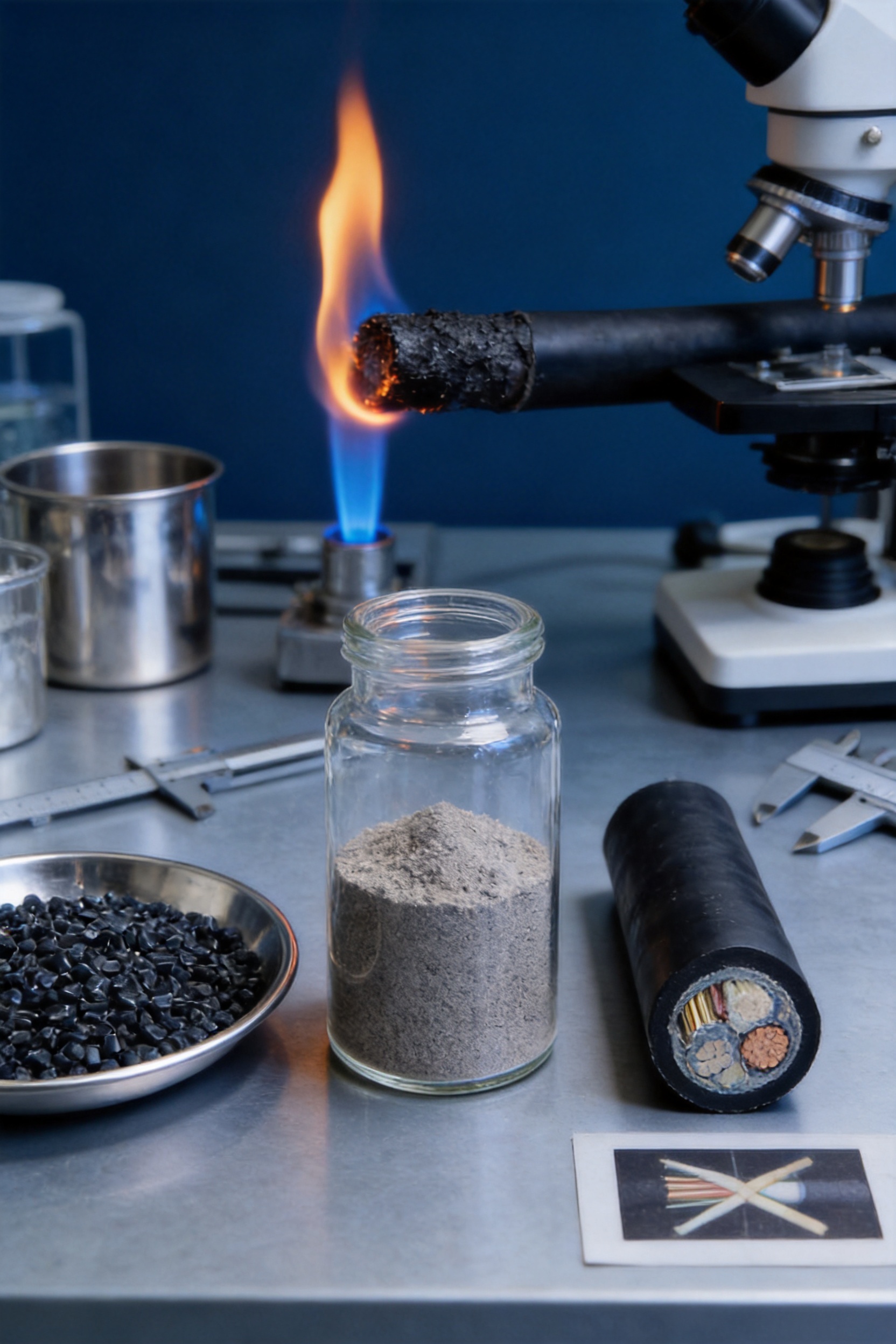
Although the primary focus of this product is flame-retardant sheathing, electrical performance remains important. The listed volume resistivity at 20°C is 1.0 × 10¹² Ω·cm as the stated standard, while typical values are 1.4 × 10¹³, 1.4 × 10¹³, 1.3 × 10¹³, and 1.5 × 10¹³ Ω·cm for the four grades.
High volume resistivity supports the electrical insulation function of the sheath and helps reduce unwanted leakage through the material. The actual electrical requirements depend on the cable structure and whether the compound is used as a primary insulation, secondary insulation, bedding, or outer sheath. Cable manufacturers should therefore evaluate the compound within the finished construction and under the relevant temperature, humidity, and voltage conditions.
The pH and conductivity results provide additional information about the material’s low-corrosiveness profile. A pH of 5.1 to 5.2 is above the stated minimum of 4.3, while conductivity of 1.1 μS/mm is substantially below the maximum of 10 μS/mm. These indicators are commonly considered when assessing the corrosive nature of gaseous emissions generated during combustion.
The hydrogen chloride and hydrogen bromide content is listed as less than 0.5 percent for all grades. This result supports the material’s halogen-free positioning. However, purchasers should confirm the applicable definition, test method, declaration requirements, and documentation for their target market. “Halogen-free” performance is normally assessed through specific standards and analytical procedures, not solely by the general description of the polymer base.
Comparison with Conventional and Less-Optimized Materials
The principal advantage of this product family is its integrated performance. Compared with conventional halogen-containing sheathing materials, the compound is intended to reduce smoke and corrosive emissions while maintaining flame resistance. This can be valuable in enclosed spaces and locations where equipment protection and human evacuation are important.
Compared with LSZH compounds that focus primarily on reducing halogen content, the described product places equal emphasis on fire classification, smoke density, mechanical properties, thermal aging, thermal shock, ozone resistance, and low-temperature performance. This broader approach can help cable manufacturers reduce the need to choose between low-emission behavior and practical sheath durability.
The formulation also offers a useful grade structure. DS-WDZH-B1, DS-WDZH-X-B1, and DS-WDZH-W-B1 are identified as B1 grades, while DS-WDZH-B2 is identified as a B2 grade. Their typical density values range from 1.54 to 1.57 g/cm³. The different oxygen-index values, ranging from 38 to 42 percent, provide an indication of the flame-retardant characteristics available within the product family.
The DS-WDZH-W-B1 grade records the highest typical oxygen index at 42 percent, while DS-WDZH-X-B1 records 40 percent. DS-WDZH-B1 and DS-WDZH-B2 each record 38 percent. Oxygen index is not the same as a complete cable fire classification, but it is a useful comparative indicator of the relative oxygen concentration required to sustain combustion under a specified test method.
All grades record the same typical tensile strength and elongation values in the supplied data. This consistency can simplify material selection when a customer needs to compare fire or smoke characteristics without giving up the basic mechanical platform. The final choice should still be based on cable design, processing behavior, regulatory requirements, and application-specific validation.
Product Data Summary
| Property | Unit | Standard or Requirement | DS-WDZH-B1 | DS-WDZH-X-B1 | DS-WDZH-W-B1 | DS-WDZH-B2 |
|---|---|---|---|---|---|---|
| Density | g/cm³ | Not specified | 1.56 | 1.57 | 1.56 | 1.54 |
| Tensile strength | MPa | ≥10.0 | 12 | 12 | 12 | 12 |
| Elongation at break | % | ≥160 | 170 | 170 | 170 | 170 |
| Oxygen index | % | ≥30 | 38 | 40 | 42 | 38 |
| Thermal deformation | % | ≤50 | 10 | 9 | 9 | 11 |
| Flaming smoke density | — | ≤100 | 70 | 67 | 62 | 75 |
| Flameless smoke density | — | ≤350 | 210 | 206 | 198 | 223 |
| Volume resistivity at 20°C | Ω·cm | 1.0 × 10¹² | 1.4 × 10¹³ | 1.4 × 10¹³ | 1.3 × 10¹³ | 1.5 × 10¹³ |
| pH | — | ≥4.3 | 5.2 | 5.1 | 5.2 | 5.1 |
| HCl and HBr content | % | ≤0.5 | <0.5 | <0.5 | <0.5 | <0.5 |
| Conductivity | μS/mm | ≤10 | 1.1 | 1.1 | 1.1 | 1.1 |
The table summarizes the typical values supplied for the four grades. Customers should treat typical values as technical guidance rather than an unconditional guarantee for every production batch. Actual results can vary with test specimen preparation, processing conditions, cable construction, and the applicable test standard. Formal purchasing specifications should identify the required test method, acceptance range, sampling plan, and documentation.
Application Areas
Power and Distribution Cables
LSZH sheathing materials can be used in power and distribution cable constructions where low smoke and reduced corrosive emissions are important. Typical environments may include substations, public buildings, underground facilities, industrial plants, and electrical rooms. The compound’s mechanical strength, elongation, thermal aging, and electrical resistivity provide a foundation for evaluating it in these cable designs.
Communication and Data Cables
Communication cables, data cables, and network infrastructure may be installed in offices, data centers, transportation hubs, hospitals, and commercial buildings. In these environments, smoke and corrosive gases can threaten both human safety and sensitive electronic equipment. The product’s low-smoke and low-corrosiveness properties make it relevant for cable designs where system continuity and equipment protection are significant considerations.
Rail Transit and Locomotive Cables
Rail vehicles and railway infrastructure require materials that can support fire safety in confined environments. Cable sheaths may be exposed to vibration, temperature changes, installation stress, and strict fire-performance requirements. The product family’s thermal shock resistance, ozone resistance, low-temperature performance, no-cracking results, and low-smoke characteristics provide relevant points for further validation in rail applications.
Photovoltaic and New-Energy Systems
Photovoltaic systems, energy-storage installations, charging infrastructure, and other new-energy applications often involve outdoor exposure, temperature cycling, electrical stress, and long service periods. The material’s ozone resistance, thermal aging performance, electrical resistivity, and flame-retardant design can support its evaluation in these systems. Application testing should account for ultraviolet exposure, moisture, installation method, connector design, and the specific operating temperature range.
Marine and Industrial Cables
Marine, offshore, and industrial cables may be installed in areas where smoke, corrosion, vibration, and restricted access create elevated safety concerns. Low-smoke and low-corrosiveness behavior can be particularly valuable in machinery spaces, control rooms, passenger areas, and enclosed technical compartments. The final suitability of the compound should be assessed against marine or industrial approval requirements where applicable.
Manufacturing Strengths and Technical Support
The manufacturer, Jiangsu Duoshang New Materials Technology Co., Ltd., is located in Nantong City, Jiangsu Province, China, and specializes in the research, development, production, and sales of polyolefin cable compounds. Its product portfolio includes UV-crosslinked, silane cross-linkable, irradiation cross-linked, thermoplastic low-smoke halogen-free flame-retardant compounds, polyethylene sheath compounds, and other specialized materials.
The company’s stated development philosophy is based on people-oriented operation and technology-driven innovation. Its R&D center, production bases, equipment investment, and professional technical team provide support for formulation development and production scale-up. The company reports more than 50 varieties across eight major product categories, allowing customers to source different compound technologies from a specialized cable-material supplier.
Manufacturing capacity is especially important for cable producers that require stable supply. More than 10 production lines for polyolefin cable compounds can support different product grades, production scheduling, and customer requirements. The existence of multiple production bases may also support capacity planning and business continuity, subject to the manufacturer’s quality-management procedures and supply arrangements.
Technical support is another differentiating factor. A compound supplier should be capable of discussing extrusion temperature profiles, screw configuration, die design, cooling conditions, surface finish, line speed, storage, and compatibility with cable components. It should also be able to provide technical data, safety information, sample material, test support, and guidance for production trials.
For customized requirements, the company’s focus on polymer cable compounds and biodegradable materials creates a basis for application-oriented development. Customers may require adjustments to hardness, flexibility, flame performance, smoke density, color, processing behavior, temperature resistance, or compatibility with a specific cable structure. Any custom formulation should be confirmed through a documented development and validation process.
Processing Guidance for Cable Manufacturers
Before production, the compound should be stored in clean, dry conditions and protected from contamination and excessive moisture. Packaging should remain sealed until the material is ready for use. If drying is required by the technical data sheet or by the customer’s process evaluation, the recommended temperature and time should be followed carefully to avoid polymer degradation or additive changes.
Extrusion conditions should be established through a controlled trial. The optimum temperature profile depends on the extruder, screw design, die geometry, cable construction, line speed, and desired surface quality. Excessively high temperatures may increase degradation or affect smoke and mechanical performance, while insufficient melting or mixing may produce poor dispersion and surface defects.
During production, operators should monitor melt pressure, melt temperature, torque, line speed, outer diameter, wall thickness, concentricity, surface appearance, cooling conditions, and take-up tension. A stable process helps ensure that the compound’s laboratory performance is reflected in the finished cable.
Because LSZH compounds can contain significant quantities of functional flame-retardant components, dispersion and feeding stability deserve particular attention. Irregular feeding can lead to variation in flame performance and physical properties. Screen-pack selection, screw configuration, and cleaning procedures should be evaluated during the initial process qualification.
Finished cables should be tested according to the customer’s specification and target market. Testing may include tensile strength, elongation, thermal aging, thermal shock, low-temperature brittleness, smoke density, acidity, conductivity, flame spread, dripping, electrical properties, and any required environmental or mechanical tests. The exact test program should be determined by cable type and certification requirements.
Quality Control and Qualification Approach
A robust qualification program should begin with the compound itself. Incoming inspection can verify grade identity, packaging condition, pellet appearance, moisture condition, and selected physical properties. Batch traceability should connect the material to production records, test results, and shipment documentation.
Process qualification should then evaluate the compound on the intended extrusion line. The trial should examine feeding, melting, pressure stability, surface finish, dimensional control, cooling behavior, and production speed. Samples should be taken from the finished cable and conditioned according to the relevant methods before testing.
Performance qualification should confirm that the finished cable reaches the required fire classification and mechanical, electrical, and environmental properties. This is particularly important when switching from another compound, changing sheath thickness, modifying fillers, or altering the cable core. A compound that performs well in one construction may not deliver identical results in another.
Routine production control should include defined inspection frequencies and acceptance criteria. Important characteristics may include density, tensile strength, elongation, thermal deformation, smoke performance, pH, conductivity, and appearance. Statistical review of results can help identify process drift before it becomes a customer complaint.
The supplier and cable manufacturer should also establish a change-control process. Changes to resin, flame retardants, synergists, carbonization agents, antioxidants, processing additives, equipment, or manufacturing location can influence performance. Customers should be informed of changes that may affect product qualification or regulatory documentation.
How to Select the Appropriate Grade
The first selection factor is the required fire classification. A customer should identify whether the finished cable is intended for a B1, B2, B1ca, B2ca, Cca, or another classification. The relevant standard and test method should be confirmed before selecting a compound.
The second factor is the cable construction. Conductor size, insulation material, filler type, shielding, armor, sheath thickness, cable diameter, and production speed can all influence fire performance and processing behavior. A material that is suitable for a small communication cable may require different processing conditions from the same material used in a large power cable.
The third factor is the service environment. Outdoor installations may require resistance to ultraviolet radiation, ozone, moisture, and temperature cycling. Rail, marine, and industrial applications may involve vibration, oil, chemicals, or restricted spaces. Indoor public-building applications may place greater emphasis on smoke, acidity, and fire classification.
The fourth factor is processing compatibility. Cable manufacturers should evaluate whether the selected grade can run at the desired line speed, with acceptable melt pressure, surface quality, dimensional stability, and scrap rate. Technical consultation with the supplier can help identify suitable equipment and process settings.
Based on the supplied typical data, DS-WDZH-W-B1 may be considered when a B1-grade material with a comparatively high typical oxygen index and low typical smoke-density values is desired. DS-WDZH-X-B1 also presents a high typical oxygen index and low typical smoke values. DS-WDZH-B1 provides the same listed tensile and elongation platform with a typical oxygen index of 38 percent. DS-WDZH-B2 offers the B2 grade designation and the lowest typical density among the four grades. Final selection must be confirmed through application testing.
Frequently Asked Questions
What are B1 and B2 low-smoke halogen-free sheathing materials?
They are polyolefin-based cable compounds formulated with flame retardants, synergists, carbonization agents, antioxidants, and processing additives. They are designed to provide flame resistance, reduced smoke generation, low corrosiveness, mechanical durability, and resistance to cracking and dripping.
What cable applications can use these materials?
The materials are suitable for evaluation in power cables, communication cables, data cables, rail and locomotive cables, photovoltaic cables, new-energy cables, marine cables, industrial cables, and other cable constructions requiring low-smoke halogen-free performance. The finished cable must be validated for its specific application.
Are the materials halogen-free?
The product is described as a low-smoke halogen-free compound. The supplied data lists hydrogen chloride and hydrogen bromide content below 0.5 percent for each grade. Customers should confirm the applicable market definition, testing method, and formal documentation for their project.
What is the difference between B1 and B2 grades?
B1 and B2 refer to different fire-performance grade designations within the stated classification systems. B1 grades in the supplied product family include DS-WDZH-B1, DS-WDZH-X-B1, and DS-WDZH-W-B1. DS-WDZH-B2 is identified as a B2 grade. The correct grade depends on the required finished-cable classification and application conditions.
Do the compound grades have the same mechanical properties?
The supplied typical data lists tensile strength of 12 MPa and elongation at break of 170 percent for all four grades. The standard requirements are at least 10.0 MPa tensile strength and at least 160 percent elongation. Actual results should be confirmed through batch testing and finished-cable evaluation.
Which grade has the highest typical oxygen index?
DS-WDZH-W-B1 has the highest listed typical oxygen index at 42 percent. DS-WDZH-X-B1 is listed at 40 percent, while DS-WDZH-B1 and DS-WDZH-B2 are listed at 38 percent. Oxygen index is an indicator of combustion behavior but does not replace complete cable fire-classification testing.
Which grade has the lowest typical smoke density?
DS-WDZH-W-B1 has the lowest listed typical flaming smoke density at 62 and the lowest listed typical flameless smoke density at 198. DS-WDZH-X-B1 follows with typical values of 67 and 206. These are typical values and should be confirmed using the applicable test method.
Can the material be used outdoors?
It may be suitable for outdoor cable designs when the complete formulation and cable construction meet the required environmental conditions. The supplied data includes ozone resistance and low-temperature brittleness performance, but outdoor suitability may also require ultraviolet, moisture, chemical, weathering, and long-term aging evaluations.
Can the material be customized?
The manufacturer specializes in polyolefin cable compounds and provides application-oriented material solutions. Potential development targets may include flame performance, smoke density, flexibility, hardness, processing behavior, electrical properties, temperature resistance, and compatibility with a particular cable construction. Customization should be confirmed through technical discussion and validation testing.
What information should a customer provide when requesting a quotation?
Useful information includes cable type, conductor size, insulation and sheath structure, target fire classification, required standards, operating temperature, installation environment, color, annual volume, extrusion equipment, expected line speed, and any existing compound specification. Providing this information helps the supplier recommend an appropriate grade and prepare a meaningful technical proposal.
Who supplies these materials?
The materials are supplied by Jiangsu Duoshang New Materials Technology Co., Ltd. The company’s sales contact is sales@duoshangmaterials.com. Its listed telephone contacts are +86-18951314035 and +86-18021682970.
Conclusion
B1 and B2 low-smoke halogen-free sheathing materials are engineered for cable manufacturers that need more than basic polymer protection. Their value comes from the combination of flame-retardant design, smoke control, low corrosiveness, mechanical strength, elongation, thermal aging resistance, thermal shock resistance, ozone resistance, low-temperature performance, and electrical insulation properties.
The four listed grades provide options for different fire-performance requirements and processing priorities. Typical data shows tensile strength of 12 MPa, elongation at break of 170 percent, oxygen-index values from 38 to 42 percent, low thermal deformation, controlled smoke density, high volume resistivity, pH values above the stated minimum, low HCl and HBr content, and low conductivity. All grades are also listed as passing thermal shock and ozone resistance tests without cracking.
The manufacturing platform behind the product is equally important. Polyolefin expertise, a large R&D center, professional technical personnel, twin-screw compounding, multiple production bases, and more than 10 production lines provide a strong foundation for product development and supply. The manufacturer’s wider portfolio enables customers to evaluate related cross-linked, thermoplastic, polyethylene, and specialized cable-compound technologies.
For the best results, cable manufacturers should select the grade according to the required classification, cable construction, service environment, and extrusion process. Supplier typical values should be supported by finished-cable testing and formal project documentation. When correctly selected and processed, these materials can provide a practical route toward safer, cleaner, and more reliable cable systems for modern infrastructure.
References
GB 31247-2014, Classification for Burning Behavior of Cables and Optical Fiber Cables.
EN 13501-6, Fire Classification of Construction Products and Building Elements: Classification Using Data from Reaction to Fire Tests on Power, Control and Communication Cables.
Technical data supplied for DS-WDZH-B1, DS-WDZH-X-B1, DS-WDZH-W-B1, and DS-WDZH-B2 low-smoke halogen-free sheathing materials.
Manufacturer-provided company and product information for Jiangsu Duoshang New Materials Technology Co., Ltd.
General polymer-processing principles for twin-screw compounding, flame-retardant polyolefin materials, cable extrusion, and low-smoke halogen-free cable construction.