English
 Français
 Español
 русский
 عربى
Green Ohm
Green Ohm
Green Ohm
Green Ohm
Green Ohm
Green Ohm
Green Ohm
Green Ohm
Green Ohm
Content
- 1 1. Product Overview
- 2 2. Why LSZH Insulation Matters in Power Systems
- 3 3. The Role of Electron Accelerator Irradiation
- 4 4. Key Technical Performance
- 5 5. Mechanical Strength and Flexibility
- 6 6. Thermal Performance and Grade Selection
- 7 7. Electrical Insulation Performance
- 8 8. Flame Retardancy and Smoke Control
- 9 9. Environmental and Regulatory Considerations
- 10 10. Manufacturing Strengths and Technical Capabilities
- 11 11. Competitive Advantages of the Product
- 12 12. Applications in Power Transmission and Distribution
- 13 13. Processing and Quality-Control Considerations
- 14 14. Recommended Selection Checklist
- 15 15. Frequently Asked Questions
- 15.1 Q1. What is the main purpose of this material?
- 15.2 Q2. How is the cable cross-linked?
- 15.3 Q3. What grades are available?
- 15.4 Q4. Is the material suitable for indoor electrical installations?
- 15.5 Q5. What are the typical tensile properties?
- 15.6 Q6. How does the material perform under hot-extension testing?
- 15.7 Q7. Does the compound have low smoke performance?
- 15.8 Q8. Does the material contain halogens?
- 15.9 Q9. What electrical properties does it provide?
- 15.10 Q10. Can the compound be customized?
- 15.11 Q11. Which standards are associated with the product?
- 15.12 Q12. What information should be provided when requesting a quotation?
- 16 16. Conclusion
- 17 References
- 18 Product: Accelerator Irradiation Cross-linked LSZH Flame Retardant Insulation for Power Grids (Class B1/B2)
Modern power distribution systems require cable insulation that can balance electrical reliability, mechanical durability, flame-retardant performance, low smoke generation, environmental responsibility, and long-term processing stability. These requirements become especially demanding in urban power grids, indoor switchgear, power transmission and distribution installations, public infrastructure, and other environments where cable failure may affect both equipment and personnel safety.
Accelerator-irradiation cross-linked low-smoke, zero-halogen insulation compounds provide an advanced solution for these applications. The product discussed in this article is an irradiation cross-linked LSZH compound developed for power-grid cable insulation in Class B1 and B2 flame-retardant applications. After extrusion, the finished cable is cross-linked through electron accelerator irradiation. This process creates a durable three-dimensional polymer network that improves heat resistance, mechanical strength, dimensional stability, and resistance to deformation.
The material is designed around the performance expectations of modern power cables. It offers a typical tensile strength of up to 13.8 MPa, elongation at break of up to 170%, an oxygen index of 32%, excellent hot-extension results, high volume resistivity, a dielectric strength of 30 MV/m, low smoke density, low halogen-acid gas content, and low electrical conductivity. These characteristics make it suitable for cable systems where fire safety, insulation reliability, and stable operation are essential.
1. Product Overview
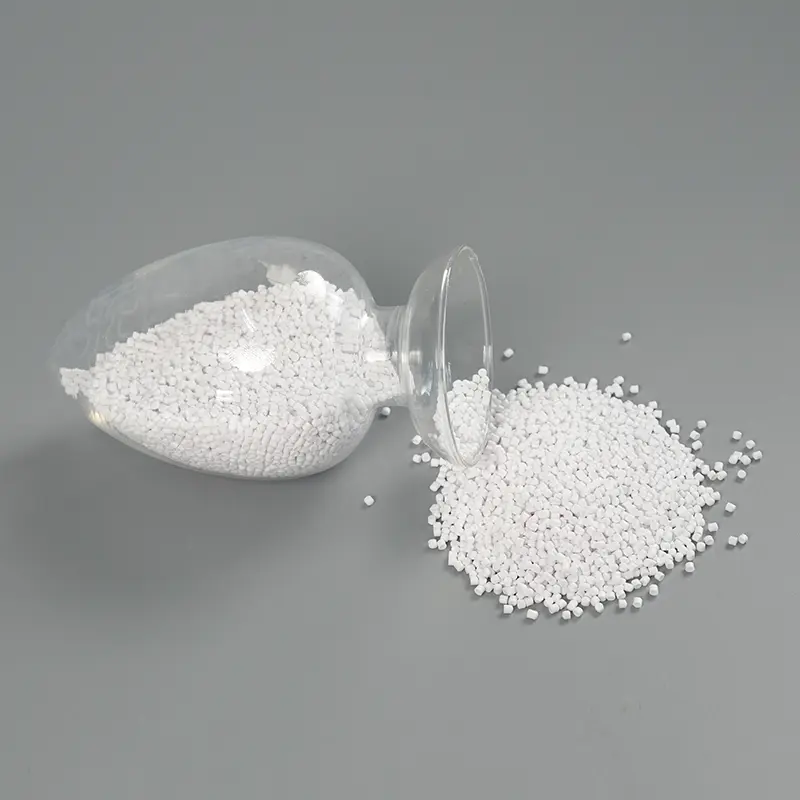
The product is an accelerator-irradiation cross-linked LSZH flame-retardant insulation compound for power-grid cables. LSZH means low smoke and zero halogen. When exposed to fire, the compound is formulated to limit the release of dense smoke and corrosive halogen-containing gases compared with conventional halogenated cable materials.
The compound is intended for use as an insulating material in cables serving power transmission and distribution systems, urban electrical networks, indoor switchgear, and related electrical infrastructure. It is available in two product grades identified as DS-WDZF-105 (DW) and DS-WDZF-125 (DW). The grade designation reflects the intended thermal-performance category of the finished, cross-linked insulation system.
Unlike thermoplastic insulation, which can soften significantly when exposed to elevated temperatures, the material becomes cross-linked after irradiation. The cross-linked structure helps the insulation maintain its shape and mechanical integrity under heat, electrical loading, and short-duration thermal stress. This is particularly valuable in cable applications where conductors may experience temperature rises during overloads, fault conditions, or heavy-duty operation.
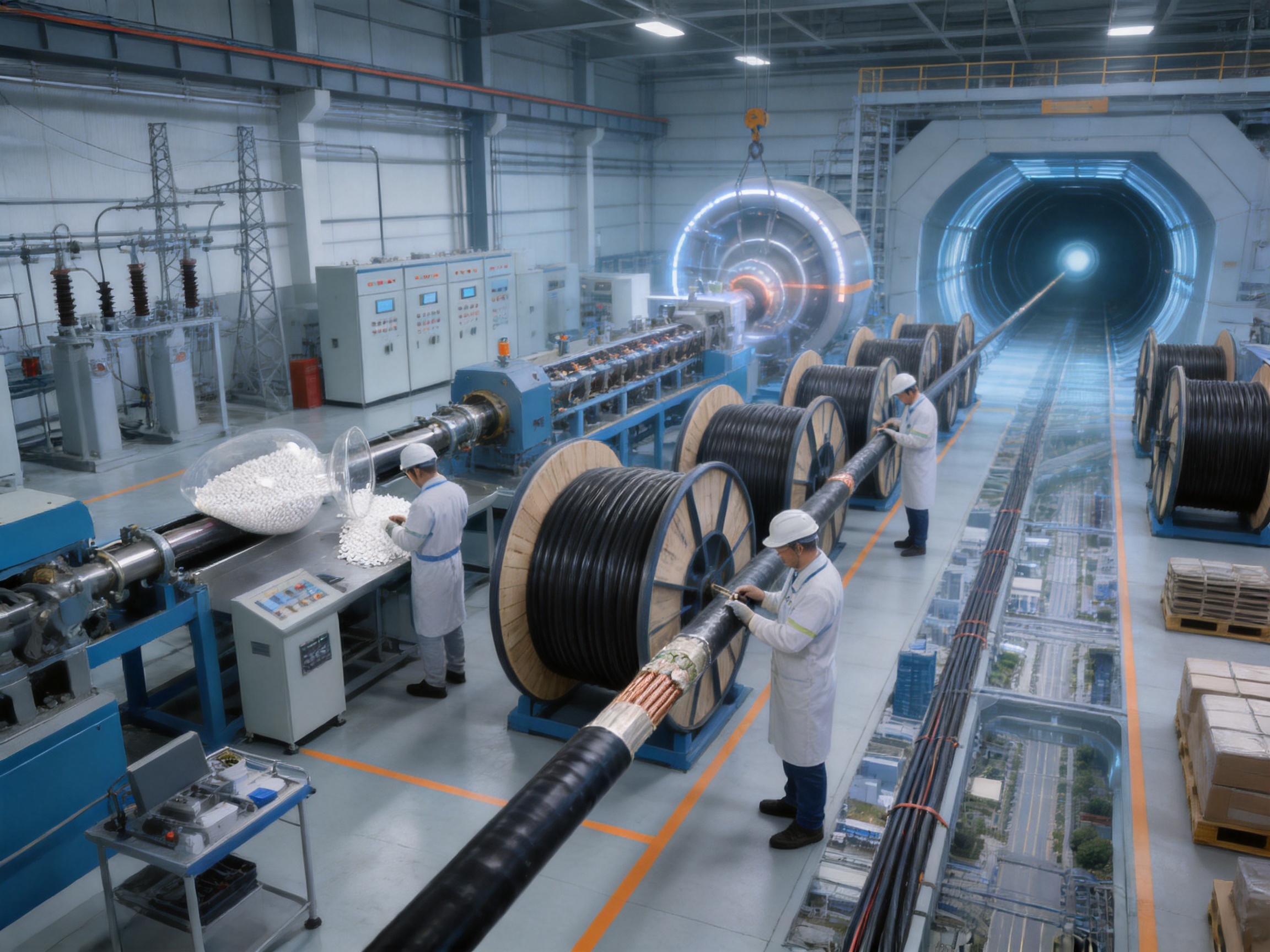
The product is manufactured for integration into a controlled cable-production process. The compound is first extruded around the conductor. The extruded insulation is then exposed to a controlled electron-beam irradiation dose. The accelerator initiates cross-linking reactions within the polymer structure without requiring chemical peroxide systems or a long thermal-vulcanization line.
The resulting cable combines the processing advantages of an extrudable polyolefin-based compound with the service advantages of a cross-linked insulation material. This combination gives cable manufacturers a practical route to high-performance LSZH insulation while supporting efficient production, consistent quality, and application-specific customization.
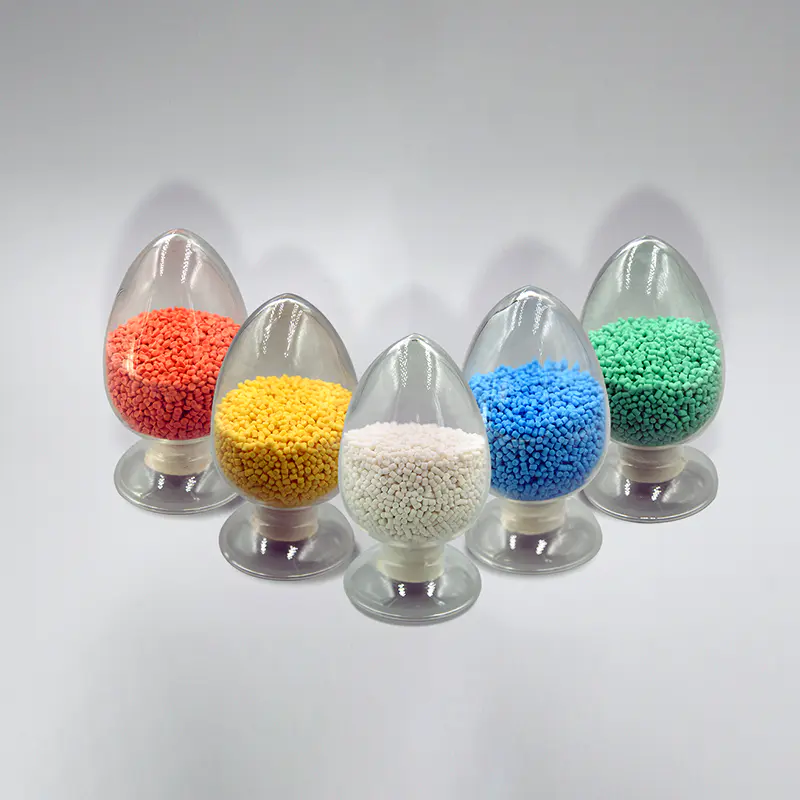
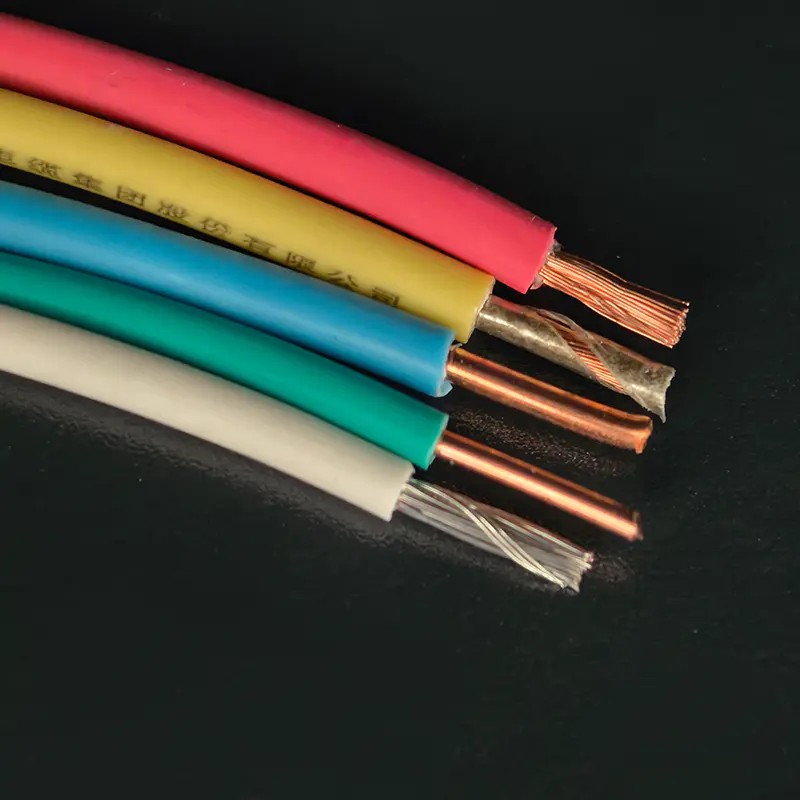
Accelerator Irradiation Cross-linked LSZH Flame Retardant Insulation for Power Grids (Class B1/B2)
2. Why LSZH Insulation Matters in Power Systems
Power cables are often installed in locations where fire behavior and smoke production are critical safety considerations. Indoor switchgear rooms, substations, transport facilities, commercial buildings, control rooms, cable tunnels, utility corridors, and densely populated urban areas may contain large quantities of cable. During a fire, the cable insulation can influence flame propagation, smoke visibility, gas toxicity, and the corrosive effect on electrical and electronic equipment.
Traditional halogen-containing cable compounds can generate acidic gases when burned. These gases may be harmful to people and can corrode metallic components, contacts, control systems, and sensitive electronic equipment. Dense smoke can also reduce visibility and delay evacuation or emergency response.
LSZH compounds are developed to reduce these concerns. The low-halogen formulation helps control hydrogen chloride and hydrogen bromide generation, while the flame-retardant package supports resistance to ignition and flame spread. The product’s test data show HCl and HBr content below 0.5%, a pH value of 5, and electrical conductivity of 0.52 μS/mm. These values demonstrate the material’s low-corrosivity and low-conductivity characteristics under the specified test conditions.
Low smoke performance is also important. The reported smoke density is 50 to 55 with flame and 320 to 325 without flame, within the stated limits of 100 and 350 respectively. Lower smoke generation can contribute to better visibility during emergency evacuation and can reduce the contamination of nearby equipment.
For power-grid projects, LSZH insulation is not simply an environmental preference. It is a system-level safety measure. The material must also maintain electrical insulation, mechanical strength, resistance to thermal deformation, and acceptable processing performance. A successful LSZH compound therefore needs to balance several properties rather than maximize only one flame-retardant indicator.
3. The Role of Electron Accelerator Irradiation
3.1 Cross-Linking Principle
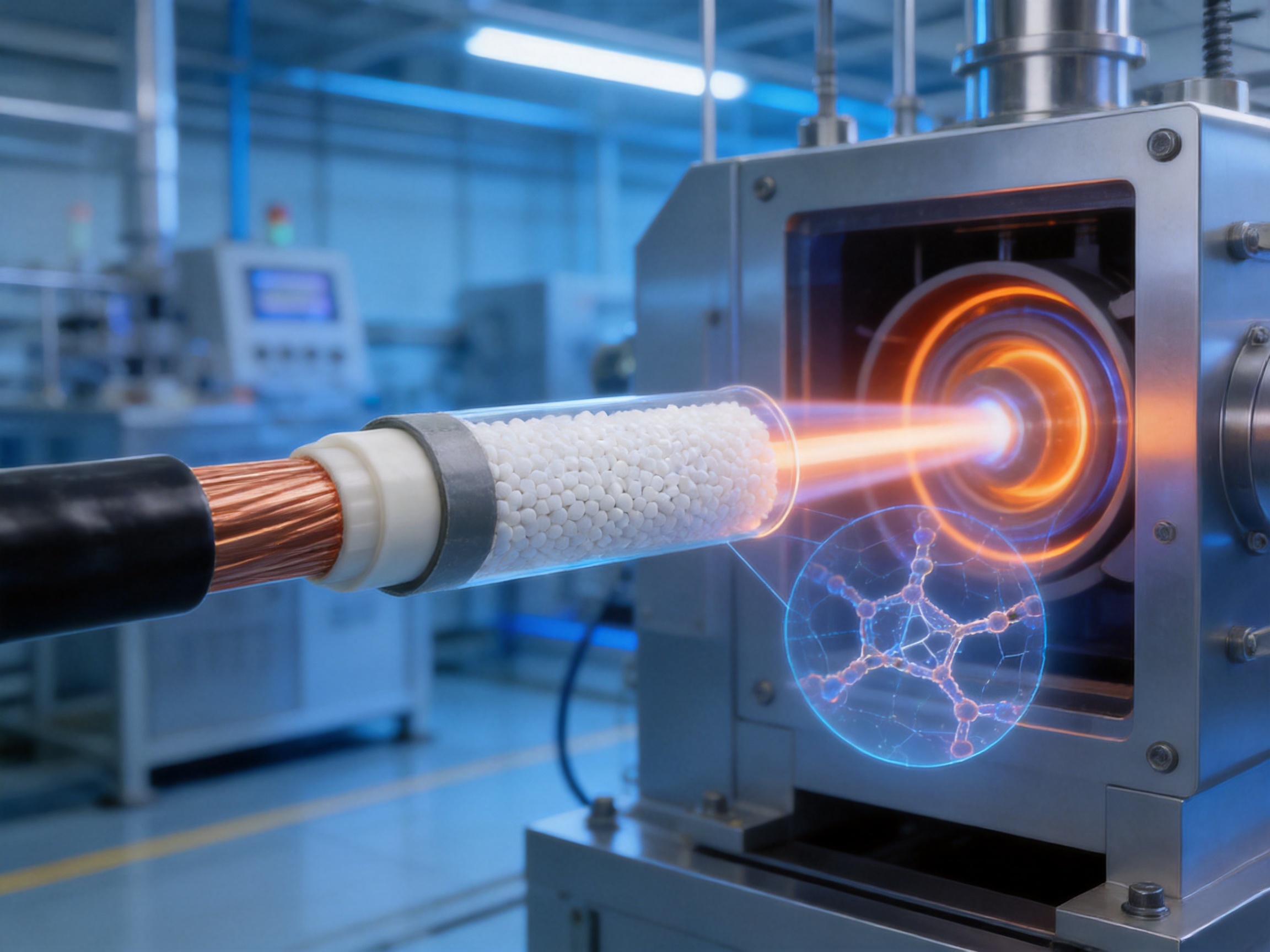
Electron-beam irradiation uses a high-energy electron accelerator to deliver controlled radiation to the extruded cable insulation. The energy initiates molecular reactions within the polymer matrix. Polymer chains form connections with one another, producing a three-dimensional cross-linked structure.
This network changes the behavior of the insulation at elevated temperature. In an uncross-linked thermoplastic material, heat can cause polymer chains to move more freely, resulting in softening, deformation, or flow. In a cross-linked material, the network restricts chain movement. The insulation therefore retains its shape more effectively and shows improved resistance to hot deformation.
The cross-linking process is performed after extrusion. This allows cable manufacturers to process the compound using familiar extrusion equipment and then apply irradiation as a separate, controllable finishing stage. The approach avoids the need for a continuous chemical curing tube or certain high-temperature vulcanization processes associated with other cross-linked cable materials.
3.2 Process Control and Consistency
Electron irradiation can be controlled through parameters such as beam energy, dose, line speed, product geometry, and cable handling. Proper control is essential because under-irradiation may result in insufficient cross-linking, while excessive irradiation can affect flexibility, elongation, or other properties.
A professional cable-compound manufacturer must therefore coordinate formulation design with irradiation-process requirements. The compound has to respond predictably to the selected dose range and produce stable results across different insulation thicknesses and cable constructions. Consistent material dispersion, pellet quality, extrusion behavior, and radiation response all contribute to finished-cable performance.
3.3 Advantages Over Conventional Thermoplastic Insulation
Compared with conventional non-cross-linked thermoplastic insulation, irradiation cross-linked LSZH insulation generally offers better resistance to heat-induced deformation and improved shape retention. The hot-extension results in the supplied data illustrate this advantage. Under the test condition of 200°C, 0.2 MPa, and 15 minutes, the elongation under load is 55% for DS-WDZF-105 (DW) and 45% for DS-WDZF-125 (DW), both well below the stated maximum of 100%.
After cooling, permanent deformation is reported as 0% for both grades against a maximum requirement of 25%. This result indicates that the insulation returns effectively to its original dimensions after the specified thermal stress. Such dimensional stability is valuable for maintaining insulation thickness, electrical clearances, and protection around the conductor.
3.4 Advantages Compared with Certain Chemical Cross-Linking Routes
Compared with some chemical cross-linking systems, electron-beam cross-linking can offer a cleaner and more flexible production route because the cross-linking reaction is initiated by irradiation after extrusion. It can reduce dependence on chemical curing agents and may support shorter or more adaptable production arrangements, depending on the cable manufacturer’s equipment and workflow.
The process also supports rapid treatment after extrusion. When irradiation parameters are properly controlled, cable manufacturers can achieve cross-linking without exposing the insulation to prolonged thermal curing. This can be advantageous for production planning, product changeovers, and manufacturing lines designed for irradiation processing.
These advantages do not eliminate the need for process expertise. Irradiation dose mapping, cable handling, insulation thickness, conductor size, line speed, and post-irradiation testing must all be managed carefully. The benefit is realized when the compound supplier and cable manufacturer work together to establish a reliable process window.
4. Key Technical Performance
The product’s technical data demonstrate a balanced combination of electrical, mechanical, thermal, fire-safety, and environmental performance. The following values are typical data for the two listed grades after cross-linking.
| No. | Test Item | Unit | Requirement or Standard | DS-WDZF-105 (DW) | DS-WDZF-125 (DW) |
|---|---|---|---|---|---|
| 1 | Specific Gravity | g/cm³ | Reference | 1.48 | 1.47 |
| 2 | Tensile Strength | MPa | ≥10.0 | 13.5 | 13.8 |
| 3 | Elongation at Break | % | ≥150 | 165 | 170 |
| 4 | Oxygen Index | % | ≥28 | 32 | 32 |
| 5 | Hot Extension at 200°C | % | ≤100 | 55 | 45 |
| 6 | Permanent Deformation after Cooling | % | ≤25 | 0 | 0 |
| 7 | Smoke Density with Flame | — | ≤100 | 55 | 50 |
| 8 | Smoke Density without Flame | — | ≤350 | 325 | 320 |
| 9 | Volume Resistivity at 20°C | Ω·cm | 1.0 × 10¹⁴ | 4.5 × 10¹⁴ | 5.0 × 10¹⁴ |
| 10 | Dielectric Strength | MV/m | ≥20 | 30 | 30 |
| 11 | Impact Brittleness Temperature | °C | -25 | Pass | Pass |
| 12 | pH Value | — | ≥4.3 | 5 | 5 |
| 13 | HCl and HBr Content | % | ≤0.5 | <0.5 | <0.5 |
| 14 | Electrical Conductivity | μS/mm | ≤10 | 0.52 | 0.52 |
The stated values are typical performance data and should be evaluated together with the actual cable design, conductor size, insulation thickness, irradiation dose, processing conditions, and applicable project specifications. Final certification should be based on finished-cable testing under the relevant standards.
5. Mechanical Strength and Flexibility
Mechanical performance is essential because cable insulation is exposed to tension, bending, abrasion, handling, thermal expansion, and installation stress. A flame-retardant compound that lacks sufficient mechanical strength may crack, tear, or lose dimensional stability during cable production or installation.
DS-WDZF-105 (DW) provides a typical tensile strength of 13.5 MPa and elongation at break of 165%. DS-WDZF-125 (DW) provides a typical tensile strength of 13.8 MPa and elongation at break of 170%. Both grades exceed the stated minimum tensile-strength requirement of 10.0 MPa and elongation requirement of 150%.
The combination of strength and elongation is significant. High tensile strength supports resistance to damage, while adequate elongation allows the insulation to absorb movement and installation stress without premature fracture. This balance is especially useful for cables that must be routed through confined spaces, bent around switchgear, or handled during field installation.
The impact brittleness test also shows that both grades pass the stated test temperature of -25°C. This indicates suitability for applications where cables may encounter low-temperature handling or service conditions within the applicable design range. As with all polymer materials, the actual minimum operating and installation temperature should be confirmed for the complete cable construction.
6. Thermal Performance and Grade Selection
Thermal performance is one of the main reasons to choose a cross-linked insulation material. The DS-WDZF-105 (DW) and DS-WDZF-125 (DW) grades provide options for different thermal requirements and cable-system designs.
The supplied air thermal-aging data show a tensile-strength change rate of +10% after aging at 135°C for 168 hours for the lower-temperature grade, and +12% after aging at 158°C for 168 hours for the higher-temperature grade. The elongation change rates are -8% and -15% respectively. These changes remain within the stated allowable range of ±25%.
These results demonstrate that the material retains a substantial proportion of its mechanical performance after elevated-temperature aging. Retention of tensile strength and elongation is important because insulation degradation can reduce resistance to cracking and mechanical damage over time.
The grade-selection decision should consider the cable’s conductor operating temperature, emergency temperature, installation environment, expected service life, and applicable national or international cable standard. The higher-temperature grade may be appropriate where the cable design requires greater thermal endurance, while the lower-temperature grade may be selected for applications aligned with its specified performance category.
Thermal performance should not be considered in isolation. Conductor size, current load, ambient temperature, cable grouping, installation method, ventilation, and sheath design all influence actual cable temperature. The compound provides a material capability, but the cable designer must confirm system-level thermal suitability.
7. Electrical Insulation Performance
Reliable electrical insulation prevents leakage current, dielectric breakdown, phase-to-phase faults, and loss of system efficiency. For power-grid cables, insulation performance must remain stable during normal operation, temperature variation, mechanical handling, and long-term service.
The volume resistivity at 20°C is typically 4.5 × 10¹⁴ Ω·cm for DS-WDZF-105 (DW) and 5.0 × 10¹⁴ Ω·cm for DS-WDZF-125 (DW), compared with the stated requirement of 1.0 × 10¹⁴ Ω·cm. High volume resistivity indicates strong resistance to current flow through the insulation material.
The dielectric strength is 30 MV/m for both grades, exceeding the stated minimum of 20 MV/m. This provides a strong electrical barrier between the conductor and surrounding components when the insulation is correctly extruded and free from defects.
Electrical performance depends not only on the compound formulation but also on processing conditions. Moisture, contamination, air entrapment, poor dispersion, surface damage, insufficient insulation thickness, and improper irradiation can affect finished-cable performance. For this reason, quality control should include raw-material inspection, extrusion monitoring, dimensional measurement, irradiation verification, and electrical testing.
8. Flame Retardancy and Smoke Control
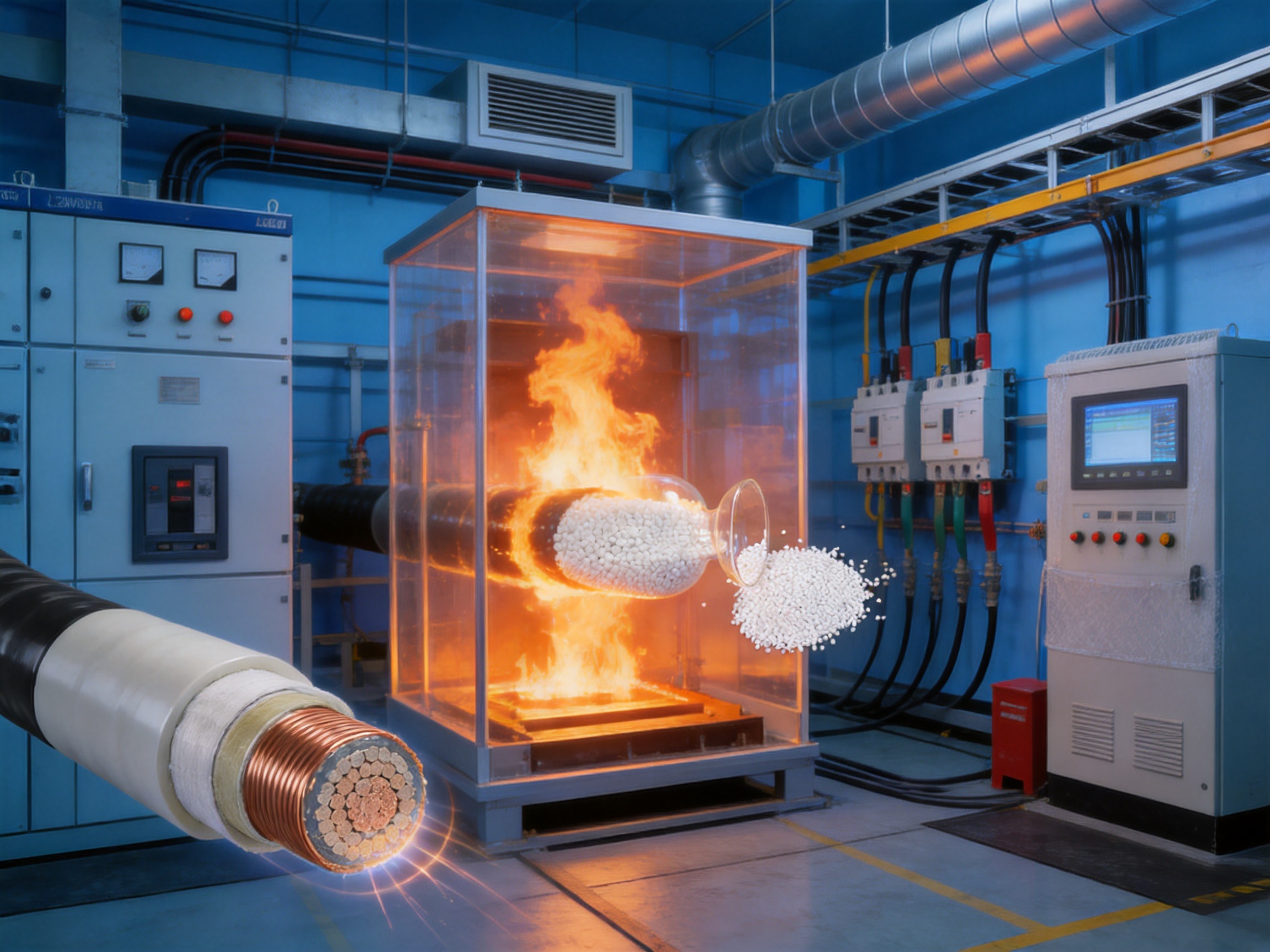
Flame-retardant cable insulation is designed to reduce the likelihood that a cable will support or spread fire. The oxygen index of both grades is 32%, above the stated minimum of 28%. A higher oxygen index generally indicates that the material requires a higher oxygen concentration to sustain combustion under the applicable test method.
Smoke density is another important consideration. The product records a typical smoke density of 50 to 55 with flame and 320 to 325 without flame, compared with limits of 100 and 350. These results indicate controlled smoke generation under both test conditions.
Low smoke performance benefits evacuation, firefighting, equipment protection, and post-fire recovery. In switchgear rooms and electrical control areas, dense smoke can obscure labels, indicators, emergency exits, and operating equipment. Reduced smoke can help limit these hazards, although overall fire safety also depends on cable arrangement, circuit protection, building design, ventilation, and installation practices.
The material also has an HCl and HBr content below 0.5%, a pH value of 5, and electrical conductivity of 0.52 μS/mm. These results support the low-corrosivity objective of LSZH cable design. The low acid-gas and conductivity characteristics can help reduce secondary damage to metal structures and electronic equipment during fire exposure.
The product is designed to support finished-cable compliance with GB/T 19666-2019, IEC 60332, and UL 1581 FT-2 requirements as applicable to the completed cable. Standards apply to specific test constructions and conditions, so cable manufacturers must confirm the relevant test configuration and certification route for each project.
9. Environmental and Regulatory Considerations
Environmental compliance is increasingly important in the selection of cable compounds. The product is described as complying with RoHS and REACH environmental requirements. These frameworks address restricted substances, chemical management, and supply-chain transparency.
Compliance with environmental requirements helps cable manufacturers serve international markets and meet procurement conditions for infrastructure projects, industrial facilities, transportation systems, and building installations. It also supports responsible material selection by reducing reliance on restricted substances and promoting clearer documentation of chemical composition.
Environmental compliance should be supported by current declarations, test reports, supplier documentation, and appropriate quality-management procedures. Buyers may request material declarations, restricted-substance reports, safety information, and batch traceability documents before approving the compound for a project.
LSZH performance also contributes to environmental and asset-protection objectives during fire events. Lower halogen-acid gas generation can reduce corrosive contamination, potentially limiting damage to nearby equipment and reducing the complexity of post-fire cleanup. This benefit is particularly relevant in data rooms, substations, control cabinets, transport facilities, and other environments containing valuable electrical or electronic assets.
10. Manufacturing Strengths and Technical Capabilities
The manufacturer has developed its business around polymer cable compounds, including irradiation cross-linked, silane cross-linkable, UV-cross-linked, and thermoplastic low-smoke, halogen-free flame-retardant materials. This product breadth indicates experience across multiple cross-linking technologies, cable structures, and application requirements.
The company operates a research and development center covering more than 3,000 square meters. The facility is equipped with research equipment valued at more than RMB 35 million and supported by a professional research team of more than 30 members, including five doctors and several recipients of provincial and municipal talent awards.
This technical structure supports formulation development, material characterization, process optimization, failure analysis, and customer-specific product adjustment. For a specialized cable compound, research capacity is important because performance depends on the interaction of polymer selection, flame-retardant additives, compatibilizers, processing aids, fillers, cross-linking response, and cable geometry.
The company also operates two production bases covering more than 15,000 square meters, with more than 10 production lines for polyolefin cable compounds. Multiple production lines can support product segmentation, capacity planning, batch stability, and supply continuity. For cable manufacturers, stable availability is often as important as laboratory performance because cable projects may require repeated deliveries over long production schedules.
10.1 Formulation Development
Formulation development for LSZH insulation requires careful control of flame-retardant loading. High additive levels can improve flame resistance but may reduce mechanical strength, elongation, electrical properties, processability, or surface quality. A balanced formulation must meet flame and smoke targets without compromising insulation integrity.
The manufacturer’s focus on polymer cable compounds provides a foundation for managing these trade-offs. Material development can be directed toward application conditions such as power cables, communication cables, locomotives, photovoltaic systems, new-energy generation, rail transit, marine cables, and other specialized cable markets.
10.2 Quality and Batch Stability
Batch-to-batch consistency is essential in cable-compound production. Variations in moisture, additive dispersion, melt flow, density, or radiation response can affect extrusion stability and finished-cable performance. A reliable production system should monitor incoming raw materials, compounding conditions, pelletizing, packaging, storage, and shipment.
Consistent pellets support stable feeding and melting during extrusion. Uniform dispersion helps reduce weak points, surface defects, and electrical irregularities. Controlled moisture is important because excessive moisture can contribute to voids, surface roughness, or insulation defects during processing.
10.3 Technical Support and Customization
Different cable manufacturers use different extruders, screw designs, line speeds, conductor constructions, cooling systems, and irradiation equipment. A compound that performs well on one production line may require adjustment on another. Technical support is therefore a major part of product value.
The manufacturer provides application-oriented solutions, research and testing support, technical documentation, stable supply capacity, and customized material solutions for customers worldwide. Customization may involve adjusting processing behavior, color, flexibility, thermal class, flame-retardant balance, irradiation response, or compatibility with a specific cable design.
11. Competitive Advantages of the Product
The product competes in a demanding market that includes thermoplastic LSZH compounds, chemically cross-linked polyolefins, silicone-based materials, conventional PVC compounds, and other specialized insulation systems. Its competitive position is based on the combined performance of the material and the irradiation process rather than on a single property.
11.1 Cross-Linked Heat Resistance
Compared with standard thermoplastic LSZH insulation, the product offers the advantage of a cross-linked molecular structure after electron irradiation. The reported hot-extension and permanent-deformation results show strong resistance to thermal deformation. This can help maintain insulation geometry during high-temperature service and abnormal thermal events.
11.2 Balanced Mechanical Performance
The product provides both tensile strength and elongation. The typical values exceed the stated minimum requirements with a practical margin, allowing the finished insulation to withstand handling, bending, and installation stress. This balance can be more useful than selecting a material optimized only for hardness or flame resistance.
11.3 Low Smoke and Low Halogen-Acid Gas Emission
Compared with many conventional halogenated materials, LSZH insulation is designed to reduce smoke and acidic gas risks during fire. The product’s reported smoke-density values, HCl and HBr content, pH value, and electrical conductivity demonstrate a comprehensive approach to fire safety rather than reliance on flame retardancy alone.
11.4 High Electrical Reliability
The volume resistivity and dielectric-strength values support use in power-grid insulation applications. Electrical properties remain a central requirement, and the material’s high resistivity and dielectric strength complement its mechanical and flame-retardant performance.
11.5 Efficient Irradiation-Based Production
Electron-beam cross-linking can provide a flexible alternative to certain chemical or thermal cross-linking routes. It enables post-extrusion treatment and allows the cross-linking step to be controlled through irradiation parameters. For manufacturers with accelerator access, this can support efficient production and adaptable cable designs.
11.6 Broad Application and Development Platform
The manufacturer’s experience with multiple polyolefin compound categories creates opportunities for product matching across different industries. Customers can work with one technical partner for power, communications, rail, photovoltaic, marine, and new-energy applications, while still receiving material recommendations specific to each cable design.
12. Applications in Power Transmission and Distribution
Power transmission and distribution cables must operate reliably under electrical load, temperature variation, mechanical stress, and environmental exposure. The irradiation cross-linked LSZH compound is suitable for insulation systems where flame retardancy and low smoke performance are important in addition to electrical reliability.
In substations and urban distribution networks, cables may be installed in ducts, trenches, tunnels, switchgear rooms, and enclosed equipment areas. The low-smoke and low-halogen characteristics can help address fire-safety requirements in these locations.
The material can also be considered for indoor switchgear cables. Switchgear environments often contain compact cable routing, high electrical energy, metal enclosures, control systems, and limited ventilation. Stable insulation dimensions, high dielectric strength, and controlled fire behavior are important for maintaining system integrity.
For urban power-grid projects, the material’s LSZH properties can support infrastructure goals related to public safety, equipment protection, and environmental compliance. Designers should evaluate cable size, voltage rating, current capacity, installation conditions, bending radius, conductor type, shielding, and finished-cable certification before final selection.
13. Processing and Quality-Control Considerations
13.1 Storage
Pellets should be stored in clean, dry, sealed packaging away from direct sunlight, excessive heat, water, and contamination. Good storage practice helps preserve material consistency before extrusion. The recommended storage period and packaging condition should be confirmed with the supplier’s technical documentation.
13.2 Extrusion
Extrusion temperature, screw speed, back pressure, cooling conditions, drawdown ratio, and line speed should be established through trials. The goal is to produce smooth, concentric insulation with stable dimensions and minimal surface defects.
Conductor cleanliness and preheating can also affect adhesion and insulation quality. If the cable construction includes screens, fillers, tapes, or other layers, compatibility should be assessed. Proper die design and centering are necessary to maintain uniform insulation thickness.
13.3 Irradiation
The irradiation dose must be matched to the compound, insulation thickness, cable geometry, and desired cross-linking level. Dose mapping and process validation are recommended for new cable constructions. Testing should confirm hot extension, permanent deformation, tensile properties, elongation, electrical performance, and other project requirements after irradiation.
13.4 Finished-Cable Inspection
Finished-cable quality control may include dimensional inspection, spark testing, insulation resistance, high-voltage testing, tensile and elongation testing, thermal aging, hot extension, flame tests, smoke-density testing, and chemical-emission testing. The exact program should follow the applicable cable standard, customer specification, and certification requirements.
14. Recommended Selection Checklist
When evaluating this compound for a power-grid cable project, buyers and cable manufacturers should consider the following factors:
- Required voltage class and insulation thickness.
- Conductor material, conductor size, and operating temperature.
- Required thermal grade and emergency operating conditions.
- Applicable national, international, utility, or project standards.
- Required flame-retardant, smoke, and acid-gas performance.
- Available extrusion equipment and accelerator irradiation capacity.
- Target irradiation dose and cable-construction compatibility.
- Required flexibility, bending radius, and installation conditions.
- Environmental and restricted-substance documentation.
- Production volume, delivery schedule, and batch-traceability requirements.
- Need for color, processing, or performance customization.
A technical discussion with the compound supplier before mass production can reduce trial time and improve the probability of first-pass success. Laboratory data provide a starting point, but the final decision should be based on finished-cable validation.
15. Frequently Asked Questions
Q1. What is the main purpose of this material?
The material is designed as a low-smoke, zero-halogen, flame-retardant insulation compound for power-grid cables. It is intended for applications such as power transmission and distribution, urban power grids, and indoor switchgear cables.
Q2. How is the cable cross-linked?
The compound is extruded around the conductor and then cross-linked through electron accelerator irradiation. The irradiation creates a three-dimensional polymer network that improves thermal stability, shape retention, and resistance to hot deformation.
Q3. What grades are available?
The supplied product information identifies two grades: DS-WDZF-105 (DW) and DS-WDZF-125 (DW). Their thermal-aging conditions differ, allowing selection according to the required cable thermal class and application conditions.
Q4. Is the material suitable for indoor electrical installations?
Yes. The product is described as suitable for indoor switchgear cables and other power-grid applications where low smoke, low halogen-acid gas emission, electrical insulation, and flame retardancy are important. The final cable must still be designed and tested for the specific installation.
Q5. What are the typical tensile properties?
DS-WDZF-105 (DW) has a typical tensile strength of 13.5 MPa and elongation at break of 165%. DS-WDZF-125 (DW) has a typical tensile strength of 13.8 MPa and elongation at break of 170%.
Q6. How does the material perform under hot-extension testing?
At 200°C, 0.2 MPa, and 15 minutes, the reported elongation under load is 55% for DS-WDZF-105 (DW) and 45% for DS-WDZF-125 (DW). Both results are below the stated maximum of 100%. Permanent deformation after cooling is reported as 0% for both grades.
Q7. Does the compound have low smoke performance?
Yes. The typical smoke density is 50 to 55 with flame and 320 to 325 without flame, compared with stated limits of 100 and 350. These results support its intended LSZH cable applications.
Q8. Does the material contain halogens?
The product is designed as an LSZH compound. Its reported HCl and HBr content is below 0.5%, and its pH value is 5 under the stated test conditions. Current supplier documentation should be reviewed for project-specific declarations.
Q9. What electrical properties does it provide?
The typical volume resistivity at 20°C is 4.5 × 10¹⁴ Ω·cm for DS-WDZF-105 (DW) and 5.0 × 10¹⁴ Ω·cm for DS-WDZF-125 (DW). Dielectric strength is typically 30 MV/m for both grades.
Q10. Can the compound be customized?
Customization may be possible according to cable construction, processing equipment, thermal requirements, color, flexibility, flame-retardant balance, and irradiation conditions. The exact feasibility should be confirmed through technical consultation and sample testing.
Q11. Which standards are associated with the product?
The product information references GB/T 32129-2015 for the material and indicates that finished cables meet GB/T 19666-2019, IEC 60332, and UL 1581 FT-2 requirements. The applicable test scope should be verified for the specific cable design and certification program.
Q12. What information should be provided when requesting a quotation?
Useful information includes cable type, conductor size, insulation thickness, voltage rating, target thermal class, extrusion equipment, irradiation capability, annual or monthly demand, required standards, packaging requirements, delivery location, and any environmental documentation needs.
16. Conclusion
Accelerator-irradiation cross-linked LSZH insulation provides a strong combination of electrical insulation, mechanical durability, thermal stability, flame retardancy, low smoke generation, and low halogen-acid gas emission. The product’s typical performance values show substantial margins over the stated requirements in tensile strength, elongation, oxygen index, hot extension, volume resistivity, and dielectric strength.
Its principal advantage is the integration of a carefully designed LSZH polyolefin compound with electron-beam cross-linking. The resulting network improves resistance to thermal deformation and helps the finished cable maintain dimensional stability during demanding service conditions. At the same time, the material supports low-smoke and low-corrosivity objectives needed in indoor electrical installations, urban power systems, switchgear, and other safety-sensitive environments.
The manufacturer strengthens this product offering through dedicated research facilities, experienced technical personnel, multiple production bases, more than 10 polyolefin-compound production lines, and a broad product portfolio covering several cross-linking technologies and cable industries. Its capabilities in formulation development, testing support, stable supply, and customized material design are valuable for cable manufacturers seeking more than a standard commodity compound.
For the best results, the product should be selected together with a validated extrusion and irradiation process. Finished-cable testing remains essential, but the material provides a technically capable foundation for reliable, environmentally responsible, and fire-conscious power-grid cable design.
References
GB/T 32129-2015, Technical Requirements for Low Smoke, Halogen-Free, Flame-Retardant Cable Materials.
GB/T 19666-2019, General Rules for Flame Retardancy and Fire Resistance of Wires and Cables.
IEC 60332 Series, Tests on Electric and Optical Fibre Cables Under Fire Conditions.
UL 1581, Reference Standard for Electrical Wires, Cables, and Flexible Cords.
RoHS Directive, Restriction of Hazardous Substances in Electrical and Electronic Equipment.
REACH Regulation, Registration, Evaluation, Authorisation and Restriction of Chemicals.
Product Technical Data for DS-WDZF-105 (DW) and DS-WDZF-125 (DW), including post-cross-linking performance values supplied by the manufacturer.
General principles of electron-beam irradiation cross-linking for polyolefin cable insulation and sheathing materials.