English
 Français
 Español
 русский
 عربى
Green Ohm
Green Ohm
Green Ohm
Green Ohm
Green Ohm
Green Ohm
Green Ohm
Green Ohm
Green Ohm
Content
- 1 1. The Role of LSZH Insulation in Modern Construction
- 2 2. Product Concept: A Two-Part Silane-Crosslinkable System
- 3 3. Fire-Performance Orientation for B1 and B2 Applications
- 4 4. Electrical Insulation Performance
- 5 5. Mechanical Performance and Thermal Stability
- 6 6. Advantages Compared with Alternative Crosslinking Technologies
- 7 7. Manufacturing Strengths and Quality-Control Philosophy
- 8 8. Main Performance Data
- 9 9. Recommended Application Areas
- 10 10. Production Recommendations for Cable Manufacturers
- 11 11. Why Technical Support Matters
- 12 12. Sustainability and Resource Efficiency
- 13 13. Purchasing and Qualification Checklist
- 14 14. Frequently Asked Questions
- 14.1 What is this product?
- 14.2 How is the material supplied?
- 14.3 How does crosslinking occur?
- 14.4 Does the material require UV equipment?
- 14.5 How long does natural crosslinking take?
- 14.6 Can the curing process be accelerated?
- 14.7 What fire-performance requirements do the products address?
- 14.8 Are the products halogen-free?
- 14.9 What are the main electrical properties?
- 14.10 What are the main mechanical properties?
- 14.11 Is the material suitable for dark-colored cables?
- 14.12 Can the compound be used for every cable application?
- 14.13 What is the role of the manufacturer’s R&D capabilities?
- 14.14 What documents should customers request?
- 15 15. Conclusion
- 16 References
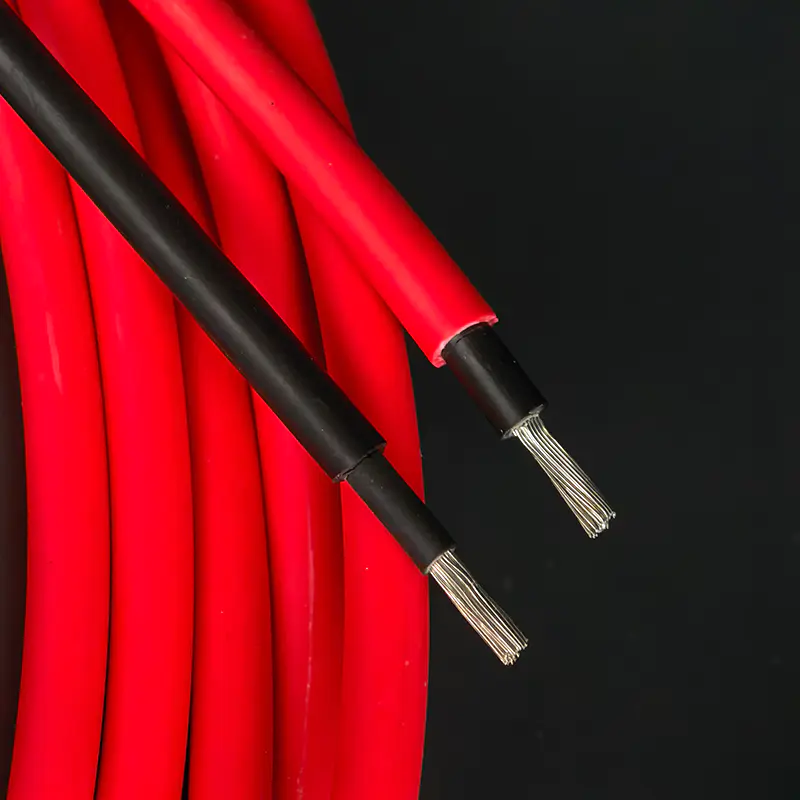
- 17 Product: Silane Cross-linked LSZH Flame Retardant Insulation for Construction Engineering (Class B1/B2)
Modern construction projects increasingly require cable systems that combine electrical reliability, mechanical durability, fire safety, low smoke generation, and minimal corrosive emissions. These requirements are especially important in high-occupancy buildings, transportation hubs, hospitals, public infrastructure, commercial complexes, data centers, and industrial facilities where cable performance during a fire can directly affect evacuation, firefighting, equipment protection, and property loss.
Silane-crosslinked low-smoke, halogen-free flame-retardant insulation compounds provide an effective response to these requirements. The material described in this article is developed for construction engineering cables requiring B1 or B2 combustion performance under the applicable national fire-safety framework. It is supplied as a two-part system consisting of Part A and Part B. After accurate mixing and extrusion, the insulation can crosslink naturally through ambient moisture, warm water, or steam.
This processing approach gives cable manufacturers a practical alternative to systems that depend on ultraviolet irradiation, electron-beam irradiation, or a separate chemical accelerator. Crosslinking can begin under normal environmental conditions and may be completed in approximately two to three days at an indoor temperature of 25°C with ambient humidity. The result is an insulation material that supports efficient production, stable electrical performance, strong mechanical properties, low smoke generation, and improved fire safety.
The compound is intended to help manufacturers produce cables that satisfy demanding construction-engineering requirements while controlling equipment investment, energy consumption, production complexity, and the risk of incomplete curing in dark-colored products.
1. The Role of LSZH Insulation in Modern Construction
Traditional halogen-containing cable materials can produce dense smoke and corrosive gases when exposed to fire. Smoke can obscure escape routes and complicate rescue operations, while acidic or corrosive combustion products may damage electrical equipment, metal structures, control systems, and communication hardware. In enclosed areas, these hazards can remain significant even when the flame itself is localized.
Low-smoke, halogen-free materials are designed to reduce these risks. Their formulations avoid the use of halogen-based polymers and flame-retardant systems that can generate substantial quantities of hydrogen chloride, hydrogen bromide, or other corrosive gases during combustion. Instead, LSZH compounds generally rely on carefully balanced polymer systems and mineral flame-retardant packages.
For construction cables, the insulation must do more than pass a flame test. It must retain adequate tensile strength and elongation, provide dependable dielectric performance, resist thermal deformation, and maintain dimensional stability during manufacturing and service. At the same time, the compound must be processable on conventional cable extrusion equipment and must not create excessive die pressure, surface defects, or unstable output.
The B1 and B2 product series are intended to address these combined requirements. They are formulated for cables in which fire performance, smoke control, low corrosiveness, and electrical insulation are equally important. The material is particularly suitable for engineering applications where national construction fire classifications influence cable selection.
2. Product Concept: A Two-Part Silane-Crosslinkable System
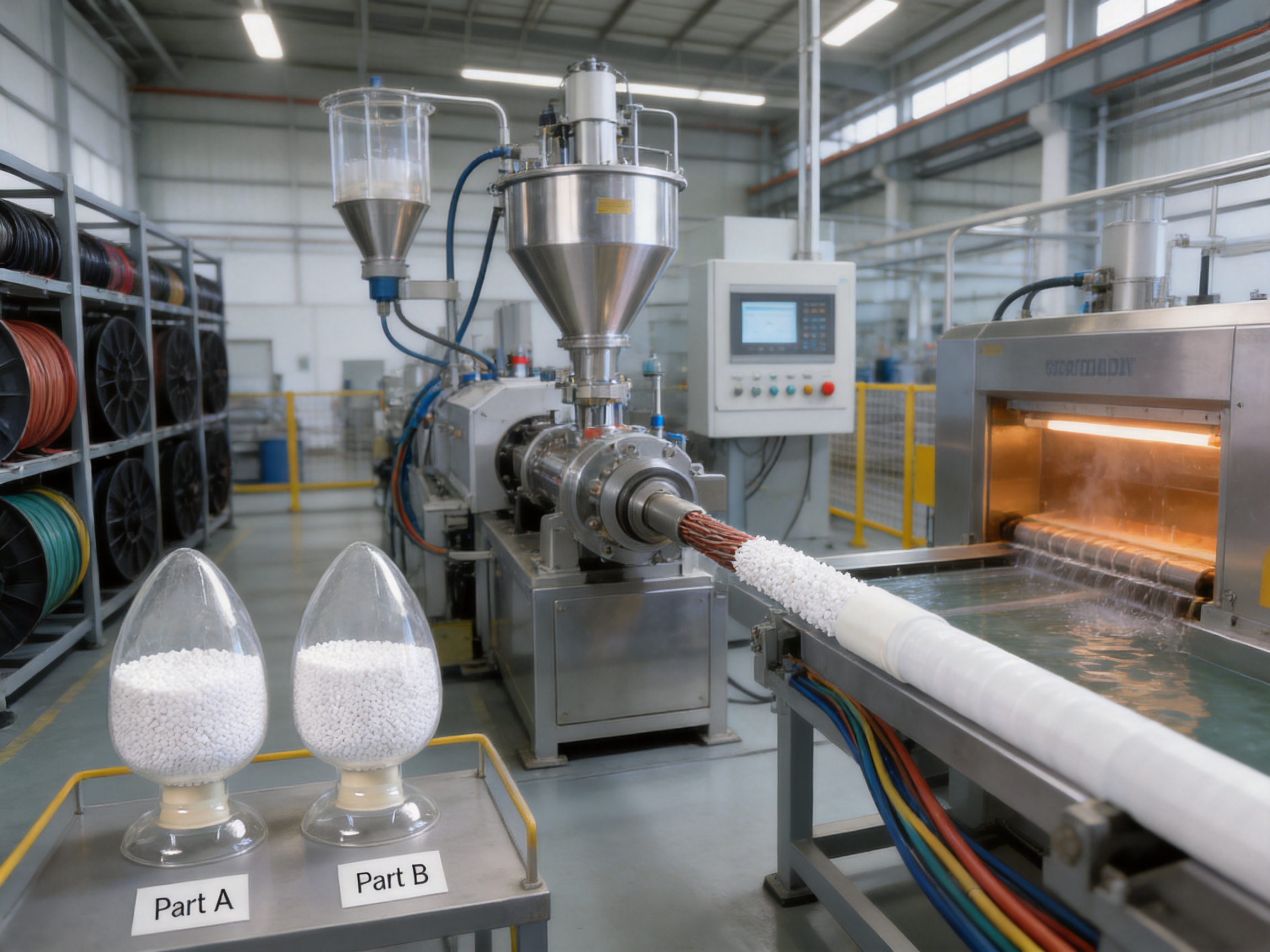
The material is divided into Part A and Part B. The two components are designed to be mixed in the required proportion before or during the extrusion process. Following extrusion, moisture initiates the silane crosslinking reaction. Depending on the production arrangement, the cable can be allowed to crosslink in ambient conditions or can be exposed to warm water or steam to accelerate the process.
This two-part architecture separates reactive components until processing and allows the compound to remain suitable for controlled manufacturing. Once the insulation has been extruded around the conductor, the silane groups can react in the presence of water. The resulting crosslinked structure improves resistance to heat, deformation, and mechanical stress compared with an uncrosslinked thermoplastic insulation system.
At an indoor temperature of approximately 25°C and under ordinary ambient humidity, complete crosslinking can generally be achieved in two to three days, subject to cable dimensions, formulation, humidity, extrusion conditions, and quality-control procedures. Where a shorter production cycle is required, warm water or steam can be used to accelerate moisture diffusion and reaction kinetics.
The process does not require ultraviolet equipment or accelerator irradiation. This is an important distinction for cable producers that manufacture a wide range of colors, wall thicknesses, conductor sizes, and cable constructions. The compound can be used in dark-colored cables without relying on UV energy to pass through the insulation layer.
2.1 Natural Moisture Crosslinking
Natural moisture crosslinking is one of the main practical benefits of the system. After extrusion, the cable can be stored in a controlled production area where atmospheric moisture gradually penetrates the insulation. The process is simple, energy-efficient, and suitable for manufacturers that prefer to avoid additional curing equipment.
Natural crosslinking also reduces the need to transfer freshly extruded cables to a dedicated irradiation line. This can simplify material handling and reduce the number of process stages between extrusion and final inspection. For manufacturers operating multiple extrusion lines, such flexibility can improve production scheduling and reduce bottlenecks.
2.2 Warm Water and Steam Crosslinking
When a faster curing cycle is required, warm water or steam can be used. These methods increase the availability of moisture and can shorten the time needed to achieve the target crosslinking level. The appropriate temperature, exposure time, and handling method should be established through process validation for each cable design.
Warm water and steam curing are familiar technologies in many cable factories. They can often be integrated into existing production arrangements more easily than new UV or irradiation systems. The choice between natural humidity, warm water, and steam can therefore be matched to product volume, cable size, factory layout, and delivery requirements.
3. Fire-Performance Orientation for B1 and B2 Applications
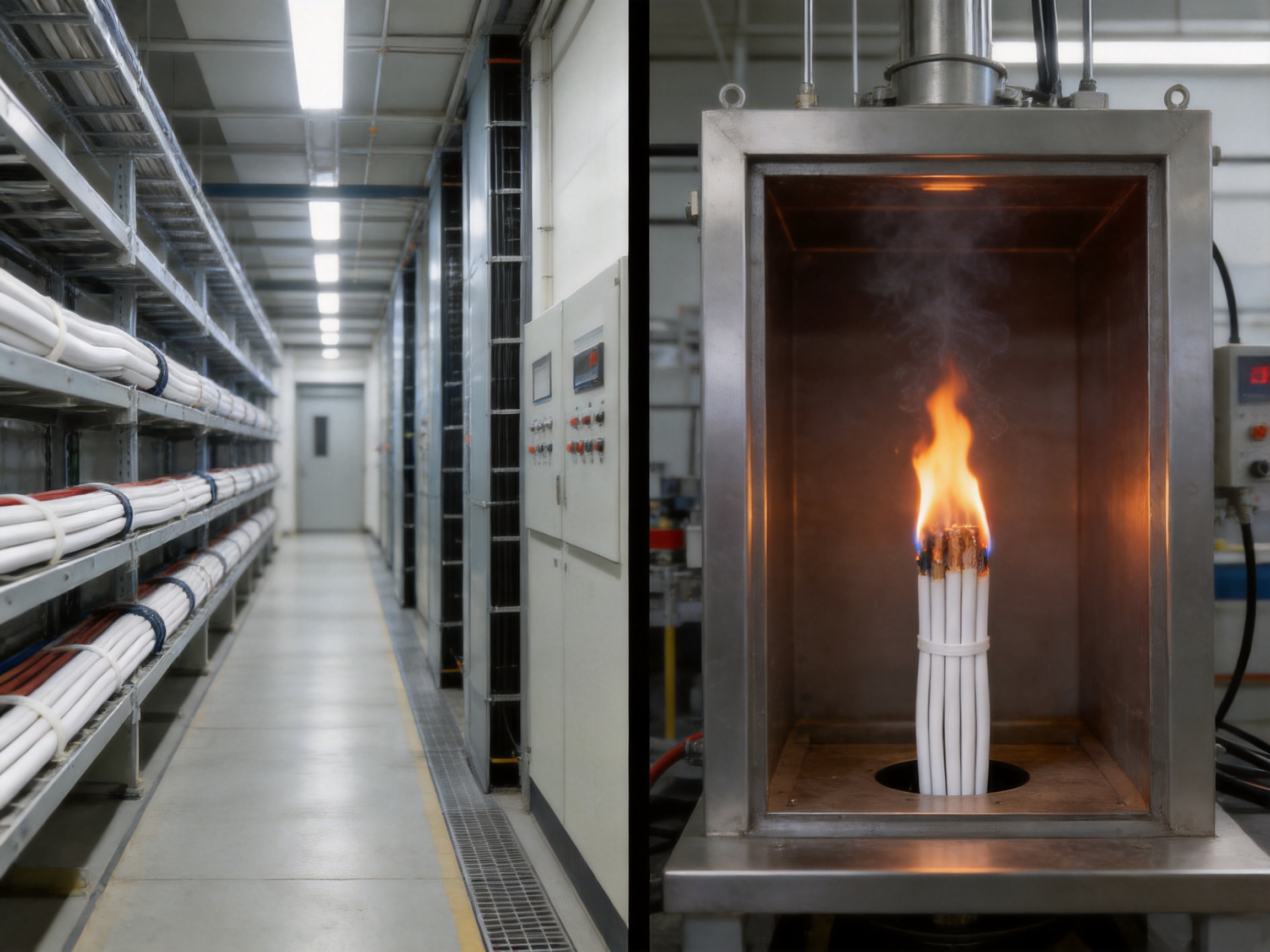
The B1 and B2 products are designed for construction-engineering applications governed by the fire-performance requirements of GB 31247-2014. The relevant assessment framework considers multiple fire characteristics rather than relying on a single flame-propagation result.
Important characteristics include flame propagation, heat release rate, total heat release, smoke density, burning droplets, combustion particulates, toxicity of combustion gases, and corrosiveness. This comprehensive approach reflects the real risks created by cable fires in buildings. A cable may stop flaming quickly but still produce large quantities of smoke, heat, corrosive gas, or burning particles. Therefore, a responsible material-selection process must consider the full group of fire behaviors.
The formulation is designed to support extremely low corrosiveness and low smoke generation. In the supplied performance information, smoke density values are reported below the listed limits under both flame and non-flame conditions. The reported hydrogen chloride and hydrogen bromide content is zero in the typical values presented for the tested grades.
These characteristics can help cable manufacturers serve projects that specify enhanced fire safety for vertical shafts, enclosed corridors, public buildings, underground areas, transportation facilities, and other locations where smoke movement and corrosive combustion products are serious concerns.
3.1 Flame Propagation and Heat Release
Flame propagation is a critical consideration because cables installed in bundles can provide a continuous path for fire travel. A compound with appropriate flame-retardant behavior can help limit the spread of combustion along the cable surface and through cable groups.
Heat release is equally important. High heat release can increase the severity of a fire, accelerate damage to nearby materials, and reduce the time available for evacuation. The B1 and B2 product positioning reflects the need to control both the spread of flame and the energy released during combustion.
Actual classification depends on the complete cable construction, including conductor size, insulation thickness, sheath design, cable grouping, installation method, and test configuration. The compound should therefore be evaluated as part of the finished cable rather than considered a substitute for complete cable-level certification.
3.2 Smoke and Combustion Products
Smoke density is especially important in large buildings and enclosed infrastructure. Dense smoke can make signs and exit routes difficult to see, interfere with breathing, and complicate the work of emergency personnel. The supplied typical data show flame smoke density values of 65, 62, and 45 for the listed material grades, compared with a stated limit of 100. Non-flame smoke density values are reported as 320, 326, and 260, compared with a stated limit of 350.
The reported hydrogen chloride and hydrogen bromide content is 0% for the listed grades, against a stated maximum of 0.5%. The material also shows a pH value of approximately 5.0 to 5.1 and conductivity of approximately 0.52 to 0.53 μS/mm in the provided typical data. These results indicate a strong emphasis on low corrosiveness and reduced acidity in combustion-related testing.
Low smoke and low corrosiveness can help protect both people and equipment. In data centers, control rooms, railway facilities, and communications infrastructure, preventing acidic combustion products from reaching sensitive hardware can be an important part of system resilience.
Silane Cross-linked LSZH Flame Retardant Insulation for Construction Engineering (Class B1/B2)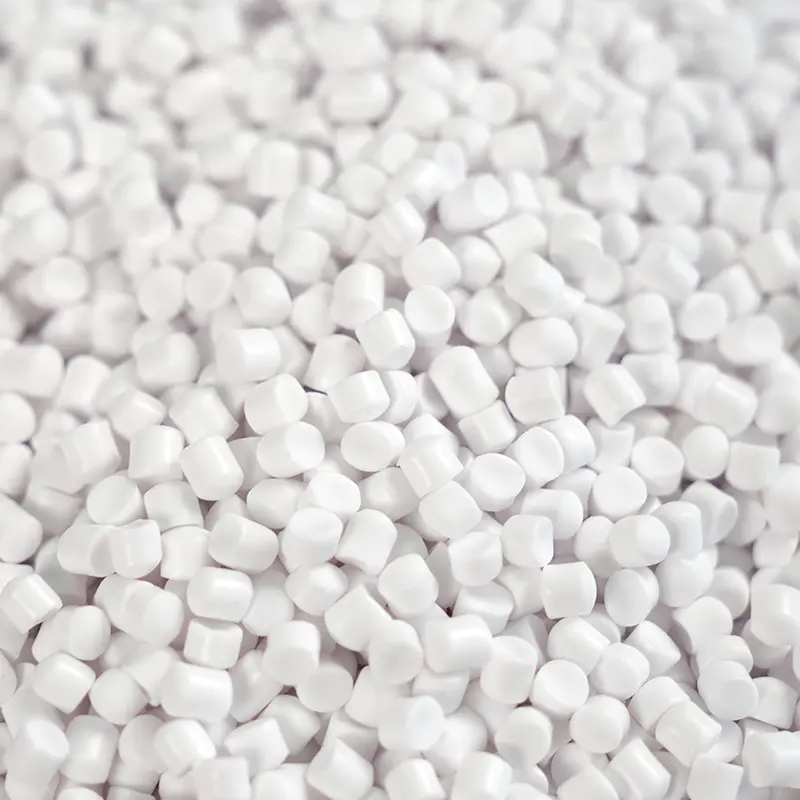
4. Electrical Insulation Performance
Fire performance must not compromise the primary function of cable insulation: maintaining electrical separation and stable signal or power transmission. The material data demonstrate a strong electrical property profile suitable for insulation applications.
The listed volume resistivity at 20°C ranges from 2.0 × 10¹⁴ to 4.2 × 10¹⁴ Ω·cm, compared with a stated standard value of 1.0 × 10¹⁴ Ω·cm. High volume resistivity indicates effective resistance to leakage current through the insulation under the specified test conditions.
Dielectric strength is reported at 28 MV/m for all three listed grades, exceeding the stated minimum of 20 MV/m. This provides a useful electrical safety margin in the material data and supports the use of the compound in cables where reliable insulation withstand is essential.
Electrical performance can be influenced by moisture, filler dispersion, extrusion quality, voids, contamination, conductor surface condition, and crosslinking level. For that reason, manufacturers should control drying, mixing, extrusion temperature, line speed, cooling, and curing conditions. The compound’s high reported resistivity and dielectric strength are valuable, but they must be supported by disciplined manufacturing practices.
4.1 Moisture Management and Electrical Stability
Because silane crosslinking depends on moisture, production teams must manage moisture in a controlled way. Moisture must be available after extrusion to promote crosslinking, but uncontrolled moisture before processing can affect storage stability, melt behavior, surface quality, and electrical performance.
Part A and Part B should be stored according to the supplier’s technical instructions. Packaging should remain sealed until use, and production areas should limit unnecessary exposure to high humidity. Mixing equipment should be clean and free from incompatible residues. These measures help preserve consistent batch performance.
After extrusion, curing should proceed under conditions that allow moisture to reach the insulation evenly. Large cable diameters and thick insulation walls may require longer curing times than small cables. Finished-cable testing should confirm that the selected curing schedule produces the required electrical and mechanical results throughout the insulation cross-section.
5. Mechanical Performance and Thermal Stability
Construction cables may be exposed to pulling forces, bending, vibration, installation tension, thermal cycling, and localized mechanical stress. The insulation must therefore maintain both tensile strength and elongation after processing and crosslinking.
The supplied typical data list tensile strengths of 13.0 MPa, 13.5 MPa, and 11.5 MPa for the three material grades. The stated minimum is 10.0 MPa. Elongation at break is listed at 185%, 180%, and 170%, compared with a stated minimum of 150%.
These values indicate that the material combines strength with substantial flexibility. High elongation is useful during cable installation because it allows the insulation to tolerate bending and movement without cracking or premature rupture. Adequate tensile strength helps the insulation resist damage during take-up, transport, stripping, and handling.
The listed tensile-strength change rates are 34%, 32%, and 40%, against a stated requirement of at least 28%. The exact interpretation of this line should be confirmed against the applicable test method and technical datasheet format, but the reported results indicate that the grades are designed to retain mechanical performance under the relevant aging or conditioning procedure.
5.1 Elongation Under Load
Elongation under load is a useful indicator of how an insulation material behaves under sustained heat and mechanical stress. The provided data show test temperatures of 135°C for two grades and 158°C for one grade, with reported tensile-strength change values of approximately +12%, +18%, and +15% in the first listed condition. A second condition of 168 hours shows changes of -12%, -15%, and -20%.
These results suggest that the material can maintain a controlled mechanical response under elevated-temperature conditioning. In practical terms, this is important for cables installed in areas exposed to heat from equipment, sunlight, enclosed service shafts, or neighboring circuits.
5.2 Heat Elongation and Permanent Deformation
Heat elongation testing examines whether the insulation stretches excessively when subjected to a specified temperature and load. The listed elongation-under-load values are 45%, 40%, and 50%, compared with a maximum limit of 100%. Permanent deformation after cooling is reported as 0% for all three grades, compared with a maximum of 25%.
Low permanent deformation is an important advantage in cable manufacturing and service. Excessive deformation can reduce insulation thickness, alter electrical clearances, create surface irregularities, and weaken the cable’s long-term dimensional stability. The reported zero values indicate that the tested samples returned to their original dimensions under the stated test conditions.
6. Advantages Compared with Alternative Crosslinking Technologies
Silane crosslinking is not the only method available for producing high-performance cable insulation. Cable manufacturers may also consider thermoplastic LSZH materials, ultraviolet-crosslinked compounds, irradiation-crosslinked compounds, peroxide systems, or other moisture-curable technologies. The silane system offers several practical advantages in comparison with these alternatives.
6.1 Reduced Dependence on UV Equipment
UV-crosslinked compounds require sufficient radiation to reach the reactive material. This can create challenges for dark-colored cables, thick insulation, complex cable geometries, and production lines with limited radiation penetration. Incomplete curing may occur if the light cannot reach all areas evenly.
The silane system does not require UV exposure. Crosslinking is initiated by moisture, which can gradually penetrate the insulation after extrusion. This makes the approach more suitable for dark colors and thicker insulation designs where optical penetration would otherwise be a concern.
Eliminating UV equipment can also reduce capital expenditure, maintenance requirements, shielding requirements, lamp replacement, and line-layout limitations. Manufacturers can focus on controlling material mixing, extrusion, and curing conditions rather than managing a separate optical irradiation stage.
6.2 No Accelerator Irradiation Requirement
Some production routes require accelerator irradiation or additional energy input to achieve the desired crosslinking rate. Such systems may lengthen the production cycle or require dedicated equipment and specialized process controls.
The described material can crosslink naturally under ambient humidity or through warm water and steam. This means that no accelerator irradiation is necessary. The simplified route can be especially attractive for manufacturers seeking to reduce energy use and avoid adding another major process stage.
6.3 Lower Energy Consumption
Natural moisture crosslinking consumes no dedicated irradiation energy. The cable can cure in a controlled storage area while the manufacturing team proceeds with other production activities. If warm water or steam is selected, energy is still used, but the process can be integrated into a practical curing system with controlled throughput.
Reduced energy demand can support lower operating costs and help manufacturers pursue more efficient production. Energy savings may be particularly meaningful in high-volume plants where multiple curing lines would otherwise operate continuously.
6.4 Greater Color Flexibility
Color is an important cable-design requirement. Construction and infrastructure projects may require different conductor identification colors, sheath colors, warning colors, or custom product colors. UV-dependent curing can be affected by pigments and dark shades, whereas moisture curing is not dependent on optical transparency.
The silane approach therefore supports greater flexibility in dark-colored cable production. Manufacturers should still validate each pigment system because colorants can influence processing, moisture diffusion, electrical performance, and flame behavior. However, the basic crosslinking mechanism avoids the specific problem of insufficient UV penetration.
6.5 Simplified Factory Integration
The compound can be incorporated into a production system based on conventional mixing and extrusion equipment, followed by ambient, warm-water, or steam curing. This flexibility allows manufacturers to adapt the material to existing plant capabilities rather than redesigning the entire factory around a specialized irradiation line.
For companies operating several product families, the ability to use different curing routes can be valuable. Standard products may be cured naturally, urgent orders may use warm water or steam, and large or thick cables may receive a dedicated validated schedule. This creates a practical balance between throughput and equipment investment.
7. Manufacturing Strengths and Quality-Control Philosophy
A high-performance cable compound is only as reliable as the manufacturing system that produces it. The material is developed and manufactured by a company focused on polymer cable compounds, biodegradable materials, application-oriented development, and customized material solutions.
The company operates a research and development center exceeding 3,000 square meters. The center is equipped with more than RMB 35 million in research equipment and supported by a professional R&D team of more than 30 members, including five doctors and several recipients of provincial or municipal talent awards. These resources support formulation design, performance optimization, processing development, analytical testing, and customer-specific technical service.
The company also operates two production bases covering more than 15,000 square meters, with more than ten production lines for polyolefin cable compounds. Its portfolio includes UV-crosslinked compounds, silane cross-linkable materials, irradiation-crosslinked compounds, thermoplastic LSZH flame-retardant materials, polyethylene sheath compounds, and other specialized products.
This broad product coverage is strategically important. Experience with multiple crosslinking technologies and polymer platforms allows the technical team to compare processing behavior, mechanical properties, flame performance, and application requirements across different cable designs. Customers can receive a material recommendation based on the complete cable structure rather than a single isolated property.
7.1 Formulation Development
LSZH formulations must balance several properties that can conflict with one another. A high loading of mineral flame retardant may improve fire performance but increase viscosity, reduce elongation, increase density, and make extrusion more difficult. A softer polymer system may improve flexibility but reduce heat resistance or tensile strength. Electrical performance can also be affected by filler dispersion and moisture sensitivity.
Successful formulation development therefore requires control over polymer selection, silane functionality, catalyst balance, flame-retardant package, compatibilization, processing aid selection, pigment compatibility, and stabilization. The reported combination of high electrical resistivity, tensile strength, elongation, low smoke, low corrosiveness, and controlled heat deformation indicates a formulation approach designed to balance these requirements.
7.2 Compounding and Dispersion
Uniform dispersion is essential for LSZH materials because flame-retardant fillers are often used at high concentrations. Poor dispersion can create weak points, surface roughness, inconsistent electrical properties, and local differences in flame performance.
A controlled compounding process should regulate feeding accuracy, melt temperature, residence time, shear history, vacuum venting, filtration, pelletizing, and packaging. Consistent dispersion also improves batch-to-batch stability and makes extrusion conditions easier to reproduce.
7.3 Extrusion Process Support
The compound is intended for cable extrusion, and its success depends on compatibility between the material and the customer’s equipment. Important factors include screw design, compression ratio, barrel temperature profile, die configuration, line speed, conductor preheating, cooling conditions, and take-up tension.
Technical support is especially valuable when customers transition from thermoplastic LSZH compounds or another crosslinking method. The extrusion window may need to be optimized to achieve a smooth surface, stable diameter, adequate adhesion where required, and uniform insulation thickness. Process documentation and application-oriented technical service can shorten the time required for qualification.
7.4 Testing and Traceability
Material quality should be supported by incoming raw-material inspection, in-process monitoring, finished-pellet testing, and customer application validation. Typical control items may include density, tensile strength, elongation, melt behavior, moisture content, electrical resistivity, dielectric strength, smoke performance, halogen content, pH, conductivity, and thermal deformation.
Traceability is also important. Each batch should be identifiable through raw-material records, production parameters, laboratory results, packaging information, and shipment documentation. A reliable traceability system makes it easier to investigate deviations, maintain consistent supply, and support customer audits.
8. Main Performance Data
The following table summarizes the principal typical values provided for the three listed grades: DS-GW-105, DS-GW-125, and DS-GW-105-B1. Values are representative rather than universal guarantees and should be confirmed in the current technical datasheet and applicable test report.
| No. | Test Item | Unit | Stated Standard or Requirement | DS-GW-105 | DS-GW-125 | DS-GW-105-B1 |
|---|---|---|---|---|---|---|
| 1 | Specific Gravity | g/cm³ | Not specified | 1.49 | 1.48 | 1.59 |
| 2 | Tensile Strength | MPa | ≥10.0 | 13.0 | 13.5 | 11.5 |
| 3 | Elongation at Break | % | ≥150 | 185 | 180 | 170 |
| 4 | Tensile Strength Change Rate | % | ≥28 | 34 | 32 | 40 |
| 5 | Heat Elongation | % | ≤100 | 45 | 40 | 50 |
| 6 | Permanent Deformation After Cooling | % | ≤25 | 0 | 0 | 0 |
| 7 | Smoke Density, Flame | — | ≤100 | 65 | 62 | 45 |
| 8 | Smoke Density, Non-Flame | — | ≤350 | 320 | 326 | 260 |
| 9 | Volume Resistivity at 20°C | Ω·cm | 1.0 × 10¹⁴ | 2.8 × 10¹⁴ | 4.2 × 10¹⁴ | 2.0 × 10¹⁴ |
| 10 | Dielectric Strength | MV/m | ≥20 | 28 | 28 | 28 |
| 11 | Impact Catalytic Temperature | °C | -25 | Pass | Pass | Pass |
| 12 | pH Value | — | ≥4.3 | 5.0 | 5.0 | 5.1 |
| 13 | Conductivity | μS/mm | ≤10 | 0.52 | 0.52 | 0.53 |
| 14 | Hydrogen Chloride and Hydrogen Bromide Content | % | ≤0.5 | 0 | 0 | 0 |
The table shows that the listed grades provide a balanced combination of mechanical, electrical, thermal, smoke, and low-corrosiveness properties. The DS-GW-105-B1 grade has the highest listed density and the lowest reported smoke values among the three grades, while the DS-GW-125 grade shows the highest listed tensile strength and volume resistivity. Selection should be based on the final cable design, fire classification, processing conditions, and customer specifications.
9. Recommended Application Areas
The material is intended for construction-engineering cables that require LSZH performance and B1 or B2 fire classification. Potential application areas include building power cables, control cables, communication cables, instrumentation cables, fire-safety systems, public infrastructure, and other cable assemblies installed in occupied or enclosed environments.
It may be considered for high-rise buildings, hospitals, schools, airports, railway stations, shopping centers, office complexes, hotels, data centers, underground facilities, tunnels, and industrial buildings. These locations often place special emphasis on smoke reduction, low corrosiveness, flame control, and electrical continuity.
The compound can also support customers serving power, communications, locomotives, photovoltaics, new-energy generation, rail transit, marine cables, and related industries. Each sector may impose additional requirements, such as oil resistance, water resistance, flexibility at low temperature, enhanced UV stability, pressure resistance, or specialized electrical performance. The base compound should therefore be evaluated together with the complete application environment.
9.1 Construction and Building Services
Building-service cables often run through vertical shafts, cable trays, false ceilings, raised floors, and enclosed technical rooms. In these environments, fire can spread along cable routes and smoke can travel through ventilation or service spaces. LSZH insulation with controlled smoke and corrosiveness can contribute to a safer cable system.
The material is suitable for manufacturers that need to produce cables with multiple conductor identification colors and different insulation dimensions. Its moisture-based curing mechanism supports color flexibility and avoids the optical limitations associated with UV curing.
9.2 Rail and Transportation Infrastructure
Railway stations, metro systems, tunnels, and transportation vehicles require strict attention to fire behavior because evacuation can be difficult and passenger density may be high. Low smoke and low corrosiveness are valuable in these applications, although the final cable must also satisfy the relevant transportation-specific standards.
The material’s mechanical strength, elongation, dielectric strength, and heat-aging characteristics can provide a useful foundation for transportation cable designs. Additional testing should be conducted where vibration, oil exposure, water immersion, dynamic bending, or low-temperature flexibility is required.
9.3 Data Centers and Communication Facilities
Data centers and communication facilities contain sensitive electronic equipment and dense cable installations. A cable material that generates low smoke and minimal corrosive combustion products can help reduce secondary damage during a fire event.
The reported volume resistivity and dielectric strength values support electrical insulation applications, while the compound’s crosslinking flexibility can help manufacturers produce different colors, sizes, and cable constructions for structured cabling and equipment systems.
10. Production Recommendations for Cable Manufacturers
Before large-scale production, manufacturers should conduct a structured qualification program. The program should include mixing-ratio verification, extrusion trials, surface inspection, dimensional measurement, curing assessment, mechanical testing, electrical testing, and cable-level fire evaluation.
The selected mixing ratio of Part A and Part B should be controlled accurately. Automatic weighing or gravimetric feeding systems can improve consistency and reduce operator dependence. The two components should be protected from unintended moisture exposure before processing, and the material should be processed within the recommended storage period.
Extrusion temperature should be high enough to ensure adequate melting and dispersion but controlled to prevent premature reaction, excessive degradation, or unstable output. Screw speed, line speed, die gap, conductor temperature, and cooling conditions should be recorded during qualification.
After extrusion, the curing method should be selected according to cable size and production schedule. Natural humidity curing may be suitable for standard sizes and planned inventory. Warm water or steam can be considered for urgent orders, larger insulation thicknesses, or situations in which rapid testing and shipment are required.
Crosslinking should be verified rather than assumed. Mechanical heat elongation, permanent deformation, gel-content analysis where applicable, dimensional stability, and electrical tests can help establish whether the target curing level has been achieved. Testing should be performed at representative positions along the cable length and, for larger cables, at different radial locations where appropriate.
11. Why Technical Support Matters
Choosing a cable compound solely from a single tensile or flame test can result in processing difficulties or inconsistent field performance. A complete technical evaluation should consider the conductor material, insulation wall thickness, extrusion line, curing environment, cable geometry, required certification, installation conditions, and end-user expectations.
An experienced compound supplier can support the customer with material selection, extrusion parameter recommendations, curing guidance, test planning, and troubleshooting. This application-oriented support can be especially valuable when a manufacturer changes from a thermoplastic material to a crosslinkable system.
Potential troubleshooting topics include unstable surface appearance, excessive die pressure, poor dimensional control, slow curing, low elongation, electrical breakdown, insufficient smoke performance, or inconsistent results between production batches. Many of these issues can be addressed through a combination of formulation adjustment and process optimization.
Customization may also be required. Cable manufacturers may need a different balance of flexibility, density, flame performance, colorability, curing speed, or extrusion output. A supplier with in-house R&D, multiple production lines, and experience across several polyolefin technologies is better positioned to develop a material that matches the customer’s specific design.
12. Sustainability and Resource Efficiency
Although fire safety and electrical reliability are the primary objectives, the production route also has resource-efficiency advantages. Natural moisture crosslinking can avoid the electricity required for UV or accelerator irradiation. It can also reduce the need for dedicated irradiation equipment, facility modifications, and associated maintenance.
Lower equipment requirements may reduce the factory footprint and simplify production planning. Manufacturers can use existing storage space for curing rather than building an extensive irradiation zone. The final environmental profile will still depend on raw materials, electricity sources, curing method, transport, product lifetime, and disposal practices, but the process provides a practical opportunity to reduce energy-intensive stages.
Crosslinked insulation can also contribute to long-term cable durability. A durable cable may require fewer replacements over its service life, reducing material consumption and maintenance activity. The actual service life depends on installation, operating temperature, mechanical stress, moisture, chemicals, and other environmental factors.
13. Purchasing and Qualification Checklist
Before placing a production order, buyers should confirm the exact grade, intended cable construction, required fire classification, mixing ratio, storage conditions, shelf life, extrusion recommendations, and curing requirements.
They should also request the current technical datasheet, safety documentation, batch certificate, applicable test reports, and packaging information. If the cable will be sold into a regulated market, the buyer should confirm whether additional testing is required beyond the listed national standard.
Important technical questions include:
1. Which grade is recommended for the target conductor size and insulation thickness?
2. What mixing ratio should be used for Part A and Part B?
3. What are the recommended barrel, head, and die temperatures?
4. What curing time is expected under ambient humidity for the proposed cable dimensions?
5. What warm-water or steam conditions can be used to accelerate curing?
6. How should the material be stored before use?
7. What test method is used to verify crosslinking?
8. Are color masterbatches compatible with the compound?
9. What cable-level fire tests are required for the intended project?
10. What technical support is available during the first production trial?
Clear answers to these questions reduce qualification risk and help align the material with the customer’s production system.
14. Frequently Asked Questions
What is this product?
It is a silane-crosslinkable low-smoke, halogen-free flame-retardant insulation compound for construction-engineering cables. The product family includes grades intended for B1 and B2 combustion-performance applications.
How is the material supplied?
The material is supplied as Part A and Part B. The two parts are mixed before or during extrusion according to the supplier’s specified ratio.
How does crosslinking occur?
After extrusion, moisture reacts with the silane-functional groups in the compound. Crosslinking can occur naturally in ambient humidity or can be accelerated using warm water or steam.
Does the material require UV equipment?
No. The described process does not require UV equipment or accelerator irradiation. This is one of the principal advantages for manufacturers that want to avoid irradiation investment or produce dark-colored cables.
How long does natural crosslinking take?
At approximately 25°C and under ambient humidity, crosslinking can generally be completed in two to three days, depending on insulation thickness, cable construction, environmental conditions, and process control.
Can the curing process be accelerated?
Yes. Warm water or steam can be used to provide additional moisture and accelerate crosslinking. The exact temperature and exposure time should be established through cable-specific validation.
What fire-performance requirements do the products address?
The B1 and B2 products are designed around the combustion-performance requirements specified in GB 31247-2014. These requirements include flame propagation, heat release, total heat release, smoke density, burning droplets, combustion particulates, combustion-gas toxicity, and corrosiveness.
Are the products halogen-free?
The materials are described as low-smoke, halogen-free compounds. The supplied typical data report zero hydrogen chloride and hydrogen bromide content for the listed grades, compared with a stated maximum of 0.5%.
What are the main electrical properties?
The listed volume resistivity values range from 2.0 × 10¹⁴ to 4.2 × 10¹⁴ Ω·cm, and the listed dielectric strength is 28 MV/m for all three grades. These results indicate strong electrical insulation performance under the stated test conditions.
What are the main mechanical properties?
The listed tensile strengths range from 11.5 to 13.5 MPa, while elongation at break ranges from 170% to 185%. These values exceed the stated minimum requirements in the supplied performance information.
Is the material suitable for dark-colored cables?
It is particularly suitable for dark-colored cable designs because crosslinking is moisture-initiated rather than dependent on UV penetration. Pigment compatibility and final cable performance should nevertheless be confirmed through production trials.
Can the compound be used for every cable application?
No material should be considered universal. The compound is intended for construction-engineering insulation and related LSZH cable applications. Additional requirements such as oil resistance, low-temperature flexibility, water resistance, dynamic bending, marine certification, or transportation standards may require further evaluation.
What is the role of the manufacturer’s R&D capabilities?
The manufacturer’s R&D center, technical team, production bases, and multiple cable-compound production lines support formulation development, testing, process optimization, customization, and stable supply. These capabilities can help customers qualify the compound for specific cable constructions.
What documents should customers request?
Customers should request the current technical datasheet, safety data, batch certificate, storage guidance, mixing instructions, extrusion recommendations, curing guidance, and relevant test reports. Project-specific certification should be confirmed according to the destination market and cable application.
15. Conclusion
Silane-crosslinked LSZH flame-retardant insulation provides cable manufacturers with a practical route to high-performance construction cables. The two-part system can crosslink naturally through ambient moisture or can be cured more rapidly using warm water or steam. This flexibility reduces dependence on UV equipment and accelerator irradiation, supports dark-colored cable production, lowers energy requirements, and simplifies factory integration.
The product family is designed for B1 and B2 construction-engineering applications and addresses the broad range of fire characteristics required for modern cable systems. Its reported low smoke density, zero hydrogen chloride and hydrogen bromide content, low conductivity, near-neutral pH, strong dielectric strength, high volume resistivity, tensile performance, elongation, and low permanent deformation create a balanced technical profile.
Compared with alternative crosslinking routes, the material offers clear process advantages while maintaining the electrical, mechanical, and thermal properties expected from professional cable insulation. Its value is further supported by the manufacturer’s R&D resources, multiple production bases, broad polyolefin compound portfolio, technical team, testing capabilities, and commitment to customized material solutions.
For cable producers, the most important next step is application-specific validation. By matching the grade, mixing ratio, extrusion conditions, curing method, cable design, and certification program, manufacturers can use this silane-crosslinkable LSZH system to produce reliable, efficient, and fire-conscious cables for demanding construction and infrastructure projects.
References
1. GB 31247-2014, Classification for Burning Behavior of Cables and Optical Cables Used in Building Construction.
2. Technical performance information supplied for DS-GW-105, DS-GW-125, and DS-GW-105-B1 silane-crosslinkable LSZH compounds.
3. General principles of silane moisture crosslinking for polyolefin cable insulation materials.
4. General test methods for cable insulation tensile strength, elongation, heat elongation, permanent deformation, volume resistivity, and dielectric strength.
5. General test methods for smoke density, combustion-gas corrosiveness, pH, conductivity, and halogen content in cable materials.
6. Manufacturer-provided information regarding research and development facilities, production capacity, product categories, and application support.