English
 Français
 Español
 русский
 عربى
Green Ohm
Green Ohm
Green Ohm
Green Ohm
Green Ohm
Green Ohm
Green Ohm
Green Ohm
Green Ohm
Content
- 1 Why Cable Sheathing Materials Matter in Modern Communication Facilities
- 2 Product Positioning and Intended Applications
- 3 Core Performance Advantages
- 4 Representative Technical Data
- 5 Advantages Compared with Conventional Cable Sheathing Materials
- 6 Processing and Extrusion Considerations
- 7 Manufacturing Strengths and Research Capability
- 8 Quality, Safety, and Application Benefits for Data Centers
- 9 Selection Guidance for Cable Manufacturers
- 10 Installation and Handling Recommendations
- 11 Environmental and Sustainability Considerations
- 12 Commercial and Technical Value
- 13 Frequently Asked Questions
- 13.1 What is this product?
- 13.2 Where is the compound typically used?
- 13.3 Does the material contain halogens?
- 13.4 What are the main fire-performance advantages?
- 13.5 Can the compound be processed on standard cable extrusion equipment?
- 13.6 How does it compare with PVC?
- 13.7 How does it compare with ordinary polyethylene?
- 13.8 Which grade should a customer choose?
- 13.9 Does the material guarantee a final B1 or B2 cable classification?
- 13.10 What technical data is available?
- 13.11 Can customized solutions be developed?
- 13.12 What company produces the compound?
- 14 Conclusion
- 15 References
- 16 Product: Optical Fiber Cable Sheathing Material for Communication and Data Centers (Class B1/B2)
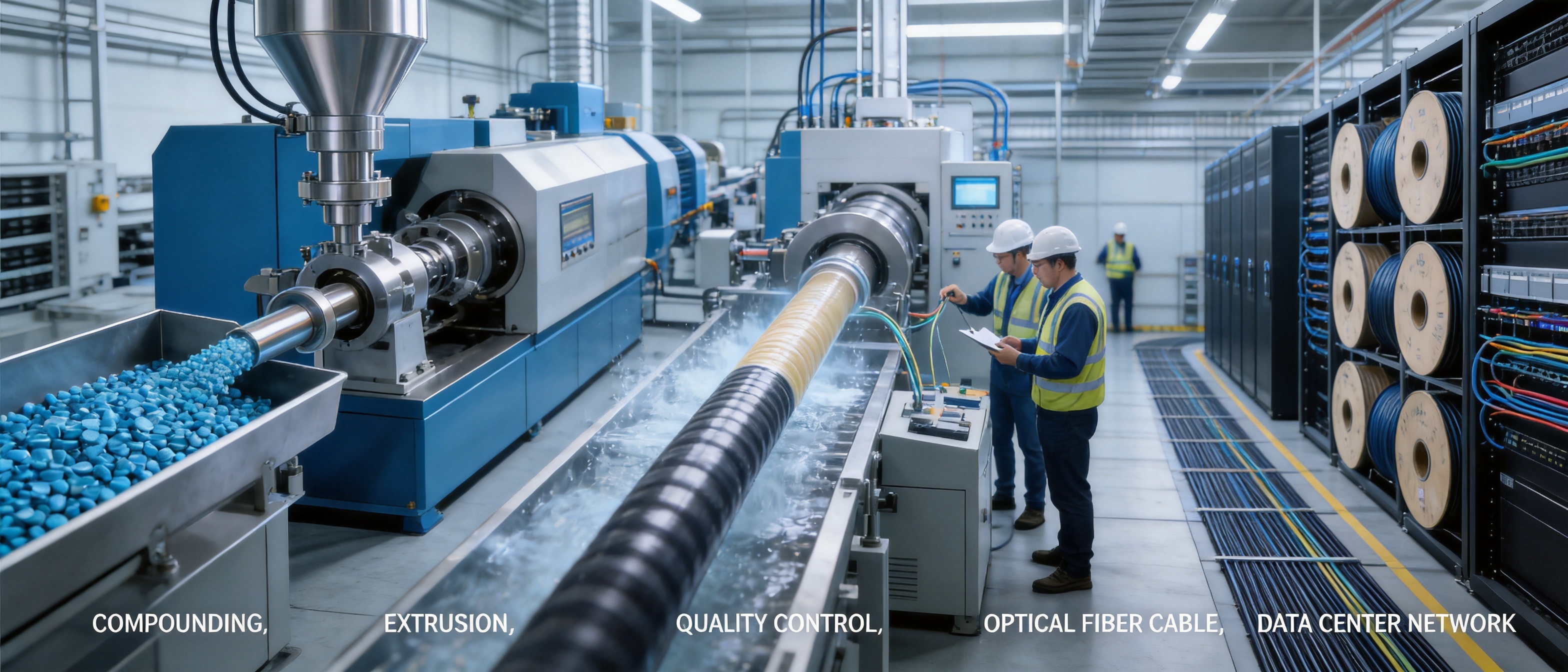
Modern communication infrastructure depends on cable systems that deliver reliable signal transmission while also meeting increasingly demanding fire-safety and environmental requirements. Data centers, central offices, base stations, equipment rooms, and indoor communication networks contain large quantities of optical fiber cables installed in confined spaces. When many cables are bundled together, the performance of the cable sheathing material becomes an important part of the overall safety design.
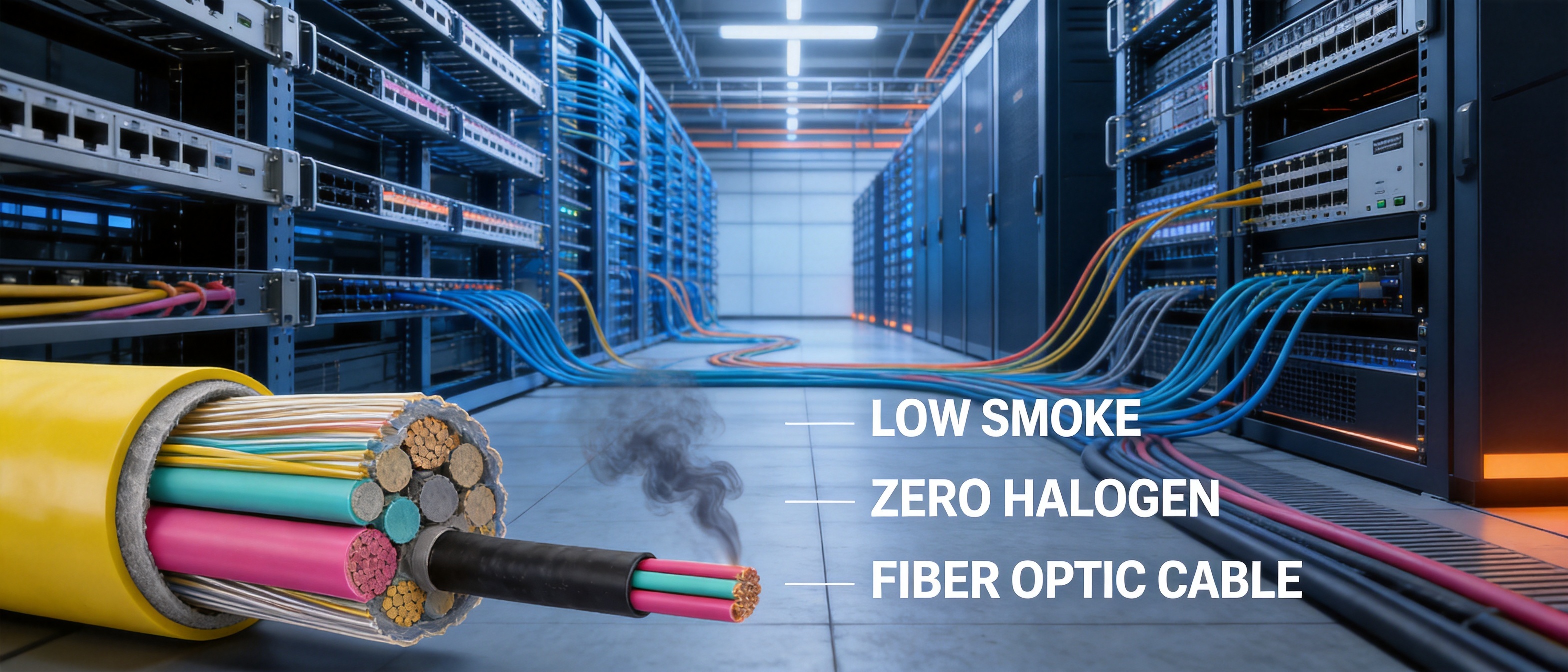
The thermoplastic low-smoke, zero-halogen compound described in this article is developed for optical fiber cable sheathing in communication and data-center environments. It is designed to combine flame retardancy, low smoke generation, zero halogen acid gas release, electrical insulation, mechanical durability, processing stability, and resistance to environmental stress cracking. The material is available for applications associated with Class B1 and B2 LSZH cable requirements, with product grades including DS-WDZGL-M-01, DS-WDZGL-M-02, and DS-WDZGL-H-W-B1.
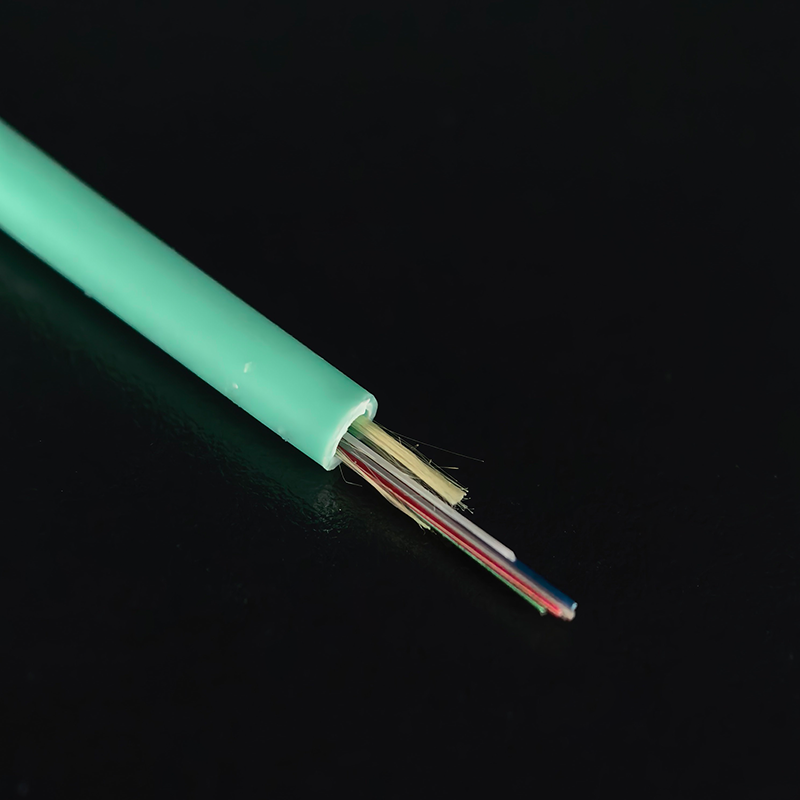
Unlike ordinary polyolefin sheathing materials, this specialized compound is formulated to reduce the risks associated with flame propagation, dense smoke, corrosive combustion gases, and cable failure during installation or service. At the same time, it is intended to provide smooth extrusion and a stable cable surface, helping manufacturers produce optical fiber cables that are suitable for indoor wiring, cabinet fiber jumpers, machine-room backbone cables, and high-density data-center cabling.
Optical Fiber Cable Sheathing Material for Communication and Data Centers (Class B1/B2)
Why Cable Sheathing Materials Matter in Modern Communication Facilities
Optical fiber cables are often regarded primarily as signal-transmission products. However, the outer sheath performs several functions beyond protecting the optical fibers from abrasion. It must withstand pulling, bending, contact with installation tools, temperature changes, moisture exposure, and long-term mechanical stress. It must also help isolate the internal cable structure from the surrounding environment.
In a data center or communications room, cables are frequently installed in trays, cabinets, raised-floor spaces, vertical shafts, and densely packed routing systems. If a fire occurs, the cable sheath can influence how quickly flames travel along the cable route. It can also affect the quantity and corrosiveness of smoke released into the room. These factors are particularly important where sensitive servers, switches, optical modules, power-control systems, and monitoring equipment are installed.
Halogen-containing materials may generate acidic gases during combustion. These gases can corrode metal surfaces and electronic components, especially in enclosed rooms where smoke and combustion products remain concentrated. A low-smoke, zero-halogen compound is intended to address this concern by avoiding halogen-based polymer chemistry and maintaining a low halogen acid gas content.
The compound discussed here reports a halogen acid gas content of zero in the supplied typical data. Its reported smoke performance, oxygen index, pH value, and conductivity characteristics demonstrate that the formulation is designed around the requirements of modern low-smoke, halogen-free cable construction rather than basic general-purpose plastic extrusion.
Product Positioning and Intended Applications
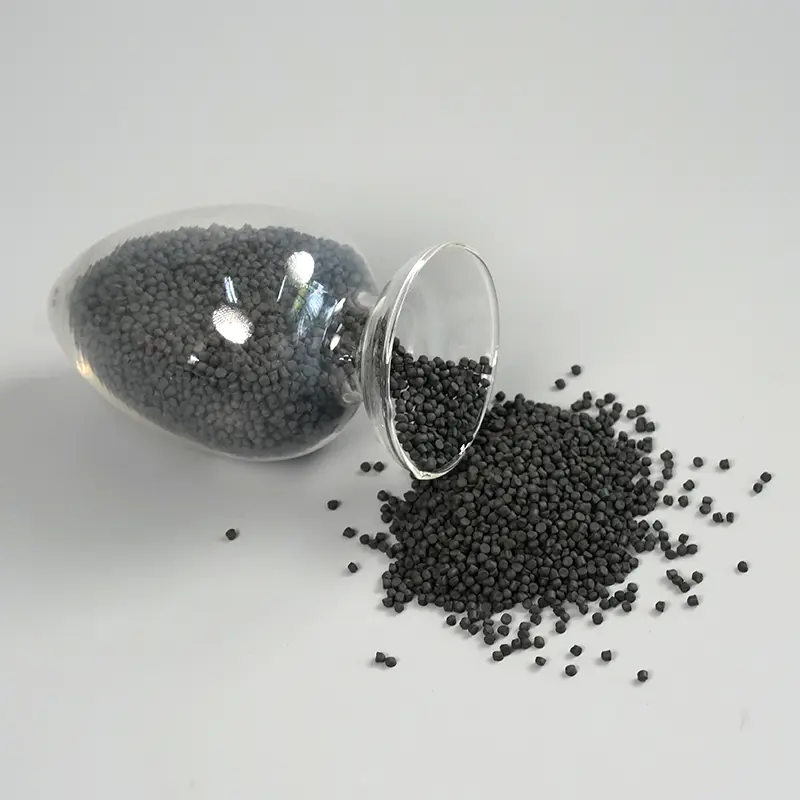
This material is a thermoplastic LSZH sheathing compound for communication and optical fiber cables. It is supplied as a processable polymer compound that can be melted and extruded around the cable core. Because it is thermoplastic, cable manufacturers can use conventional thermoplastic extrusion equipment with suitable temperature control, screw design, cooling, and sizing systems.
The material is intended for applications where cable fire behavior and smoke performance are important. Typical application areas include:
Indoor optical fiber distribution cables.
Fiber jumper cables installed inside communication cabinets.
Backbone optical cables used in computer rooms and machine rooms.
Fiber optic cables installed in data-center pathways and equipment floors.
Base-station communication cable protection.
Telecommunications rooms and central-office wiring.
Indoor network cabling for commercial and industrial buildings.
High-density cable systems where low smoke and zero halogen characteristics are required.
The compound can be selected for cable designs associated with B1 and B2 fire-performance categories, subject to the complete cable construction, processing conditions, test method, and final certification requirements applicable to the intended market. The material itself is an important part of cable performance, but the final classification depends on the finished cable and its complete design.
Core Performance Advantages
Low Smoke Generation
Smoke can reduce visibility, obstruct evacuation, interfere with emergency response, and contaminate electronic equipment. In a data center, dense smoke may also affect air-handling systems and expose optical modules, circuit boards, connectors, and metal assemblies to harmful deposits.
The supplied typical data reports flameless smoke density values of 225, 240, and 220 for the listed grades, against a stated requirement of no more than 225. Flaming smoke density values are reported at 50, 65, and 55 against a stated limit of no more than 100. These results indicate that the formulation is designed to control smoke formation under both flaming and flameless conditions.
Compared with conventional PVC-based sheathing, an LSZH formulation can offer a substantial advantage in applications where smoke visibility and contamination are major concerns. The exact performance of any finished cable depends on sheath thickness, cable geometry, pigment, additives, processing, and the selected test method. Nevertheless, a controlled smoke profile is a valuable material characteristic for indoor communication environments.
Zero Halogen Acid Gas Release
The product data reports a halogen acid gas content of 0 percent for all three listed typical grades, compared with a stated maximum of 0.5 percent. This is one of the defining advantages of the compound.
When a cable burns, halogen acid gases can attack copper conductors, metal connectors, optical equipment housings, rack structures, and other exposed components. In a high-value data center, damage caused by corrosive smoke may continue after the flame has been extinguished. The use of a zero-halogen sheath helps reduce this risk and supports cleaner fire behavior.
For operators of communication facilities, the benefit is not limited to personnel safety. It also includes protection of equipment investment, reduced corrosive contamination, and improved prospects for restoring affected systems after a fire event.
Flame Retardancy and Oxygen Index
The oxygen index values reported for the three grades are 38 percent, 33 percent, and 40 percent, compared with a stated minimum of 32 percent. A higher oxygen index generally indicates that the material requires a higher oxygen concentration to sustain combustion under the relevant test conditions.
This characteristic supports the compound’s role in flame-retardant cable construction. The formulation is intended to resist continued combustion and reduce the possibility of flame spread along indoor cable routes. The result is especially useful in applications where cables are installed in continuous trays or bundles and where a localized ignition source could otherwise initiate propagation.
The oxygen index should not be interpreted as the only measure of finished-cable fire performance. Flame spread, heat release, smoke production, dripping, cable geometry, and installation configuration may all influence the final result. However, the reported oxygen index confirms that the material is engineered for flame-retardant performance rather than ordinary sheath protection.
Mechanical Strength and Elongation
A cable sheath must remain intact during manufacturing, installation, and service. The product’s reported tensile strength values are 11 MPa, 12 MPa, and 11 MPa, against a stated standard value of 10 MPa. The corresponding elongation-at-break values are 180 percent, 180 percent, and 170 percent, compared with a stated minimum of 150 percent.
These results indicate a balanced mechanical profile. Tensile strength helps the sheath withstand pulling and handling forces, while elongation provides flexibility and tolerance to deformation. A sheath with adequate elongation is less likely to split during bending, routing, or termination, provided that the cable is designed and installed within its specified limits.
For optical fiber cables, mechanical balance is particularly important. Excessively rigid material can make routing difficult and may place unnecessary stress on the cable structure. Material that is too soft or weak may suffer surface damage, deformation, or dimensional instability. The reported combination of tensile strength and elongation is intended to support practical cable installation without sacrificing sheath integrity.
Thermal Aging Stability
Communication cables can remain in service for many years. During that time, the sheath may be exposed to elevated temperatures caused by equipment operation, power cables, ventilation conditions, sunlight entering indoor facilities, or localized heat accumulation in dense cable bundles.
The supplied aging test is conducted at 100 degrees Celsius for 168 hours. The reported change rates for tensile strength are plus 12 percent, plus 10 percent, and plus 13 percent, against a stated limit of plus or minus 20 percent. The reported elongation change rates are minus 10 percent, minus 5 percent, and minus 11 percent, also within the stated plus-or-minus 20 percent range.
These results show that the three grades maintain their basic mechanical characteristics after accelerated thermal exposure. Stable aging behavior helps reduce the possibility of premature embrittlement or excessive softening during service. It also gives cable manufacturers a stronger foundation for developing products intended for equipment rooms and other locations with elevated operating temperatures.
Resistance to Environmental Stress Cracking
Environmental stress cracking can occur when a polymer is exposed to mechanical stress and a chemically or physically aggressive environment. In cable applications, cracking may be initiated by bending, compression, installation tension, temperature cycling, or contact with certain substances.
The material is reported to pass the F0 environmental stress cracking resistance test for 96 hours, with zero failures out of ten specimens. This result suggests that the compound has been designed to maintain sheath integrity under the specified test conditions.
Good stress-cracking resistance is valuable in data-center installations because cables may be routed around tight cabinet spaces, pulled through pathways, fixed with clips, and exposed to repeated maintenance activity. A sheath that resists crack initiation can provide greater protection for the cable core and lower the likelihood of visible surface defects developing over time.
Thermal Deformation and Thermal Shock Resistance
The reported thermal denaturation values after exposure at 90 degrees Celsius for one hour are 5 percent, 10 percent, and 3 percent, against a stated maximum of 20 percent. These results indicate controlled dimensional change under the specified heating condition.
The thermal shock resistance test is conducted at 130 degrees Celsius for one hour. All three typical grades are reported as showing no cracking. This is a useful property for cable processing and service because sudden temperature changes can place stress on the sheath, especially when the material contains flame-retardant fillers.
Controlled deformation helps maintain cable dimensions during extrusion and subsequent cooling. It can also support consistent stripping, connector preparation, and installation performance. No-cracking behavior under thermal shock further indicates that the polymer matrix and additive system have been balanced to manage temperature-related stress.
Electrical Insulation Performance
Although optical fibers transmit signals through glass rather than electrical conductors, communication cables can still include strength members, metallic components, grounding elements, or adjacent electrical systems. The sheath may therefore contribute to insulation and isolation performance.
The volume resistivity at 20 degrees Celsius is reported as 2.5 times 10 to the 13 ohm-meter, 5.1 times 10 to the 14 ohm-meter, and 2.0 times 10 to the 13 ohm-meter. These values are significantly above the stated minimum of 1 times 10 to the 10 ohm-meter.
High volume resistivity supports the electrical isolation function of the sheath. It may help reduce leakage pathways and maintain stable insulation behavior in indoor cable assemblies. The final electrical performance will also depend on cable construction, moisture exposure, surface contamination, and installation conditions.
Representative Technical Data
The following table summarizes the typical data supplied for the three listed product grades. These values are representative rather than universal guarantees. Final specifications should be confirmed with the manufacturer for the selected grade, application, color, processing conditions, and market requirements.
| Property | Unit | Stated Requirement | DS-WDZGL-M-01 | DS-WDZGL-M-02 | DS-WDZGL-H-W-B1 |
|---|---|---|---|---|---|
| Density | g/cm³ | Not specified | 1.55 | 1.50 | 1.58 |
| Tensile strength | MPa | Minimum 10 | 11 | 12 | 11 |
| Elongation at break | % | Minimum 150 | 180 | 180 | 170 |
| Tensile strength change after aging at 100 degrees Celsius for 168 hours | % | Plus or minus 20 | Plus 12 | Plus 10 | Plus 13 |
| Elongation change after aging at 100 degrees Celsius for 168 hours | % | Plus or minus 20 | Minus 10 | Minus 5 | Minus 11 |
| Environmental stress cracking resistance, F0 for 96 hours | Failure count | 0 out of 10 | Pass | Pass | Pass |
| Thermal denaturation at 90 degrees Celsius for 1 hour | % | Maximum 20 | 5 | 10 | 3 |
| Low-temperature brittleness temperature | Degrees Celsius | Maximum minus 25 | Minus 25 | Minus 25 | Minus 25 |
| Volume resistivity at 20 degrees Celsius | Ohm-meter | Minimum 1 times 10 to the 10 | 2.5 times 10 to the 13 | 5.1 times 10 to the 14 | 2.0 times 10 to the 13 |
| Thermal shock resistance at 130 degrees Celsius for 1 hour | Observation | No cracking | No cracking | No cracking | No cracking |
| Smoke density, flameless | Index | Maximum 225 | 225 | 240 | 220 |
| Smoke density, flaming | Index | Maximum 100 | 50 | 65 | 55 |
| Oxygen index | % | Minimum 32 | 38 | 33 | 40 |
| Halogen acid gas content | % | Maximum 0.5 | 0 | 0 | 0 |
| pH value | pH | Minimum 4.3 | 5.5 | 5.2 | 5.8 |
| Conductivity | MicroSiemens per millimeter | Reported value | 1.2 | 1.2 | 1.2 |
Advantages Compared with Conventional Cable Sheathing Materials
Compared with General-Purpose Polyethylene
General-purpose polyethylene is valued for its processability, flexibility, and relatively low cost. However, it is not automatically suitable for applications requiring high flame retardancy, low smoke, or zero-halogen performance. Unmodified polyethylene can support combustion and may produce more smoke than a dedicated LSZH compound.
The specialized compound provides a more application-focused solution. It combines a polyolefin-based thermoplastic processing platform with flame-retardant and smoke-control characteristics. The reported oxygen index, smoke-density values, and zero halogen acid gas content distinguish it from ordinary polyethylene grades intended mainly for mechanical protection or basic insulation.
Compared with Conventional PVC Sheathing
PVC has long been used in cable applications because it offers good processability, mechanical performance, and cost efficiency. Its limitation in sensitive indoor environments is the potential generation of halogen-containing acidic gases during combustion. Smoke and corrosive products can be particularly problematic in enclosed communications rooms.
The LSZH compound is designed to provide a different safety profile. Its reported halogen acid gas content is zero, and its smoke performance is controlled under both flaming and flameless test conditions. For data centers, office buildings, transportation facilities, and communications rooms, these characteristics may offer a meaningful advantage over conventional PVC when the project requires low-smoke, halogen-free cable construction.
Compared with Basic Flame-Retardant Polyolefin Grades
Not every flame-retardant polyolefin compound delivers the same balance of mechanical strength, elongation, thermal stability, electrical resistivity, and processing behavior. Some heavily filled materials may achieve flame resistance but become stiff, brittle, abrasive to equipment, or difficult to extrude at high line speeds.
The listed grades are designed to balance fire performance with practical cable manufacturing. Tensile strength above 10 MPa, elongation above 150 percent, thermal aging stability, no cracking in the thermal shock test, and successful stress-cracking resistance testing indicate that the formulation is not focused on flame retardancy alone.
This balance can help cable manufacturers reduce trade-offs between safety and production efficiency. A compound that remains mechanically robust and dimensionally stable is more likely to produce consistent sheaths with fewer defects, provided that the extrusion process is correctly adjusted.
Processing and Extrusion Considerations
The compound is intended for thermoplastic extrusion. Smooth processing is an important product advantage because the sheath must be formed continuously around the cable core while maintaining stable wall thickness, surface quality, concentricity, and dimensional control.
Before production, the cable manufacturer should establish a processing window for the selected grade. Important variables include barrel temperature, die temperature, screw speed, line speed, melt pressure, cooling-water temperature, vacuum sizing, haul-off tension, and the condition of the cable core. The precise temperature profile should be determined through controlled trials rather than copied from an unrelated material.
LSZH compounds commonly contain significant quantities of flame-retardant components. These additives can affect viscosity, melt strength, wear behavior, and dispersion. Equipment condition should therefore be monitored, particularly in long production runs. Stable feeding and good compounding quality are essential for maintaining uniform flame-retardant performance throughout the material.
Material Preparation
Pellets should be stored in clean, dry conditions and protected from contamination. Moisture, dust, foreign polymers, and metal particles can create surface defects, bubbles, die lines, or inconsistent electrical performance. If the manufacturer’s technical instructions specify pre-drying or conditioning, those instructions should be followed.
Material handling systems should prevent cross-contamination between LSZH grades and other compounds. Even a small amount of an incompatible polymer can affect flame behavior, color, surface appearance, or mechanical properties. Dedicated conveying lines or thorough cleaning procedures may be appropriate for sensitive production schedules.
Extrusion Stability
A stable melt is important for producing optical fiber cable sheaths because changes in melt pressure or viscosity can result in uneven thickness. Uneven thickness may affect stripping performance, flexibility, cable diameter, and material consumption.
The compound’s reported mechanical and thermal properties support its use in continuous extrusion, but process settings remain critical. Excessive shear or overheating may degrade the polymer matrix or affect flame-retardant additives. Insufficient melting or poor dispersion can produce rough surfaces and localized weak points.
Manufacturers should monitor melt pressure, amperage, output, surface appearance, diameter, eccentricity, and cooling conditions. Regular sampling of tensile strength, elongation, density, and fire-related properties can help confirm that production remains within the intended control range.
Surface Finish and Cable Appearance
A smooth sheath surface is important for appearance and function. It can reduce friction during installation, support consistent printing and marking, and improve the operator’s ability to inspect the cable for defects. Smooth processing is especially useful for cabinet jumpers and high-density fiber assemblies, where many cables are routed close together.
Surface quality depends on compound formulation, die design, melt temperature, cooling rate, line speed, and the condition of the cable core. A properly adjusted process should minimize roughness, sharkskin, die buildup, bubbles, streaks, and dimensional fluctuation.
Manufacturing Strengths and Research Capability
The material is produced by Jiangsu Duoshang New Materials Technology Co., Ltd., a Chinese manufacturer specializing in polyolefin cable compounds. The company’s stated business scope includes research and development, production, and sales of cable materials for power, communications, locomotives, photovoltaic systems, new energy generation, rail transit, marine cables, and related industries.
The company operates an R and D center of more than 3,000 square meters. According to the supplied company information, the center is equipped with more than 35 million renminbi worth of research equipment and supported by a professional research team of more than 30 members, including five doctors and several personnel recognized through provincial and municipal talent programs.
This level of research investment is significant for a compound manufacturer because modern cable materials require more than a basic polymer and additive blend. The material must be evaluated through formulation development, extrusion trials, mechanical testing, thermal aging, fire testing, electrical testing, and application validation. A dedicated R and D center enables these activities to be organized around customer requirements rather than relying only on generic raw-material data.
The company also operates two production bases covering more than 15,000 square meters, with more than ten production lines for polyolefin cable compounds. This production structure supports product variety and supply capacity. It also allows the manufacturer to serve different cable sectors while maintaining dedicated attention to specialized LSZH materials.
Formulation Development
LSZH cable compounds require careful formulation control. Flame-retardant additives must be sufficiently dispersed through the polymer matrix. The formulation must also maintain flexibility, tensile strength, elongation, thermal stability, electrical insulation, and acceptable processing viscosity.
The reported performance of the three grades suggests that the manufacturer has developed more than one formulation profile. The grades differ in density, oxygen index, smoke performance, and mechanical results, allowing cable producers to select a material according to the balance required for a particular design.
A manufacturer with in-house formulation capability can respond more effectively when customers require adjustments in hardness, color, processing behavior, flame performance, low-temperature performance, or cable structure. This is particularly useful for communication cable manufacturers that produce several cable types on the same extrusion platform.
Testing and Quality Control
Quality control for LSZH compounds should cover both incoming raw materials and finished pellets. Raw-material verification can include polymer identity, additive quality, moisture, particle condition, and contamination control. Finished-product testing can include density, tensile strength, elongation, thermal aging, smoke density, oxygen index, halogen acid gas content, pH, conductivity, and extrusion appearance.
The supplied technical data includes a broad range of these tests. This breadth is important because no single test can fully describe cable performance. Mechanical testing confirms physical durability. Thermal tests assess stability. Fire tests address combustion behavior. Electrical and chemical tests help evaluate insulation and corrosive-risk characteristics.
Consistent quality also depends on batch traceability, production records, controlled formulation changes, calibrated instruments, and retained samples. These systems help identify the cause of any variation and provide customers with greater confidence in long-term supply.
Customized Technical Support
The company states that it provides application-oriented solutions, research and testing support, technical documentation, stable supply capacity, and customized material solutions for customers worldwide. For cable manufacturers, this type of support can be as important as the nominal property values.
Material selection may require cooperation between the compound supplier, cable designer, extrusion engineer, and final customer. A supplier that can discuss cable diameter, extrusion equipment, installation environment, fire classification, color, surface requirements, and testing plans can help shorten development time and reduce trial-and-error costs.
Customization may include adjusting the compound for a specific processing window, cable size, hardness range, color requirement, smoke target, mechanical profile, or regional compliance program. Any customized grade should be validated through testing on the final cable construction before commercial release.
Quality, Safety, and Application Benefits for Data Centers
Data centers are designed around continuity, redundancy, and protection of critical information. Cable sheathing materials contribute to this objective in several ways.
First, low smoke can help preserve visibility and reduce contamination during a fire event. Second, zero-halogen construction can reduce the corrosive effect of combustion gases on servers, optical modules, switches, racks, and metal infrastructure. Third, good mechanical properties can reduce the likelihood of sheath damage during installation and maintenance. Fourth, stable thermal performance can support service in equipment rooms where heat loads vary.
The compound’s electrical insulation performance also supports separation between cable components and surrounding systems. Its low-temperature brittleness temperature of minus 25 degrees Celsius provides a stated baseline for cold-condition handling and service, although the actual installation environment should always be considered.
For cable installers, a smooth, flexible, and mechanically stable sheath can make routing easier. For equipment owners, a reliable sheath can support long-term protection of the optical fiber core. For cable manufacturers, consistent extrusion and broad testing data can simplify product development and quality documentation.
Selection Guidance for Cable Manufacturers
When selecting an LSZH compound, a cable manufacturer should begin with the intended application and final cable construction. The correct grade depends on cable diameter, wall thickness, number of fibers, strength members, required flexibility, installation method, and target fire classification.
The manufacturer should also consider the following questions:
What fire-performance category is required for the finished cable?
Will the cable be installed indoors, outdoors, in a cabinet, or in a mixed environment?
What level of smoke performance is required by the project specification?
Does the project require zero-halogen acid gas performance?
What extrusion equipment and cooling system are available?
What stripping force and surface hardness are required?
Will the cable be exposed to repeated bending or mechanical handling?
What low-temperature conditions may occur during storage, transportation, or installation?
Are special colors, markings, or surface finishes required?
Which final-cable tests must be completed before approval?
The three listed grades provide a starting point for this evaluation. DS-WDZGL-M-01 offers a reported oxygen index of 38 percent and elongation of 180 percent. DS-WDZGL-M-02 reports the highest tensile strength among the three at 12 MPa and the highest volume resistivity at 5.1 times 10 to the 14 ohm-meter. DS-WDZGL-H-W-B1 reports the highest oxygen index at 40 percent, the lowest thermal denaturation at 3 percent, and the lowest flameless smoke density at 220 in the supplied data.
These differences do not mean that one grade is universally superior. Instead, they illustrate how grade selection should be matched to the priorities of the cable design. A technical discussion with the supplier can help determine which profile is most appropriate.
Installation and Handling Recommendations
Even a high-performance LSZH compound can be compromised by poor cable design or installation. Cables should not be pulled beyond their specified tension, bent below their minimum bend radius, crushed by fasteners, or exposed to incompatible chemicals. The sheath should be inspected for cuts, gouges, cracks, bubbles, or abnormal deformation before installation.
During cable routing, installers should use suitable guides and avoid sharp edges. Pulling equipment should be selected according to the cable construction. Excessive tension can transfer stress to the optical fibers or strength members even when the sheath remains visually intact.
When cables are bundled, the installation should follow the design assumptions used for fire and thermal evaluation. Large bundles may behave differently from individual cables. Airflow, spacing, tray configuration, and proximity to power cables can affect the temperature and fire behavior of the installation.
Storage should protect the cable and compound from excessive heat, direct sunlight, moisture, and contamination. Although the finished sheath is designed for durability, correct storage helps preserve the cable’s intended properties before installation.
Environmental and Sustainability Considerations
Low-smoke, zero-halogen materials support safer combustion behavior and may reduce the corrosive impact of cable fires. This is important from both an asset-protection and environmental perspective. By avoiding halogen acid gas generation, the compound can help reduce the release of highly corrosive combustion products into enclosed spaces.
The company also states that it focuses on polymer cable compounds and biodegradable materials. This broader focus indicates an interest in developing material solutions that address both performance and environmental concerns. For cable purchasers, sustainability evaluation should include the full life cycle: raw materials, production energy, service life, fire behavior, recycling options, and disposal conditions.
Environmental performance should not be reduced to one label or one test. A durable cable that remains functional for many years may reduce replacement frequency. A material that supports safer fire behavior may reduce secondary damage. A compound that can be processed consistently may reduce production scrap. These factors should be considered together when assessing the overall value of an LSZH cable material.
Commercial and Technical Value
For cable manufacturers, material value includes more than purchase price per kilogram. A compound that processes smoothly, maintains stable dimensions, and produces fewer surface defects can reduce scrap and improve line productivity. A compound supported by technical documentation and testing data can reduce development time. A supplier with multiple production lines and application experience can help improve supply continuity.
For system integrators and data-center contractors, the value lies in selecting a cable material that aligns with the project’s safety requirements. Low smoke, zero halogen acid gas release, flame retardancy, mechanical stability, and electrical insulation can all contribute to a more robust cabling system.
For equipment owners, the use of an appropriate LSZH sheath can support the protection of high-value infrastructure. The material cannot eliminate all fire risk, but it can form part of a layered safety strategy that includes detection, suppression, compartmentation, emergency planning, cable management, and regular maintenance.
Frequently Asked Questions
What is this product?
It is a thermoplastic low-smoke, zero-halogen compound designed for sheathing optical fiber and communication cables. The product range includes grades associated with B1 and B2 LSZH cable applications.
Where is the compound typically used?
Typical uses include indoor optical fiber cables, data-center backbone cables, cabinet fiber jumpers, computer-room cabling, base-station cable protection, and other high-density communication installations where low smoke and halogen-free performance are important.
Does the material contain halogens?
The supplied typical data reports a halogen acid gas content of zero percent for the three listed grades. The final cable should still be tested according to the applicable project and regulatory requirements.
What are the main fire-performance advantages?
The compound reports oxygen index values from 33 percent to 40 percent, flameless smoke-density values from 220 to 240, flaming smoke-density values from 50 to 65, and zero halogen acid gas content in the supplied typical data. These characteristics are intended to reduce flame propagation, smoke generation, and corrosive combustion gas release.
Can the compound be processed on standard cable extrusion equipment?
It is designed as a thermoplastic extrusion material. However, the correct temperature profile, screw configuration, die design, cooling conditions, and line speed must be established through production trials on the manufacturer’s equipment.
How does it compare with PVC?
The principal difference is the combustion chemistry. PVC may generate halogen-containing acidic gases during burning, while this LSZH compound is designed to provide zero-halogen acid gas performance. The LSZH material is therefore more suitable for applications where smoke and corrosive gas control are priorities.
How does it compare with ordinary polyethylene?
Ordinary polyethylene can provide good flexibility and processability but is not automatically flame retardant or low smoke. This compound is specifically formulated to combine polyolefin processing characteristics with flame-retardant, smoke-control, and zero-halogen properties.
Which grade should a customer choose?
Grade selection should be based on the final cable structure, target fire category, required mechanical properties, smoke target, extrusion conditions, and customer specification. The supplier should be consulted for a grade recommendation and sample validation.
Does the material guarantee a final B1 or B2 cable classification?
No material datasheet alone can guarantee the classification of every finished cable. Final performance depends on the complete cable construction, sheath thickness, additives, geometry, installation conditions, and formal test method. The completed cable must be tested and approved for its intended classification.
What technical data is available?
The supplied information includes density, tensile strength, elongation, thermal aging, environmental stress cracking, thermal denaturation, low-temperature brittleness, volume resistivity, thermal shock resistance, smoke density, oxygen index, halogen acid gas content, pH value, and conductivity.
Can customized solutions be developed?
The manufacturer states that it provides customized material solutions, application-oriented research, testing support, and technical documentation. Custom development should be confirmed through a technical consultation and validated on the final cable.
What company produces the compound?
The product is produced by Jiangsu Duoshang New Materials Technology Co., Ltd. The company specializes in polyolefin cable compounds and operates research, production, and technical-support activities for cable-material applications.
Conclusion
The thermoplastic LSZH sheathing compound is designed for a demanding segment of the cable-material market: optical fiber and communication cables used in data centers, computer rooms, base stations, cabinets, and other high-density indoor installations. Its value comes from the combination of properties rather than from one isolated performance number.
The supplied data shows tensile strength above 10 MPa, elongation above 150 percent, controlled thermal aging, resistance to environmental stress cracking, no cracking in thermal shock testing, high volume resistivity, oxygen index values up to 40 percent, controlled smoke density, and zero reported halogen acid gas content. Together, these characteristics support a material concept that balances fire safety, environmental performance, mechanical durability, electrical insulation, and extrusion practicality.
Compared with ordinary polyethylene, conventional PVC, and basic flame-retardant compounds, the material is positioned as a more specialized solution for modern communication infrastructure. Its low-smoke and zero-halogen profile can help protect people, equipment, and enclosed spaces during fire conditions. Its mechanical and thermal properties support reliable handling and long-term sheath integrity. Its thermoplastic processing profile allows cable manufacturers to integrate it into continuous extrusion operations.
The manufacturer’s R and D center, technical team, production bases, multiple production lines, and stated commitment to customized material solutions further strengthen the product’s commercial position. For cable manufacturers seeking a reliable LSZH compound for B1 and B2-related applications, the material provides a technically balanced platform that can be evaluated and adapted to the requirements of the finished cable.
Final selection should always be supported by extrusion trials, cable-level testing, and confirmation of the standards applicable to the target market. When correctly selected and processed, this type of compound can contribute to safer, cleaner, and more dependable optical fiber cable systems for the next generation of data and communication networks.
References
1. Product technical information for thermoplastic LSZH optical fiber cable sheathing compounds, including DS-WDZGL-M-01, DS-WDZGL-M-02, and DS-WDZGL-H-W-B1.
2. Manufacturer-provided company information for Jiangsu Duoshang New Materials Technology Co., Ltd., including research, production, product portfolio, and technical-support capabilities.
3. General principles of low-smoke, zero-halogen cable material formulation and thermoplastic extrusion processing.
4. General fire-safety considerations for communication cables installed in data centers, computer rooms, equipment cabinets, and indoor cable pathways.
5. General laboratory practices for evaluating tensile strength, elongation, thermal aging, smoke density, oxygen index, halogen acid gas content, pH value, conductivity, and environmental stress cracking resistance.