English
 Français
 Español
 русский
 عربى
Green Ohm
Green Ohm
Green Ohm
Green Ohm
Green Ohm
Green Ohm
Green Ohm
Green Ohm
Green Ohm
Content
- 1 Why LSZH Insulation Matters in Construction Engineering
- 2 Product Technology: LED UV Irradiation Cross-Linking
- 3 Performance Profile of the Material
- 4 B1 and B2 Combustion Performance
- 5 Advantages Compared with Conventional Cable Materials
- 6 Advanced Manufacturing and R&D Strengths
- 7 Recommended Processing Considerations
- 8 Quality Assurance and Project Qualification
- 9 Applications in Construction and Infrastructure
- 10 Why Choose This UV-Cross-Linked LSZH Solution?
- 11 Questions and Answers
- 11.1 What is UV Irradiation Cross-linked LSZH insulation?
- 11.2 How is LED UV cross-linking different from traditional irradiation cross-linking?
- 11.3 What do B1 and B2 refer to?
- 11.4 Does the compound contain halogens?
- 11.5 What are the reported tensile properties?
- 11.6 Can the material be used on existing extrusion equipment?
- 11.7 What should be monitored during UV curing?
- 11.8 Are the values in the performance table guaranteed?
- 11.9 What industries can use this material?
- 11.10 How can customers select between the available grades?
- 11.11 What information should be provided when requesting a quotation or technical recommendation?
- 12 Conclusion
- 13 References
- 14 Product: UV Irradiation Cross-linked LSZH Flame Retardant Insulation for Construction Engineering (Class B1/B2)
Modern construction projects increasingly require cable systems that combine electrical reliability, fire safety, low smoke generation, low corrosiveness, and efficient manufacturing. Conventional cable insulation may provide acceptable electrical performance, but it can release dense smoke, corrosive gases, or halogen-containing combustion products when exposed to fire. For buildings, transportation facilities, public infrastructure, data centers, tunnels, industrial plants, and other densely occupied environments, these risks can complicate evacuation, damage equipment, and increase the difficulty of firefighting.
UV Irradiation Cross-linked LSZH Flame Retardant Insulation for Construction Engineering is designed to address these requirements through a low-smoke, halogen-free polyolefin compound cured by LED ultraviolet irradiation after extrusion. The material is available in formulations intended to meet Class B1 and Class B2 combustion performance requirements under GB 31247-2014. It combines the processing advantages of a rapid UV curing system with the safety characteristics expected from LSZH cable insulation.
Unlike traditional irradiation cross-linking, which may require longer exposure times and substantial equipment investment, the LED UV curing approach can complete cross-linking within only a few seconds under suitable process conditions. This allows extrusion and cross-linking to be integrated into a continuous manufacturing line. The result is a production method with high throughput, reduced production-cycle time, lower energy consumption, and a smaller equipment footprint.
The compound is supplied by Jiangsu Duoshang New Materials Technology Co., Ltd., a Chinese manufacturer focused on polyolefin cable compounds and specialized polymer materials. The company combines material research, pilot testing, large-scale production, application support, and customized technical services. Its portfolio includes UV-cross-linked, silane cross-linkable, irradiation cross-linked, and thermoplastic low-smoke halogen-free flame-retardant compounds, together with polyethylene sheath compounds and other cable-material solutions.
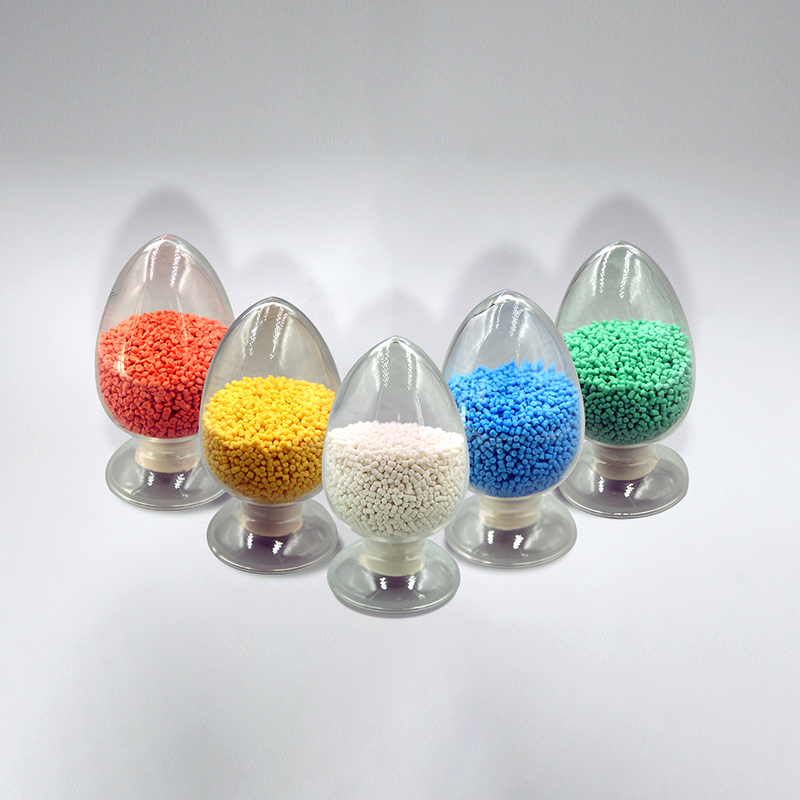
UV Irradiation Cross-linked LSZH Flame Retardant Insulation for Construction Engineering (Class B1/B2)
Why LSZH Insulation Matters in Construction Engineering
Cables installed in buildings are not isolated components. They form part of an integrated safety system that must continue to perform during normal operation and must limit secondary hazards during a fire. Cable insulation and sheathing can influence flame spread, smoke visibility, toxic exposure, corrosion of electrical equipment, and the formation of burning droplets.
Low-smoke, halogen-free materials are intended to reduce several of these risks. When a conventional halogen-containing polymer burns, it may release hydrogen chloride, hydrogen bromide, and other corrosive or irritating substances. These gases can affect occupants and may corrode metal components, electronic equipment, control cabinets, and communication systems. Dense smoke can also reduce visibility in stairwells, corridors, stations, tunnels, and large public buildings.
LSZH compounds are formulated without the halogen chemistry traditionally used in many flame-retardant cable materials. Their safety profile is based on a combination of polymer selection, flame-retardant packages, smoke-control technology, and carefully controlled processing. The objective is not simply to prevent ignition. A high-performance construction cable material must also restrict flame propagation, control heat release, limit smoke density, reduce burning drips, and keep combustion gases less corrosive.
The product described here is intended for applications where fire-performance requirements are more demanding than those of ordinary thermoplastic insulation. Its B1 and B2 formulations are designed around the combustion-performance categories specified in GB 31247-2014. These categories consider multiple fire behaviors rather than relying on a single vertical-flame or oxygen-index result.
Fire safety beyond flame retardancy
Flame retardancy is often used as a broad term, but cable safety involves several distinct characteristics. A material may resist ignition yet generate significant smoke. Another material may limit smoke but soften excessively and create burning drips. A formulation may produce little flame spread but release corrosive gases. For construction engineering, the overall performance profile is therefore more important than one isolated test value.
The supplied product information identifies flame propagation, heat release rate, total heat release, smoke density, burning drips, combustion particulates, toxicity of combustion gases, and combustion corrosiveness as relevant performance areas. This multi-dimensional approach supports the needs of projects in which cable behavior can affect both life safety and the preservation of building systems.
Suitability for infrastructure with high occupant density
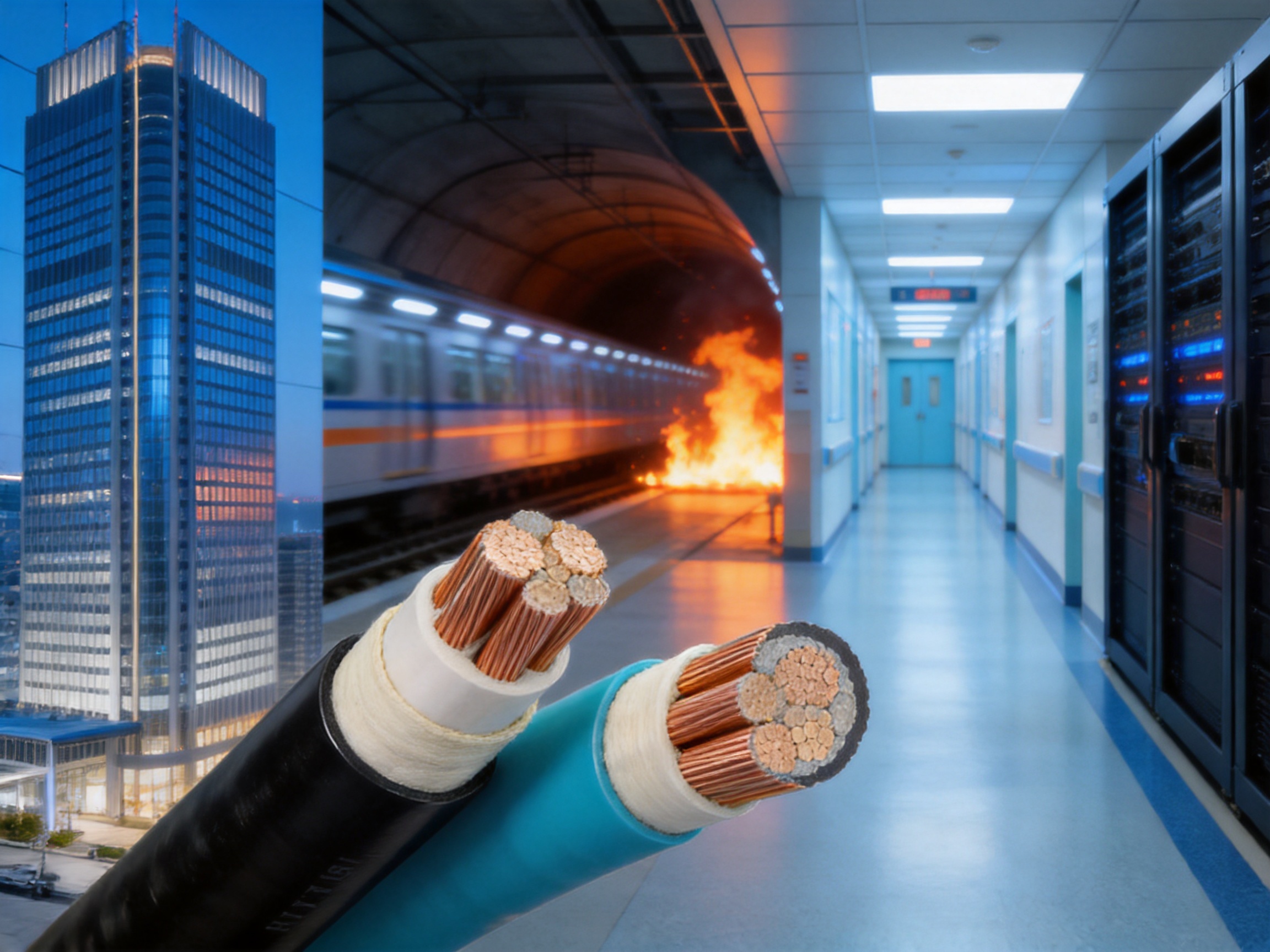
Potential applications include commercial and residential buildings, hospitals, schools, airports, railway stations, metro systems, tunnels, exhibition centers, shopping complexes, data centers, industrial facilities, photovoltaic installations, and other construction or infrastructure projects. The appropriate cable design, conductor size, insulation thickness, and installation method must still be selected by the cable manufacturer and project engineer.
The compound can be considered where project specifications call for LSZH insulation with enhanced flame-retardant performance and where rapid cross-linking is valuable to the cable producer. It is particularly relevant to manufacturers seeking to improve line productivity without sacrificing electrical insulation properties or mechanical performance.
Product Technology: LED UV Irradiation Cross-Linking
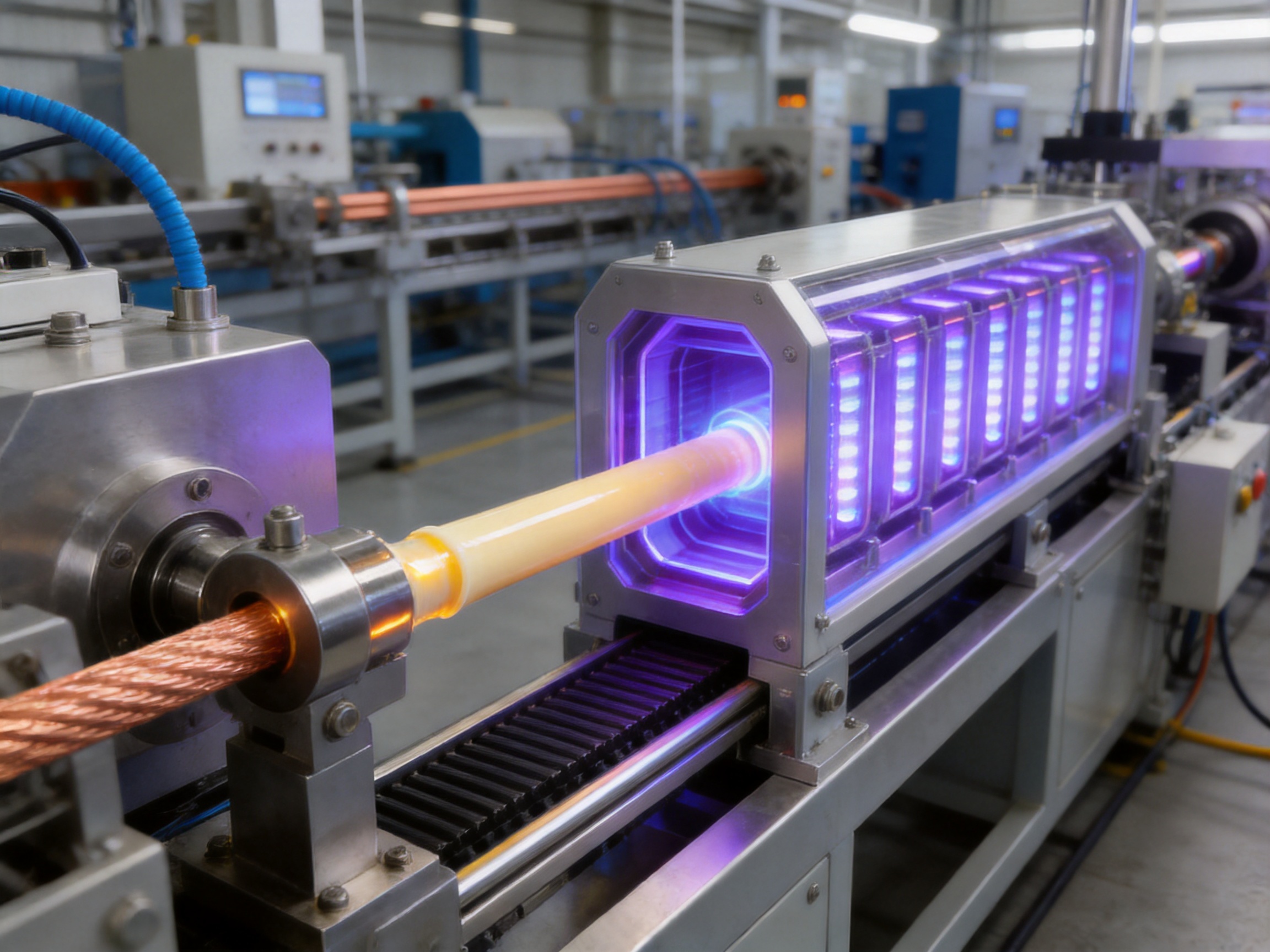
The central technological feature is cross-linking activated by LED UV light after extrusion. During cable production, the compound is melted, mixed, and formed around the conductor through an extrusion process. The freshly extruded insulation then passes through a controlled LED UV irradiation zone. The ultraviolet energy initiates the cross-linking reactions in the polymer system, converting the extruded thermoplastic-like material into a cross-linked insulation layer.
Cross-linking modifies the molecular network of the polymer. Compared with an uncross-linked material, a properly cross-linked insulation compound can offer improved resistance to thermal deformation, better dimensional stability at elevated temperature, and more reliable performance under mechanical and environmental stress. The precise balance depends on the formulation, cable geometry, extrusion conditions, UV dose, line speed, cooling profile, and conductor configuration.
Rapid curing in only a few seconds
According to the supplied product description, LED UV exposure can complete the cross-linking process in only a few seconds. The curing speed is described as dozens of times faster than traditional irradiation cross-linking. This difference can have a direct effect on cable-line design. A shorter curing zone may reduce the physical length of the production line and make it easier to integrate the curing unit with an existing extruder.
Rapid curing also reduces the time that the hot insulation remains in an unstable or partially cured condition. This can support improved line control and faster transition between production orders. For manufacturers operating multiple specifications, shorter process cycles may increase scheduling flexibility and reduce work-in-process inventory.
Simultaneous extrusion and cross-linking
The technology supports continuous extrusion and curing rather than requiring the cable to be transferred to a separate, lengthy post-treatment process. Integration can reduce handling steps and help maintain a consistent relationship between extrusion speed, coating thickness, and curing dose.
A continuous process also creates opportunities for automated monitoring. Line operators can track melt temperature, extrusion pressure, conductor preheating, line speed, UV intensity, UV exposure time, cooling conditions, outer diameter, eccentricity, and electrical characteristics. These parameters can be linked to production records for improved traceability.
Lower equipment and energy requirements
Traditional irradiation cross-linking systems can require substantial shielding, specialized radiation equipment, large production areas, and carefully managed operating procedures. The LED UV approach is intended to reduce equipment investment and energy consumption. LED sources can be switched on and off rapidly, produce controlled optical output, and avoid the long warm-up behavior associated with some conventional light sources.
Lower energy use can contribute to a reduced manufacturing cost per kilometer of cable, especially when production volumes are high. It may also support a lower environmental footprint through reduced electricity demand. The actual result depends on line speed, output, lamp efficiency, cooling requirements, UV dose, compound formulation, and factory operating conditions.
It is important to understand that UV cross-linking is not a substitute for process engineering. The UV source must provide the appropriate wavelength and intensity, and the insulation formulation must be designed for sufficient light penetration and controlled reaction kinetics. The production line must also account for pigment loading, insulation thickness, surface condition, and the optical behavior of the material.
Performance Profile of the Material
The supplied typical-value data covers mechanical properties, thermal behavior, smoke density, electrical insulation, impact performance, acidity, halogen content, and conductivity. Four material designations are shown in the technical information: DS-ZWG-105, DS-ZWG-125, DS-ZWG-105-B1, and DS-ZWG-105-B2. The values should be understood as typical results rather than universal guarantees for every production lot or every cable construction.
| Test Item | Unit | Requirement or Standard | DS-ZWG-105 | DS-ZWG-125 | DS-ZWG-105-B1 | DS-ZWG-105-B2 |
|---|---|---|---|---|---|---|
| Specific gravity | g/cm³ | Reference value | 1.49 | 1.48 | 1.58 | 1.57 |
| Tensile strength | MPa | ≥10.0 | 12.5 | 13.0 | 11.0 | 11.5 |
| Elongation at break | % | ≥150 | 170 | 175 | 160 | 165 |
| Tensile strength change rate | % | ≥28 as reported | 32 | 32 | 40 | 38 |
| Heat elongation under load | % | ≤100 | 45 | 40 | 35 | 40 |
| Permanent deformation after cooling | % | ≤25 | 0 | 0 | 0 | 0 |
| Flame smoke density | — | ≤100 | 50 | 50 | 45 | 40 |
| Non-flame smoke density | — | ≤350 | 300 | 305 | 255 | 265 |
| Volume resistivity at 20°C | Ω·cm | Reference value 1.0 × 10¹⁴ | 5.8 × 10¹⁴ | 5.6 × 10¹⁴ | 4.5 × 10¹⁴ | 5.0 × 10¹⁴ |
| Dielectric strength | MV/m | ≥20 | 30 | 30 | 28 | 28 |
| Impact catalytic temperature | °C | -25 reference | Pass | Pass | Pass | Pass |
| pH value | — | ≥4.3 | 5.0 | 5.0 | 5.2 | 5.1 |
| HCl and HBr content | % | ≤0.5 | <0.5 | <0.5 | <0.5 | <0.5 |
| Conductivity | μS/mm | ≤10 | 0.52 | 0.53 | 0.51 | 0.52 |
The table consolidates the principal figures supplied for the product family. Test conditions, specimen preparation, aging procedures, and the exact interpretation of certain headings should be confirmed against the relevant technical datasheet and test standard before use in a formal project specification.
Mechanical strength and elongation
The reported tensile strength values range from 11.0 to 13.0 MPa, exceeding the stated minimum of 10.0 MPa. Elongation at break ranges from 160% to 175%, compared with the stated minimum of 150%. These properties are important during cable manufacture, installation, bending, pulling, and service. Adequate tensile strength helps the insulation withstand handling and mechanical stress, while sufficient elongation supports flexibility and reduces the risk of cracking during movement.
The B1 and B2 formulations show somewhat higher density than the DS-ZWG-105 and DS-ZWG-125 grades. This is consistent with the use of a more intensive flame-retardant system, although density alone does not determine fire performance. The selection of the correct grade should take into account the required combustion class, insulation wall thickness, cable size, processing window, flexibility, and electrical design.
Thermal deformation resistance
The reported heat-elongation results are between 35% and 45%, well below the stated maximum of 100%. Permanent deformation after cooling is reported as zero for all four grades against a stated maximum of 25%. These results indicate good retention of shape under the specified test conditions.
Thermal deformation resistance is particularly relevant to cables installed in equipment rooms, risers, industrial facilities, photovoltaic systems, and locations exposed to elevated ambient temperatures. During operation or short-term overload, a cable insulation layer must maintain adequate thickness and dielectric separation. Cross-linking contributes to the material’s ability to resist excessive softening and permanent deformation.
Electrical insulation performance
The reported volume resistivity values are approximately 4.5 × 10¹⁴ to 5.8 × 10¹⁴ Ω·cm. The reported dielectric strength values are 28 to 30 MV/m, compared with a stated minimum of 20 MV/m. These results support the use of the compound as an electrical insulation material when the cable design and processing conditions are properly controlled.
Electrical performance depends on more than the resin formulation. Moisture control, filler dispersion, conductor cleanliness, extrusion stability, insulation eccentricity, surface smoothness, void prevention, and curing uniformity all influence final cable behavior. A well-designed UV cross-linking line should therefore include routine spark testing, dimensional inspection, insulation-resistance testing, and dielectric-strength verification.
Low-smoke and low-corrosiveness indicators
The supplied smoke-density results are below the stated limits for both flame and non-flame conditions. Flame smoke-density values range from 40 to 50, compared with a limit of 100. Non-flame values range from 255 to 305, compared with a limit of 350. The B1 and B2 grades show particularly low reported flame-smoke values, with the B2 designation showing a typical value of 40.
The reported pH values range from 5.0 to 5.2 against a stated minimum of 4.3. HCl and HBr content is reported as less than 0.5% for all four grades, and conductivity is between 0.51 and 0.53 μS/mm against a maximum of 10 μS/mm. Together, these indicators support the low-corrosiveness positioning of the LSZH formulation.
These figures should not be interpreted as a complete description of toxicity or fire behavior. Full project acceptance may require additional tests, including oxygen index, vertical flame testing, single-cable flame propagation, cable-bundle testing, heat release, smoke production, acidity, conductivity, gas analysis, and mechanical aging. The applicable project specification and local regulatory requirements should always control final qualification.
B1 and B2 Combustion Performance
The B1 and B2 variants are intended for construction-engineering applications requiring enhanced combustion performance. The supplied description states that these products meet the B1 and B2 requirements specified in GB 31247-2014. The standard addresses several fire-related characteristics, including flame spread, heat release, total heat release, smoke density, burning droplets, combustion particulates, combustion-gas toxicity, and corrosiveness.
A classification based on several performance categories is more informative than a single flame-retardancy number. In practical terms, it encourages cable manufacturers and project designers to consider the complete behavior of the installed cable system. The insulation must limit the development of fire while also reducing conditions that can hinder evacuation or damage nearby assets.
Understanding the difference between B1 and B2
B1 and B2 should be treated as distinct performance levels within the relevant classification framework. The required grade depends on building type, installation location, cable arrangement, fire-safety design, and applicable national or project standards. A B1 material should not automatically be substituted for a B2 material without checking the design requirement, and the reverse is also true.
In many projects, the cable manufacturer will select a formulation based on the required classification and cable construction. The same compound family may be adapted for different insulation thicknesses, conductor sizes, colors, and processing speeds. Before mass production, the cable should be tested in its final form because fire behavior can be affected by conductor material, insulation wall thickness, fillers, tapes, screens, sheaths, and cable grouping.
Importance of smoke, droplets, and combustion products
Fire-performance design must account for the entire cable rather than insulation alone. Burning droplets can ignite nearby materials or contribute to vertical fire spread. High smoke levels can obscure exit routes. Combustion particulates can contaminate sensitive equipment. Corrosive gases can damage metallic structures and electrical contacts even after the visible flame has been controlled.
The low-smoke, halogen-free formulation is intended to reduce these hazards. Its material design combines polyolefin chemistry with flame-retardant and smoke-suppression components. The compound must be compounded with sufficient dispersion and processed at appropriate temperatures so that the additives are distributed uniformly throughout the insulation.
Advantages Compared with Conventional Cable Materials
The product’s competitive advantages arise from both material performance and manufacturing efficiency. Many cable compounds can meet one or two basic requirements, but construction engineering increasingly demands a balanced solution. The UV-cross-linked LSZH system addresses rapid production, electrical insulation, mechanical integrity, thermal stability, and multi-dimensional fire safety within one material platform.
Faster production than traditional irradiation cross-linking
The most direct advantage is curing speed. The supplied product description states that LED UV cross-linking is dozens of times faster than traditional irradiation cross-linking. Faster curing can increase line output, shorten production cycles, and reduce the length of cable held between extrusion and final inspection.
Higher throughput can be especially valuable for large cable orders, infrastructure projects, and manufacturers that must handle multiple product specifications. A more compact production line may also simplify factory layout and reduce the capital burden associated with a new manufacturing cell.
Lower energy consumption
LED UV equipment is designed to deliver optical energy efficiently and only when required. Compared with slower or more energy-intensive curing approaches, this can reduce energy consumption per unit of finished cable. Lower energy demand may improve operating economics and support corporate sustainability objectives.
The actual energy benefit should be measured under the intended production conditions. Line speed, material thickness, UV dose, cooling requirements, lamp arrangement, maintenance, and operating hours all affect energy performance. Even so, the ability to cure rapidly after extrusion creates a strong basis for improving energy efficiency.
Reduced equipment investment
A shorter curing process can reduce the need for extensive post-treatment equipment and large curing facilities. The product is intended to support integration into a continuous extrusion line, which can make it attractive to manufacturers upgrading existing equipment or establishing new production capacity.
Reduced equipment investment does not mean that safety systems can be omitted. UV shielding, interlocks, ventilation, temperature control, monitoring instruments, and emergency-stop systems remain essential. Proper installation and commissioning are required to ensure that the LED unit delivers a stable dose across the full cable surface.
Balanced mechanical and electrical performance
Some highly filled flame-retardant compounds can be difficult to process or may show reduced flexibility. The reported tensile and elongation values of this product family indicate that the material is designed to retain useful mechanical properties while incorporating a flame-retardant package. The reported dielectric strength and volume resistivity also support its use in demanding insulation applications.
A balance between flame performance and processability is a significant competitive factor. If a compound requires excessive extrusion temperature, produces unstable surfaces, or causes frequent line stoppages, its nominal fire rating may not translate into efficient commercial production. The product’s UV-cross-linking design seeks to combine a practical processing window with rapid curing.
Low-smoke and halogen-free safety profile
Compared with conventional halogen-containing flame-retardant cable materials, LSZH compounds can provide advantages in environments where smoke, corrosiveness, and occupant safety are critical. The reported HCl and HBr content is below 0.5%, while the reported pH, conductivity, and smoke-density values are within the supplied limits.
This profile makes the material relevant to buildings and infrastructure where fire-related damage must be limited beyond the immediate flame zone. It can help support project goals involving safer evacuation, lower smoke density, and reduced corrosion of electrical and electronic systems.
Advanced Manufacturing and R&D Strengths
Jiangsu Duoshang New Materials Technology Co., Ltd. focuses on the research, development, production, and sale of polyolefin cable compounds. Its capabilities extend beyond one product grade and include a broader product portfolio serving power, communications, transportation, renewable energy, marine cables, and other industries.
The company operates an R&D center of more than 3,000 square meters and has invested more than RMB 35 million in research equipment, according to the supplied company information. Its professional R&D team includes more than 30 members, including five doctors and several recipients of provincial and municipal talent awards. This structure supports formulation development, material characterization, process optimization, and application-oriented technical service.
Multiple production bases and production lines
The company operates two production bases covering more than 15,000 square meters, with more than 10 production lines for polyolefin cable compounds. Multiple lines can support different product families, output requirements, colors, packaging formats, and processing conditions. They can also improve production scheduling and provide capacity for customized orders.
For customers in construction and infrastructure markets, manufacturing capacity is important because cable projects are often time-sensitive. Stable supply requires sufficient raw-material management, production planning, quality inspection, packaging control, and logistics coordination. A supplier with multiple production lines can provide greater flexibility than a small facility limited to one formulation or one process route.
Broad product portfolio
The company’s portfolio includes UV-cross-linked compounds, silane cross-linkable compounds, irradiation cross-linked compounds, thermoplastic LSZH flame-retardant compounds, polyethylene sheath compounds, and other specialized materials. This range allows customers to evaluate related insulation and sheathing technologies through one technical resource.
A broad product portfolio also supports system-level material selection. A cable may require different compounds for conductor insulation, inner sheath, outer sheath, bedding, or special environmental protection. A supplier with experience across multiple material types can help compare processing routes and select a combination that matches the cable design and project requirements.
Application-oriented technical support
The company states that it provides application-oriented solutions, research and development support, testing support, technical documentation, stable supply capacity, and customized material solutions. These services are valuable because a compound cannot be evaluated solely by its pellet appearance or laboratory data. Its real value is demonstrated when it runs consistently on the customer’s extrusion line and produces cable that passes final tests.
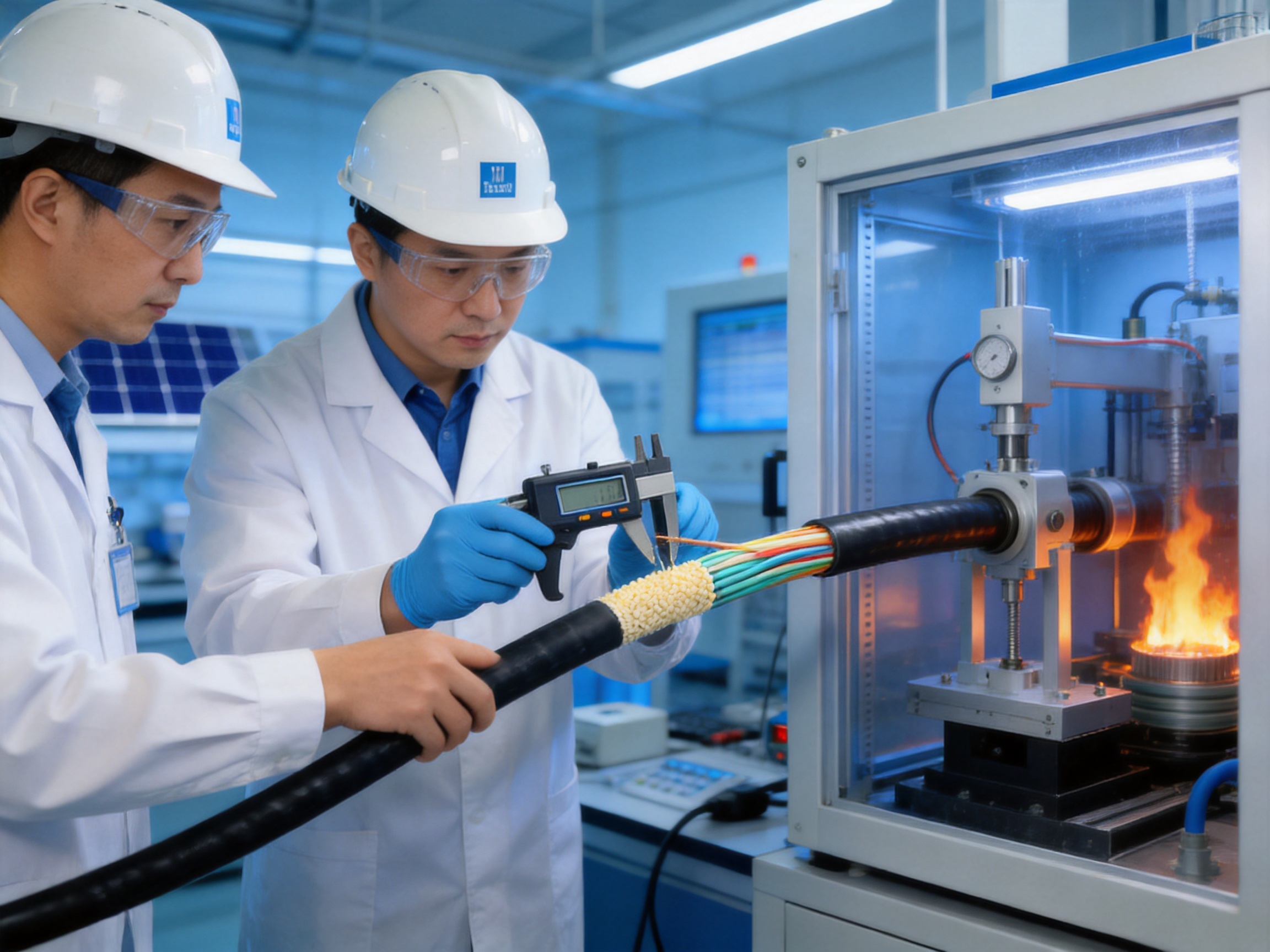
Technical support may include extrusion-trial planning, temperature-profile recommendations, UV-dose evaluation, surface-quality analysis, curing verification, electrical testing, flame-performance coordination, and troubleshooting. Customers should provide details such as conductor type, insulation thickness, line speed, extruder screw design, color requirements, expected operating temperature, and applicable standards.
Recommended Processing Considerations
UV-cross-linked LSZH insulation should be processed according to the supplier’s technical data sheet and the cable manufacturer’s validated production procedure. The following considerations provide a general framework rather than a substitute for a formal process specification.
Material storage and handling
Pellets should be stored in clean, dry, sealed packaging and protected from excessive heat, moisture, dust, and direct sunlight. Contamination can affect extrusion stability, electrical insulation, surface appearance, and UV curing. Material identification and batch traceability should be maintained from receipt through production.
Where drying is recommended by the supplier, the drying temperature and time should be carefully controlled. Excessive drying can alter the material or increase processing cost, while insufficient moisture control may contribute to surface defects, voids, or unstable electrical performance. The applicable material datasheet should determine whether pre-drying is required.
Extrusion temperature and shear control
The extrusion process should provide complete melting and uniform dispersion without causing excessive thermal degradation. Temperature settings should be established through trials that consider the extruder type, screw design, output rate, die geometry, conductor preheating, and insulation thickness.
Excessive shear or residence time can damage the polymer and additive system. Insufficient mixing can create local variations in flame-retardant concentration, which may affect combustion performance and electrical reliability. Stable melt pressure and a uniform surface are useful indicators of a well-controlled process.
UV dose and line speed
UV dose is determined by irradiation intensity and exposure time. The curing unit should be calibrated and monitored so that the entire insulation surface receives a consistent dose. Line speed must be matched to the optical output and the required degree of cross-linking.
Insulation color and thickness can affect UV penetration. Dark pigments, high filler content, and thick insulation walls may require formulation or process adjustments. The customer should validate the curing response using appropriate gel-content, hot-set, heat-elongation, or other cross-linking verification methods specified for the product.
Cooling and dimensional control
After UV exposure, the cable should be cooled under controlled conditions. Uneven cooling can contribute to ovality, eccentricity, residual stress, or surface deformation. Water temperature, cooling length, cable tension, capstan speed, and take-up conditions should be coordinated with the extrusion output.
Online diameter measurement and spark testing can identify defects quickly. Periodic off-line tests should verify tensile strength, elongation, insulation resistance, dielectric strength, heat deformation, and other requirements. For B1 and B2 applications, final cable fire testing is essential because material test results do not automatically represent the performance of every finished cable construction.
Quality Assurance and Project Qualification
Reliable cable performance depends on consistent raw materials, controlled compounding, uniform pellet quality, stable extrusion, repeatable UV curing, and documented inspection. Manufacturers should establish incoming inspection for key raw materials, in-process monitoring for compounding and extrusion, and release testing for finished compound batches.
Important quality-control activities may include melt-flow or rheological evaluation, density measurement, moisture checks, ash or filler verification, tensile testing, elongation testing, volume resistivity, dielectric strength, heat deformation, smoke-density testing, acidity and conductivity testing, and flame-performance testing.
For construction projects, documentation should clearly identify the material grade, batch number, production date, recommended processing conditions, test methods, typical values, and applicable limitations. Certificates of analysis and test reports should be retained for traceability. If a project requires formal certification or third-party approval, the material and finished cable should be assessed through the required certification route.
Typical value versus guaranteed value
The figures provided for DS-ZWG-105, DS-ZWG-125, DS-ZWG-105-B1, and DS-ZWG-105-B2 are typical values. Typical values help engineers compare grades and understand expected performance, but they should not replace contractual specifications or lot-release limits.
Performance may vary with test method, specimen preparation, aging condition, insulation thickness, color, extrusion history, UV dose, and laboratory environment. Customers should request the latest technical datasheet and discuss any special requirements before placing a production order.
Finished-cable validation
Finished-cable validation should cover normal operation and the intended installation scenario. The cable manufacturer should consider conductor size, voltage rating, insulation wall, sheath design, cable grouping, vertical or horizontal installation, ambient temperature, bending radius, pulling force, moisture exposure, and long-term aging.
Fire tests should be selected according to the project standard. A compound that performs well in a small laboratory specimen may show different behavior in a complete cable or cable bundle. This is why cooperation between compound supplier, cable manufacturer, certification laboratory, and project engineer is important.
Applications in Construction and Infrastructure
The product is particularly relevant to cables used in public and commercial buildings where smoke and corrosive emissions are significant concerns. Potential applications include power cables, control cables, building-wire systems, communication cables, fire-alarm systems, instrumentation cables, and other cable products designed with LSZH insulation.
Commercial and residential buildings
High-rise buildings, shopping centers, office complexes, hotels, hospitals, and residential developments contain large quantities of cable installed through shafts, ceilings, floors, and equipment rooms. LSZH insulation can help reduce smoke and corrosive emissions in the event of a fire, supporting the broader fire-protection strategy of the building.
Transportation facilities
Railway stations, metro systems, airports, tunnels, and locomotives require cable materials that can perform in confined or highly occupied spaces. Rapid evacuation may be complicated by dense smoke, while corrosive combustion products can damage signaling, communication, and control equipment. The B1 and B2 product grades are relevant to cable designs developed for these demanding environments, subject to applicable transport standards.
Data centers and communication facilities
Data centers, server rooms, and communication facilities contain valuable electronic equipment that can be affected by smoke and corrosive gases. LSZH cable insulation can support equipment-protection objectives while providing high electrical insulation performance. The material selection should be coordinated with fire detection, suppression, ventilation, cable-tray, and power-distribution designs.
Energy and industrial installations
Photovoltaic systems, new-energy generation facilities, industrial plants, and marine or port infrastructure often require materials with strong electrical, mechanical, and environmental performance. Duoshang’s broader product portfolio includes materials for energy, marine, rail, and communication applications, enabling customers to evaluate related solutions for different sections of a cable system.
Why Choose This UV-Cross-Linked LSZH Solution?
The product offers a combination of features that can be difficult to obtain from a conventional cable compound. It is designed for rapid LED UV curing, continuous extrusion and cross-linking, lower energy consumption, reduced equipment investment, LSZH fire safety, strong electrical insulation, useful mechanical properties, and B1 or B2 combustion-performance applications.
Its competitive value is not based only on a single numerical result. The material is positioned as a complete manufacturing solution for cable producers that need both high-performance insulation and an efficient production route. Faster curing can improve productivity. Low-smoke and halogen-free chemistry can support safer construction projects. Cross-linking can improve thermal deformation resistance. A broad supplier infrastructure can support customization and stable supply.
The company’s R&D resources, multiple production bases, more than 10 production lines, technical team, testing capabilities, and broad product portfolio provide additional support for customers requiring an ongoing material partnership rather than a one-time purchase. These strengths are particularly important when a cable must pass project-specific testing or when the production line requires tailored processing conditions.
At the same time, responsible material selection requires technical verification. Customers should confirm the exact B1 or B2 requirement, obtain the latest datasheet, review test methods, conduct line trials, and validate the finished cable. The supplier’s technical staff can help determine the most appropriate grade and processing window.
Questions and Answers
What is UV Irradiation Cross-linked LSZH insulation?
It is a low-smoke, halogen-free polyolefin cable-insulation compound that is cross-linked using LED ultraviolet irradiation after extrusion. The process forms a cross-linked network in the insulation and is designed to complete curing within a few seconds under suitable production conditions.
How is LED UV cross-linking different from traditional irradiation cross-linking?
The LED UV method uses controlled ultraviolet exposure integrated with the extrusion line. According to the supplied product information, it cures dozens of times faster than traditional irradiation cross-linking, requires lower equipment investment, consumes less energy, and supports simultaneous extrusion and cross-linking.
What do B1 and B2 refer to?
B1 and B2 refer to construction-related combustion-performance classifications under the applicable GB 31247-2014 framework. The classifications consider multiple characteristics, including flame spread, heat release, smoke, burning droplets, particulates, combustion-gas toxicity, and corrosiveness. The correct grade depends on the project specification and finished-cable design.
Does the compound contain halogens?
The product is described as a low-smoke, halogen-free compound. The supplied data reports HCl and HBr content below 0.5% for the listed grades. Customers should confirm the exact contractual halogen-free definition and test method for their project.
What are the reported tensile properties?
Typical tensile strength values range from 11.0 to 13.0 MPa, while elongation at break ranges from 160% to 175% for the listed grades. The supplied requirements are at least 10.0 MPa tensile strength and at least 150% elongation at break.
Can the material be used on existing extrusion equipment?
It may be suitable for integration into an existing cable-extrusion line, but compatibility must be confirmed through technical evaluation. The extruder, screw, die, cooling system, UV unit, line speed, insulation thickness, and conductor design all influence production results. A controlled trial is recommended before commercial production.
What should be monitored during UV curing?
Manufacturers should monitor UV intensity, dose, exposure time, line speed, lamp condition, insulation thickness, material color, surface temperature, and curing indicators. The appropriate verification method may include heat-elongation, hot-set, gel-content, or other tests specified by the supplier and applicable standard.
Are the values in the performance table guaranteed?
No. The listed figures are typical values supplied for product comparison. Guaranteed values, lot-release limits, test conditions, and certification status should be confirmed in the current technical datasheet, quality agreement, and applicable project documentation.
What industries can use this material?
Potential industries include construction, power distribution, communications, rail transit, locomotives, photovoltaic systems, new-energy generation, marine cables, industrial facilities, data centers, and other applications requiring LSZH insulation with enhanced fire performance.
How can customers select between the available grades?
Selection should consider the required fire class, electrical rating, cable size, insulation thickness, operating temperature, flexibility, processing speed, color, installation environment, and certification requirements. Jiangsu Duoshang New Materials Technology Co., Ltd. can provide technical assistance for grade selection and processing evaluation.
What information should be provided when requesting a quotation or technical recommendation?
Customers should provide the cable type, conductor material and size, insulation thickness, target line speed, extruder configuration, UV equipment, required B1 or B2 classification, applicable standards, operating temperature, color, packaging preference, annual demand, and any required third-party approvals. This information helps the supplier recommend a practical material and production process.
Conclusion
UV Irradiation Cross-linked LSZH Flame Retardant Insulation for Construction Engineering provides a technology platform for cable manufacturers seeking a combination of safety, productivity, and process efficiency. Its LED UV curing method is designed to complete cross-linking within seconds, allowing extrusion and curing to operate as a continuous process. Compared with slower traditional irradiation approaches, this can reduce production cycles, equipment investment, energy consumption, and manufacturing costs.
The material family also provides the core properties expected from a construction-grade LSZH insulation compound: high tensile strength, high elongation, thermal deformation resistance, strong volume resistivity, suitable dielectric strength, low smoke density, low reported HCl and HBr content, favorable pH, and low conductivity. The B1 and B2 grades are intended for projects requiring enhanced combustion performance under the relevant national standard.
Jiangsu Duoshang New Materials Technology Co., Ltd. strengthens the product offering through dedicated R&D resources, experienced technical personnel, multiple production bases, more than 10 production lines, a broad polyolefin compound portfolio, and application-oriented support. This combination enables the company to serve standard orders, customized formulations, process development, and project-specific cable-material requirements.
For the best result, customers should treat the compound and production process as one integrated system. Material grade, extrusion conditions, UV dose, cable geometry, cooling, testing, and final installation requirements must be evaluated together. With proper qualification and process control, this UV-cross-linked LSZH technology can help cable manufacturers produce safer, more efficient, and more competitive products for modern construction engineering.
References
GB 31247-2014, Classification for Burning Behavior of Building Materials and Products.
Supplier technical information for DS-ZWG-105, DS-ZWG-125, DS-ZWG-105-B1, and DS-ZWG-105-B2 cable compounds.
Supplier product description for UV Irradiation Cross-linked LSZH Flame Retardant Insulation for Construction Engineering.
IEC 60332 series, Tests on Electric and Optical Fibre Cables Under Fire Conditions.
IEC 60754 series, Test on Gases Evolved During Combustion of Materials from Cables.
IEC 61034 series, Measurement of Smoke Density of Cables Burning Under Defined Conditions.
General principles of polymer cross-linking, cable extrusion, ultraviolet curing, and low-smoke halogen-free cable-material processing.