English
 Français
 Español
 русский
 عربى
Green Ohm
Green Ohm
Green Ohm
Green Ohm
Green Ohm
Green Ohm
Green Ohm
Green Ohm
Green Ohm
Content
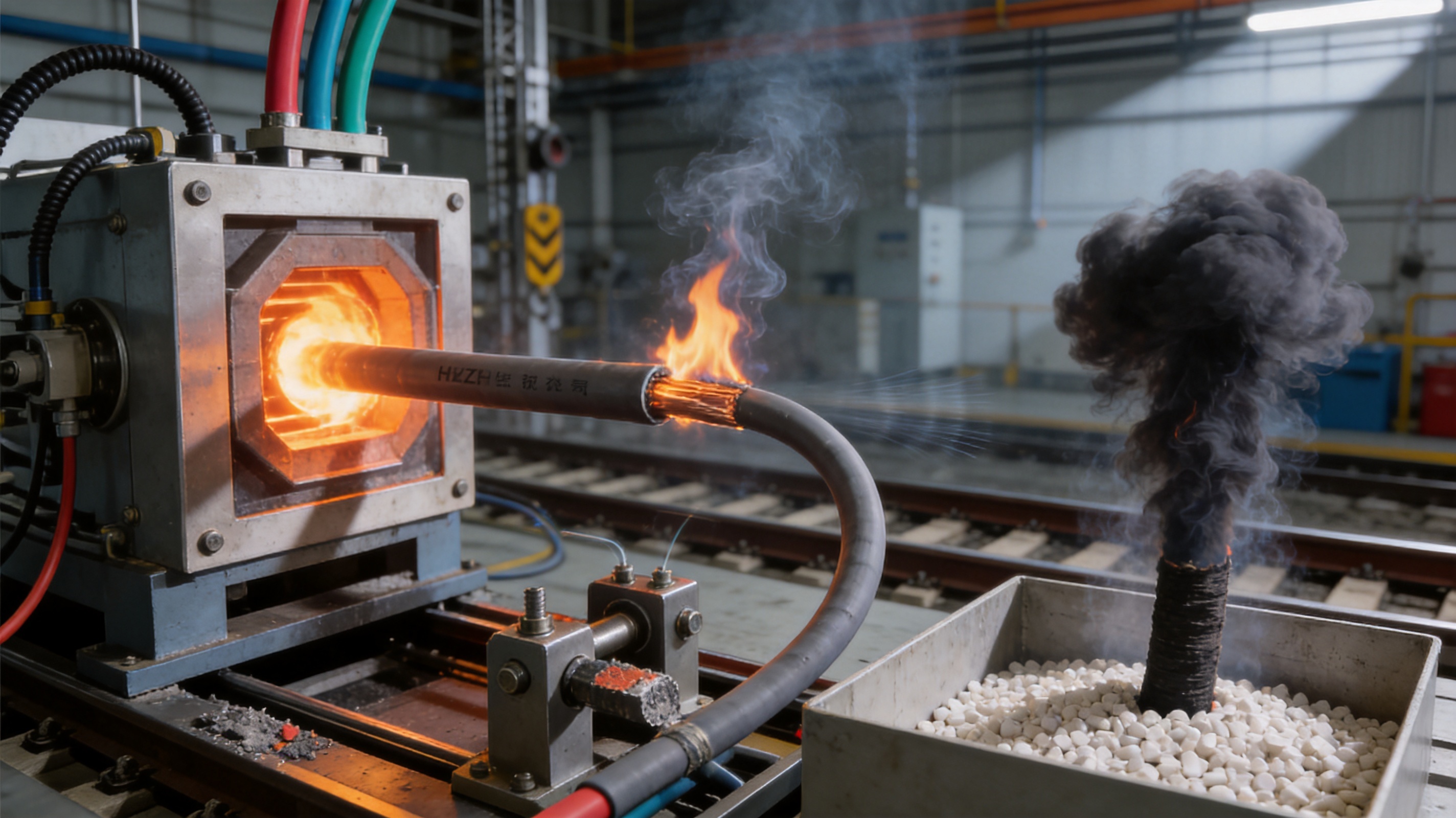
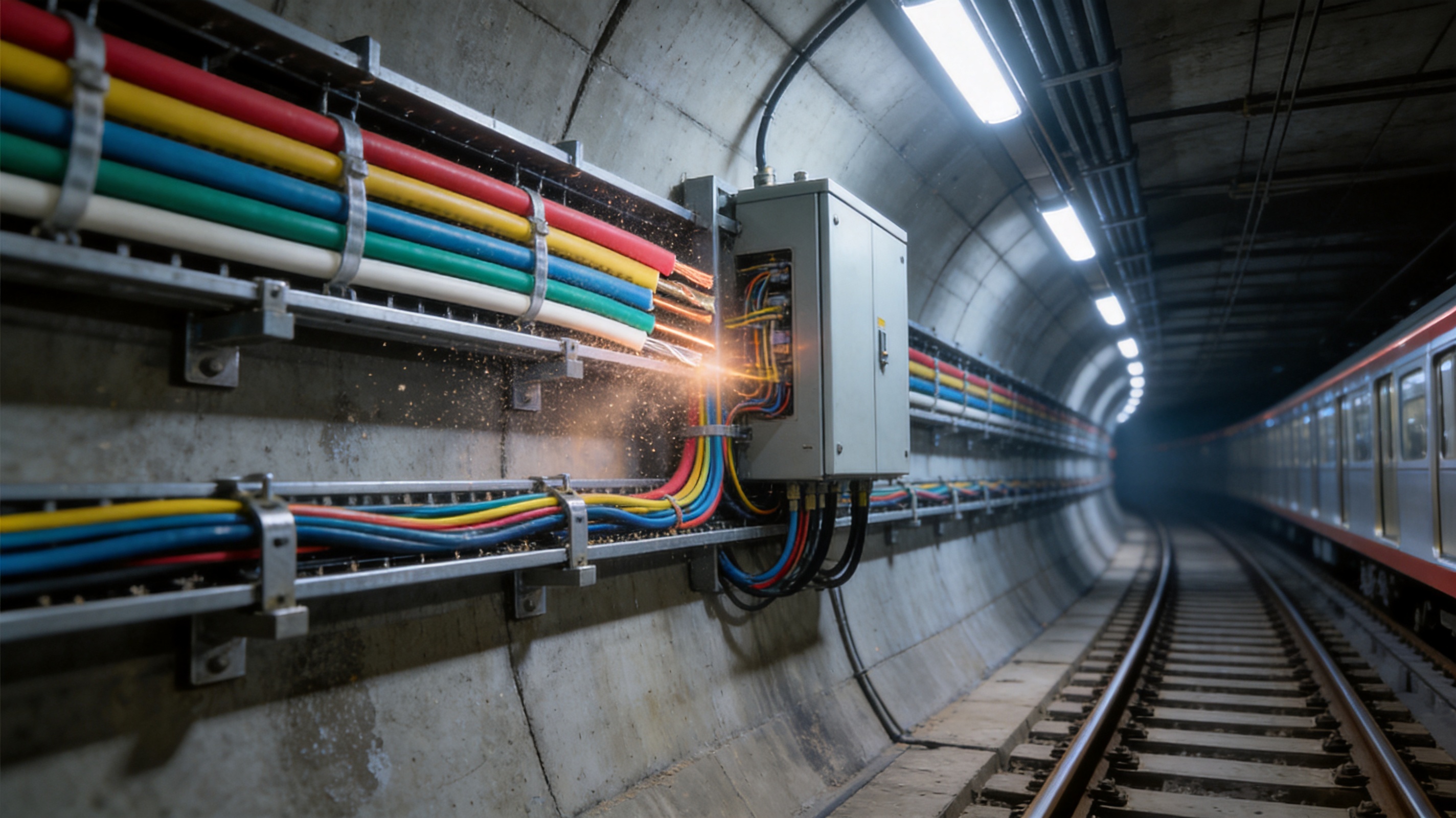
Rail transit cables operate in one of the most demanding environments in the electrical and transportation industries. A single cable may be exposed to continuous vibration, repeated heating and cooling, mechanical compression, abrasion, oil contamination, acidic or alkaline substances, and the severe fire-safety requirements associated with enclosed vehicles, stations, tunnels, and underground infrastructure. For this reason, the insulation material cannot be evaluated only by its tensile strength or electrical performance. It must provide a balanced combination of flame retardancy, low smoke generation, low corrosivity, mechanical durability, thermal stability, electrical insulation, and long-term processing reliability.
The Accelerator Irradiation Cross-linked LSZH Flame Retardant Insulation for Rail Transit, available in DS-WDZF-105 (GD) and DS-WDZF-125 (GD) grades, is designed for this demanding application environment. It is an irradiation cross-linked, low-smoke, halogen-free flame-retardant compound intended for traction cables, signaling cables, and related rail transit wiring systems. Its performance profile is designed to support cable manufacturers that need reliable insulation after extrusion and irradiation cross-linking, while also meeting the practical requirements of train, subway, and tunnel cable installations.
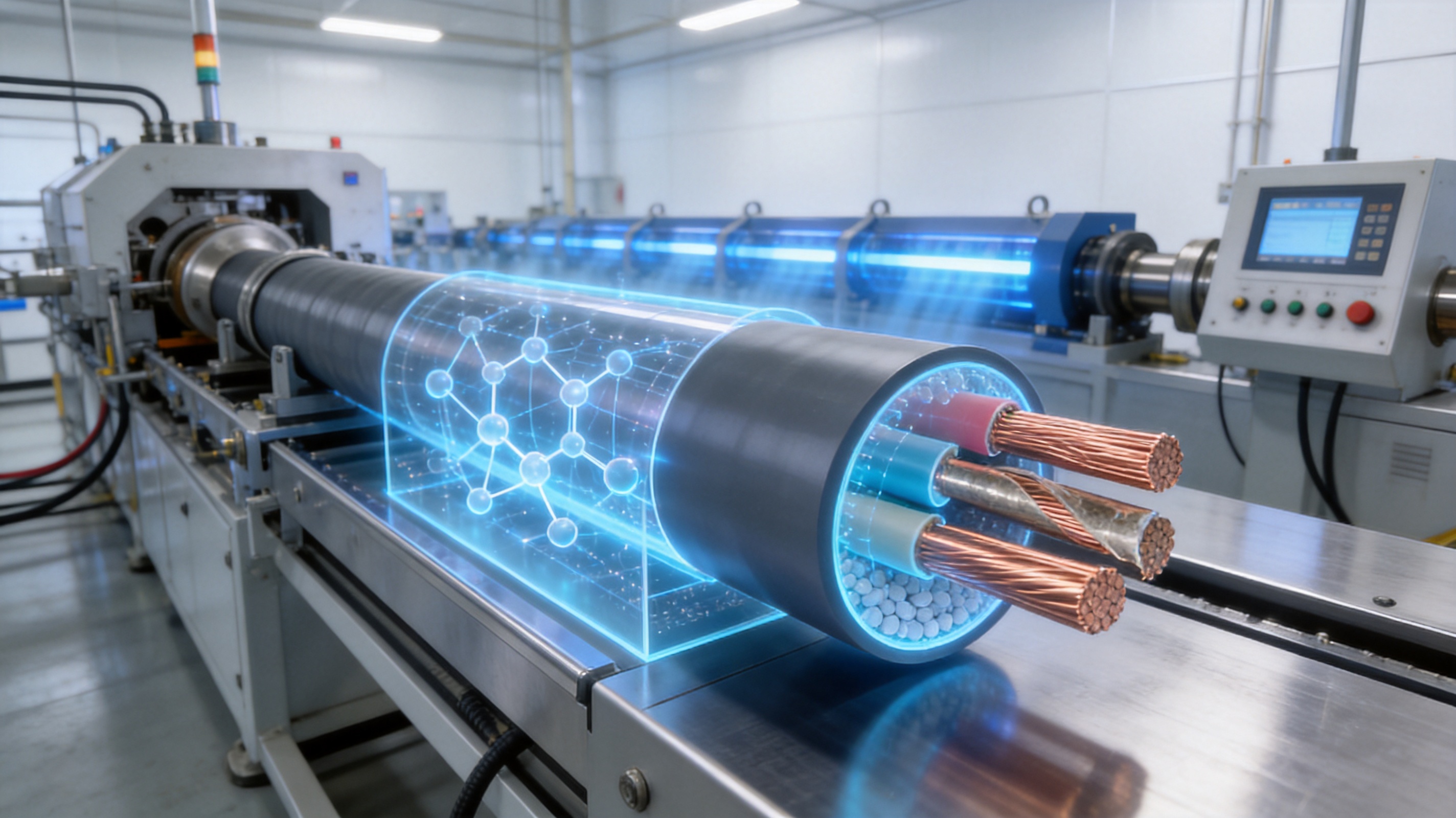
The material combines a dense cross-linked molecular structure with a polyolefin-based low-smoke, halogen-free formulation. This structure helps the finished insulation resist thermal cycling, vibration, abrasion, compression tearing, and environmental exposure. At the same time, the formulation delivers low smoke density, low acid gas content, controlled electrical conductivity, and strong flame-retardant performance. The result is a specialized compound for applications in which fire safety and operational reliability must be considered together.
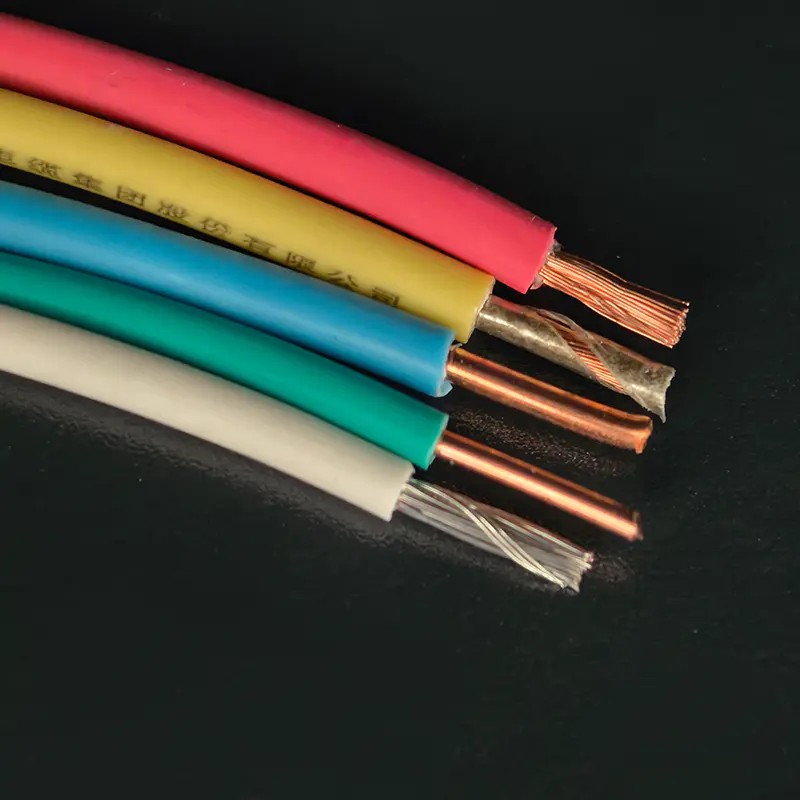
Accelerator Irradiation Cross-linked LSZH Flame Retardant Insulation for Rail Transit (Class B1/B2)
Why Rail Transit Cable Insulation Requires Specialized Materials
Rail transit cable systems differ from many conventional building or industrial cable applications. A cable installed in a train or subway must function within a restricted space, frequently near passengers, equipment, ventilation systems, and other cable circuits. In the event of a fire, smoke and corrosive gases may spread rapidly through a vehicle or tunnel. Reduced visibility can hinder evacuation, while acidic or halogen-containing combustion products may damage electrical equipment, metal structures, and control systems.
Traction and signaling cables also experience substantial mechanical and environmental stress. Trains accelerate, brake, turn, and travel over variable track conditions. Cables may be installed in confined routes where bending, clamping, pulling, or localized compression occurs. In railway vehicles, repeated vibration and movement may gradually expose weaknesses in the insulation. Tunnel cables may face moisture, dust, chemical contamination, and difficult maintenance conditions. These factors require a material that remains mechanically stable and electrically dependable for the service life of the cable.
Thermal conditions are equally important. Cables may be exposed to heat generated by current loading, adjacent equipment, enclosed cable channels, and changing ambient temperatures. During operation, the insulation can undergo repeated expansion and contraction. If the compound is not properly stabilized, thermal cycling may lead to embrittlement, cracking, deformation, or loss of electrical properties.
Traditional halogen-containing flame-retardant materials may provide flame resistance, but their combustion products can include dense smoke and corrosive gases. Conventional non-cross-linked materials may also show lower resistance to deformation at elevated temperatures. A rail transit cable compound therefore needs to address several requirements simultaneously: flame retardancy without excessive smoke, mechanical strength without excessive stiffness, thermal stability without loss of processability, and electrical performance under demanding operating conditions.
Product Concept and Material Architecture
The product is based on an irradiation cross-linking concept. During cable manufacturing, the extruded insulation is subjected to controlled irradiation. The energy initiates cross-linking reactions within the polymer system, transforming the initially processable compound into a three-dimensional molecular network. This network improves the ability of the insulation to retain its shape and mechanical properties when exposed to heat, stress, and repeated environmental changes.
Compared with a purely thermoplastic insulation, a cross-linked insulation generally offers improved hot deformation resistance and better dimensional stability. The cross-linked structure reduces the movement of polymer chains under load, which helps prevent excessive elongation or permanent deformation at elevated temperature. This feature is especially valuable in traction and signaling cables that may be routed close to heat-producing electrical components or installed in areas where ventilation is limited.
The material is also formulated as LSZH, meaning low smoke and halogen-free. The low-halogen design reduces the potential for corrosive hydrogen chloride and hydrogen bromide gases during combustion. The supplied data show HCl and HBr content below 0.5 percent, a pH value of 5, and electrical conductivity of 0.52 uS/mm for both listed grades. These results indicate a combustion behavior profile aligned with the need to protect people, equipment, and enclosed infrastructure during a fire event.
Flame retardancy is supported by an oxygen index of 32 percent for both grades. The oxygen index indicates the minimum oxygen concentration required to sustain combustion under a defined test method. A higher value generally reflects greater resistance to continued burning in an oxygen-limited environment. The actual behavior of a finished cable must still be evaluated through the applicable cable-level fire tests, but the compound-level oxygen index demonstrates a strong flame-retardant foundation.
The two grades, DS-WDZF-105 (GD) and DS-WDZF-125 (GD), are intended to provide options for different thermal requirements. The numerical designations suggest different temperature classes, with the second grade offering a higher rated thermal category. Final cable designations, allowable conductor temperatures, and installation conditions should be confirmed with the cable manufacturer and the relevant product standard.
Key Technical Advantages
Dense Molecular Structure After Irradiation Cross-Linking
The most important technical advantage of the product is the dense molecular structure created after irradiation cross-linking. This structure improves the insulation’s resistance to repeated thermal cycling, mechanical stress, and dimensional change. In a rail transit environment, cable performance is influenced not only by maximum temperature but also by the number and speed of temperature changes over time.
Repeated heating and cooling can cause ordinary materials to expand