English
 Français
 Español
 русский
 عربى
Green Ohm
Green Ohm
Green Ohm
Green Ohm
Green Ohm
Green Ohm
Green Ohm
Green Ohm
Green Ohm
Content
- 1 Why Photovoltaic Cables Need Advanced LSZH Materials
- 2 Product Concept and Cross-Linking Technology
- 3 Product Grades and Typical Performance
- 4 Key Advantages Compared with Conventional Cable Compounds
- 5 Application in Photovoltaic Cable Construction
- 6 Manufacturing Strengths of the Supplier
- 7 Quality Assurance and Qualification Considerations
- 8 Processing Guidance for Cable Manufacturers
- 9 Environmental and Safety Value
- 10 Competitive Position in the Cable-Materials Market
- 11 Recommended Selection and Purchasing Process
- 12 Conclusion
- 13 Questions and Answers
- 13.1 What is the main purpose of this LSZH compound?
- 13.2 Why is the material called irradiation cross-linked?
- 13.3 What is the operating temperature level of the material?
- 13.4 Can the material be used in cold climates?
- 13.5 What outdoor resistance does the compound provide?
- 13.6 What are the main electrical properties?
- 13.7 Does the compound contain halogens?
- 13.8 What are the listed product grades?
- 13.9 Is the material suitable for long-term solar-farm use?
- 13.10 What should cable manufacturers verify before mass production?
- 13.11 What support can the supplier provide?
- 14 References
- 15 Product: 125°C Accelerator Irradiation Cross-linked LSZH Flame Retardant Insulation and Sheathing Material for Photovoltaics
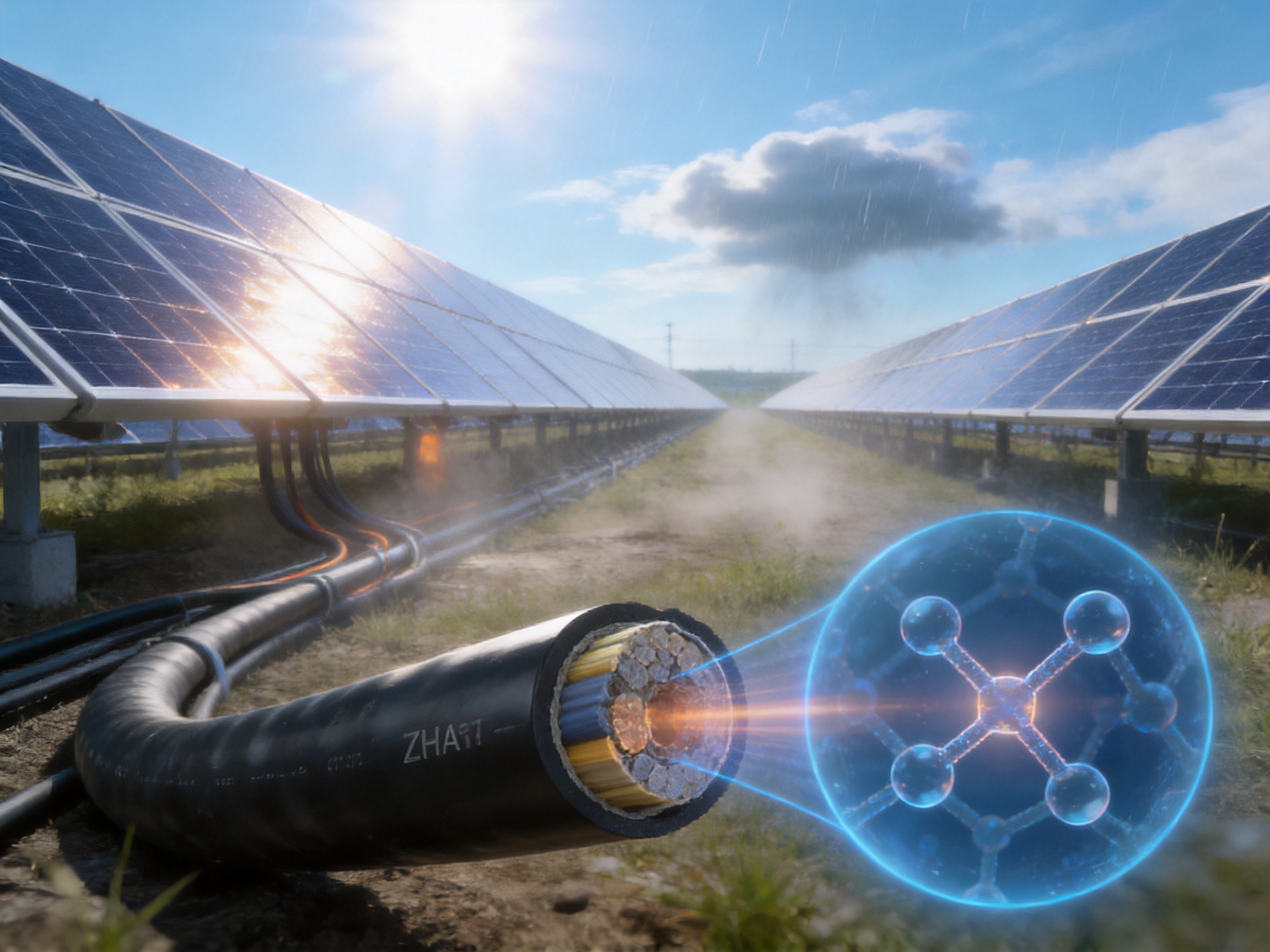
Photovoltaic power plants are expected to operate safely and reliably for decades while being exposed to sunlight, heat, humidity, temperature cycling, wind, dust, rain, and, in some locations, salt spray or aggressive chemical environments. Every cable installed in such a system must therefore perform more than the basic function of conducting electricity. Its insulation and sheath must resist flame, limit smoke generation, maintain electrical integrity, tolerate mechanical movement, and withstand long-term outdoor exposure.
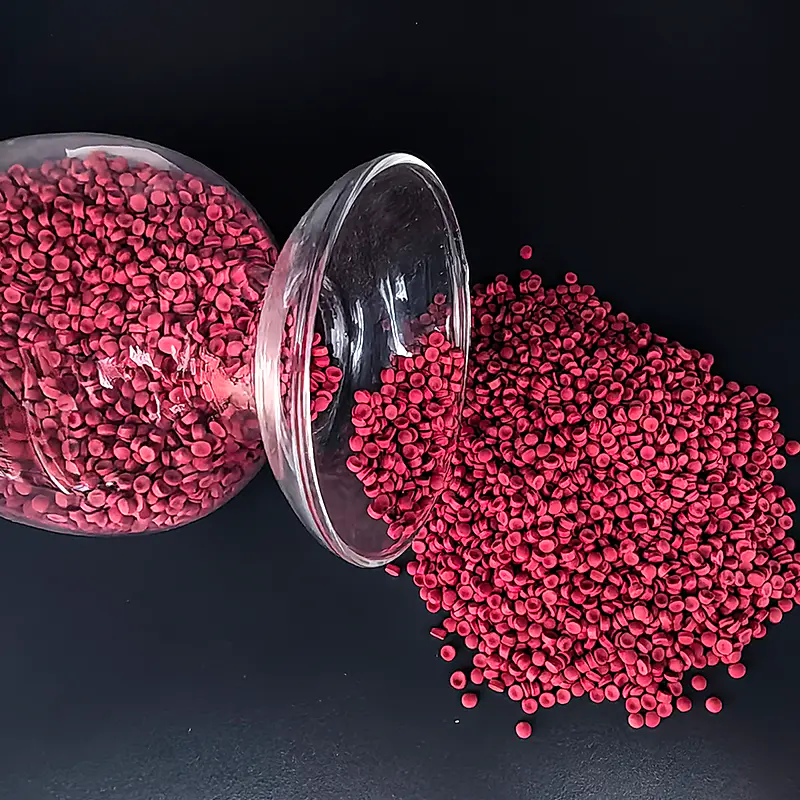
The 125°C accelerator irradiation cross-linked low-smoke halogen-free flame-retardant insulation and sheathing material developed by Jiangsu Duoshang New Materials Technology Co., Ltd. is designed for this demanding operating environment. It is a polyolefin-based LSZH compound intended for photovoltaic cable insulation and sheathing applications. Through electron accelerator irradiation crosslinking, the material forms a stable three-dimensional molecular network that improves thermal performance, dimensional stability, mechanical durability, and resistance to environmental aging.
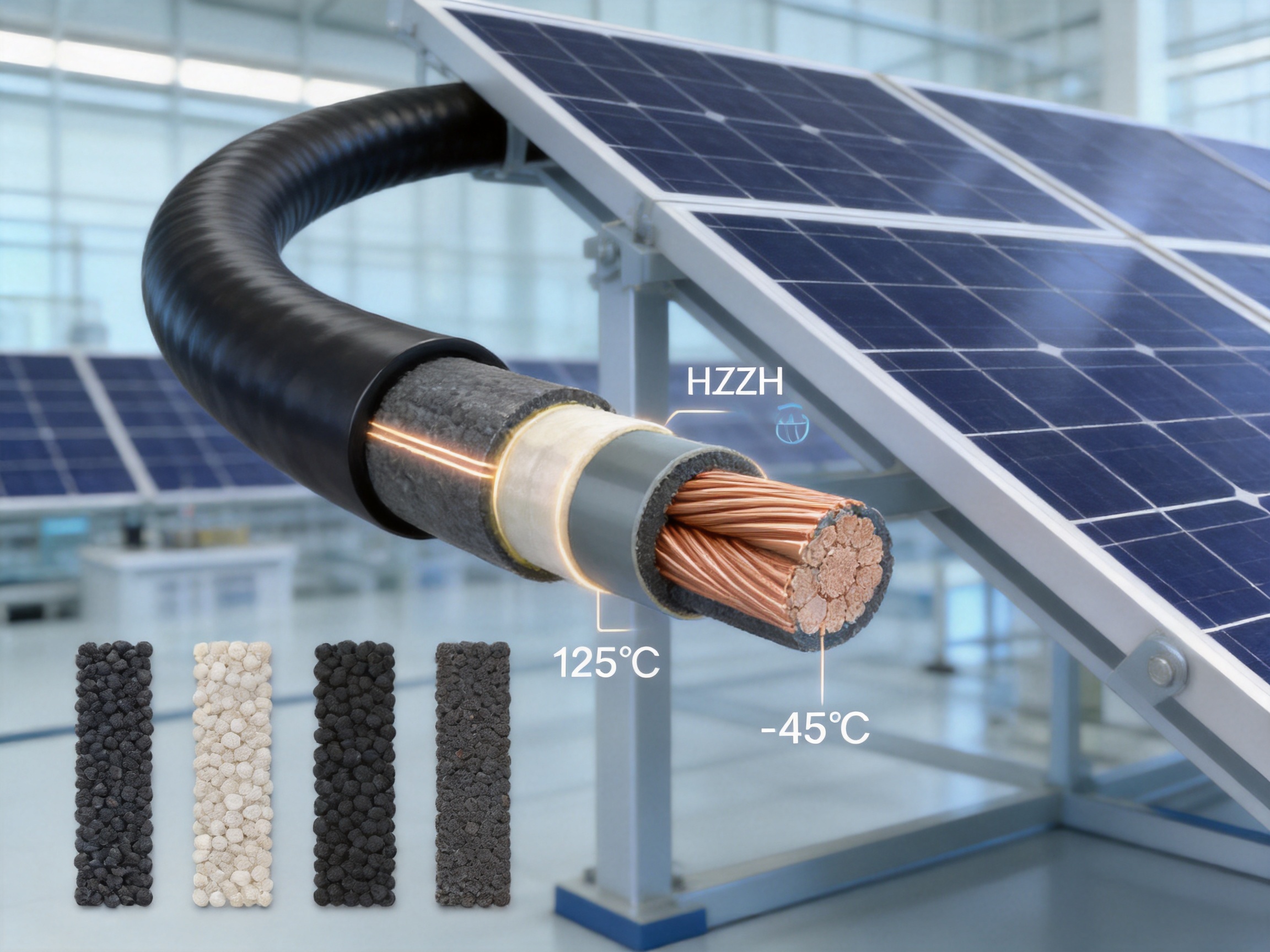
The material combines a rated temperature resistance of up to 125°C with low-temperature brittleness below -40°C. It also provides strong resistance to ultraviolet radiation, ozone, acids, and alkalis. According to the supplied product information, its outdoor service life can reach up to 25 years when properly processed and used within the applicable cable design and installation conditions. Its low-smoke, halogen-free and flame-retardant characteristics make it suitable for applications where fire safety, occupant protection, equipment protection, and environmental responsibility are important.
This article examines the material’s technical characteristics, manufacturing technology, performance data, photovoltaic applications, competitive advantages, processing considerations, quality-control approach, and the capabilities of its manufacturer. It is intended to help cable manufacturers, photovoltaic system integrators, distributors, engineering contractors, and technical buyers evaluate the compound as a long-term cable material solution.
Why Photovoltaic Cables Need Advanced LSZH Materials
Photovoltaic cables are installed in an environment that is more severe than many indoor or protected cable applications. Cable routes may run beneath solar modules, along mounting structures, through cable trays, or across exposed outdoor surfaces. During operation, solar radiation and limited ventilation can raise the cable temperature significantly. The cable may also experience repeated daily temperature cycles, seasonal changes, mechanical vibration, wind movement, moisture, and contact with construction materials or cleaning chemicals.
Conventional cable materials may provide acceptable short-term performance but may not offer the complete combination of properties needed for long-term photovoltaic service. A material that performs well electrically may have inadequate weather resistance. A highly flexible compound may show excessive deformation at elevated temperatures. A flame-retardant material may generate corrosive gases or dense smoke if it contains halogens. A material that performs well in laboratory testing may still require careful formulation and processing to maintain its properties after years of ultraviolet exposure.
LSZH materials address an important part of this challenge. Low-smoke halogen-free compounds are formulated without halogen-containing flame-retardant systems traditionally associated with corrosive combustion gases. In the event of fire, an LSZH cable material is intended to reduce smoke and avoid the release of significant quantities of hydrogen halides and related corrosive gases. This can support safer evacuation, reduce damage to nearby electrical equipment, and improve the suitability of cables in enclosed or populated areas.
Photovoltaic installations also require a balance between flexibility and strength. Cables must be routed around module frames, junction boxes, inverters, support structures, and other equipment. During installation, they may be pulled, bent, tied, or exposed to repeated movement. The compound must therefore maintain adequate tensile strength and elongation while also resisting permanent deformation and thermal aging.
The 125°C irradiation cross-linked LSZH compound is designed around this balanced performance requirement. It combines electrical insulation characteristics, flame-retardant behavior, thermal stability, environmental resistance, and mechanical flexibility in a single material platform.
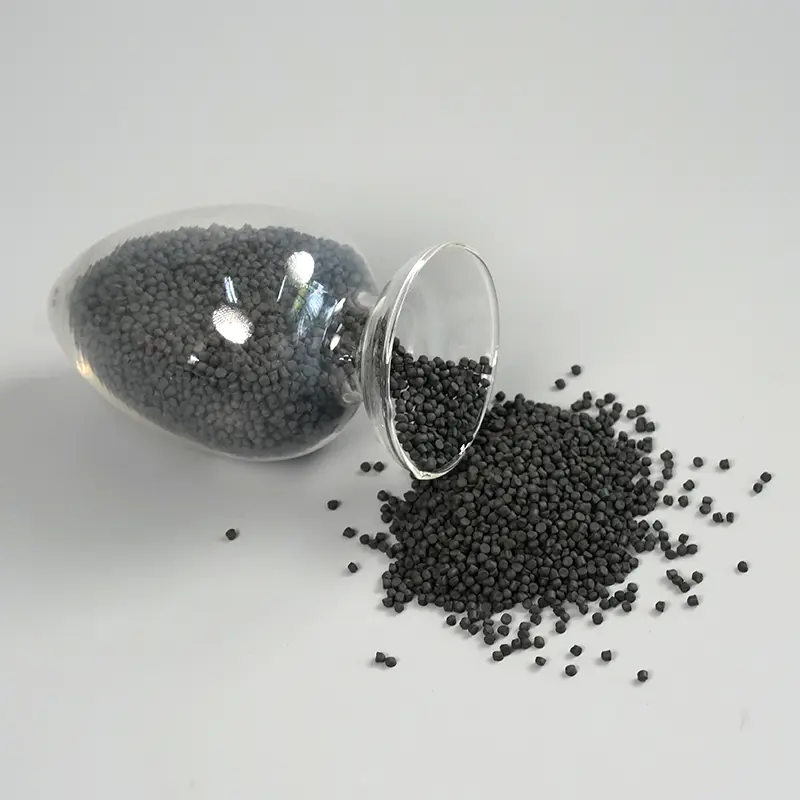
125°C Accelerator Irradiation Cross-linked LSZH Flame Retardant Insulation and Sheathing Material for Photovoltaics
Product Concept and Cross-Linking Technology
The central technology behind the product is electron accelerator irradiation crosslinking. Before crosslinking, the polymer compound consists of long molecular chains that can move relative to one another when exposed to heat or mechanical stress. During irradiation, high-energy electrons create reactive sites along the polymer chains. These sites connect with neighboring chains and form a three-dimensional network structure.
This network changes the way the material responds to heat and mechanical loading. Instead of flowing or deforming as readily as an uncross-linked thermoplastic, the cross-linked material maintains its shape more effectively at elevated temperatures. Crosslinking can also improve resistance to stress cracking, thermal deformation, abrasion, and long-term mechanical fatigue when the formulation and irradiation dose are correctly controlled.
Irradiation crosslinking offers several practical benefits for cable production. It does not require the addition of moisture during the crosslinking stage, unlike certain moisture-initiated silane systems. The cable can be extruded in a controlled thermoplastic state and cross-linked afterward using an electron accelerator. This allows the extrusion process and the crosslinking process to be managed as separate production stages.
The quality of the final product depends on more than simply exposing the cable to radiation. The compound formulation, extrusion temperature, line speed, insulation or sheath thickness, irradiation dose, cooling conditions, and storage environment must be coordinated. A suitable irradiation window is necessary to achieve sufficient crosslinking without causing excessive degradation or loss of elongation.
Jiangsu Duoshang New Materials Technology Co., Ltd. positions this material within its irradiation cross-linked LSZH compound portfolio. The company’s product range also includes UV-crosslinked materials, silane cross-linkable materials, thermoplastic low-smoke halogen-free flame-retardant compounds, polyethylene sheath compounds, and other specialized cable materials. This broad portfolio allows the company to match material selection to the manufacturing process and performance requirements of different cable constructions.
Thermal Network Stability
The 125°C designation reflects the compound’s intended high-temperature performance level. In a photovoltaic cable, the conductor can generate heat through electrical resistance, while solar radiation can add external heat. A cross-linked insulation or sheath material must resist softening, dimensional change, and mechanical deterioration under these conditions.
The stable network structure formed by irradiation helps the cable retain its geometry during elevated-temperature operation. This is especially valuable in applications where cables are bundled, installed near module surfaces, routed through confined spaces, or exposed to periods of high solar loading.
Low-Temperature Flexibility
Photovoltaic systems are installed in a wide variety of climates. Winter temperatures can fall well below freezing, and cables may be handled or moved when the material is cold. If the compound becomes brittle, installation may cause cracking or damage to the insulation and sheath.
The supplied product description states that the low-temperature brittleness temperature can reach below -40°C. The performance table also reports a -40°C impact-related test with all four listed grades recorded as passing. This indicates that the product family is designed to retain impact resistance and flexibility in low-temperature conditions, although the exact suitability of a finished cable must always be confirmed through the applicable cable standard and project qualification process.
Product Grades and Typical Performance
The product information identifies four related grades: DS-GFJ-125, DS-GFH-125, DS-ENJ-125, and DS-ENH-125. The values below are the typical values supplied for these grades. Standards, test methods, sample preparation procedures, and final cable construction can affect the result. Cable manufacturers should therefore confirm the latest technical data sheet and conduct validation on their own extrusion equipment.
| Performance Item | Unit | Standard or Requirement | DS-GFJ-125 | DS-GFH-125 | DS-ENJ-125 | DS-ENH-125 |
|---|---|---|---|---|---|---|
| Specific Gravity | g/cm³ | Not specified | 1.29 | 1.42 | 1.35 | 1.45 |
| Tensile Strength | MPa | ≥10.0 | 13.0 | 12.5 | 13.5 | 12.8 |
| Elongation at Break | % | ≥150 | 280 | 180 | 240 | 170 |
| Tensile Strength Change Rate | % | Reported requirement: ≥26 | 26 | 32 | 28 | 35 |
| Elongation Under Load, Tensile Strength Change | % | -30 condition; 158°C, 168 h | +6 | +10 | +7 | +12 |
| Elongation Under Load, Maximum Elongation Change | % | -30 condition; 158°C, 168 h | -8 | -12 | -10 | -15 |
| Heat Elongation, Elongation Under Load | % | ≤100 | 55 | 55 | 50 | 50 |
| Permanent Deformation After Cooling | % | ≤25 | 5 | 5 | 0 | 0 |
| Volume Resistivity at 20°C | Ω·cm | 1.0 × 10¹³ | 4.5 × 10¹⁵ | 6.8 × 10¹³ | 5.0 × 10¹⁵ | 7.2 × 10¹³ |
| Dielectric Strength | MV/m | ≥20 | 40 | 32 | 40 | 32 |
| Impact-Related Low-Temperature Test | °C | -40 | Pass | Pass | Pass | Pass |
| pH Value | — | ≥4.3 | 5.0 | 5.1 | 5.0 | 5.2 |
| Conductivity | μS/mm | ≤10 | 0.5 | 0.7 | 0.5 | 0.6 |
The table shows that all four grades exceed the listed minimum tensile strength and elongation requirements. Tensile strength values range from 12.5 MPa to 13.5 MPa, while elongation at break ranges from 170% to 280%. These figures indicate a useful balance between strength and flexibility. The higher elongation values of the GFJ and ENJ grades may be advantageous where installation flexibility is a priority, while the other grades provide their own formulation balance for specific insulation or sheath designs.
Heat elongation values are reported between 50% and 55%, below the listed maximum of 100%. Permanent deformation after cooling ranges from 0% to 5%, compared with the listed maximum of 25%. These values suggest good resistance to excessive deformation under the reported heat-test conditions.
Volume resistivity values are also high across the four grades. The reported values range from 6.8 × 10¹³ Ω·cm to 5.0 × 10¹⁵ Ω·cm. Dielectric strength values range from 32 MV/m to 40 MV/m, exceeding the listed requirement of 20 MV/m. These properties support the use of the compound as an electrical insulation material when the finished cable is correctly designed and processed.
The reported pH and conductivity values are relevant to the low-smoke halogen-free concept. A pH value of at least 4.3 and conductivity no higher than 10 μS/mm are listed as requirements, while the typical values are substantially within those limits. These results can help reduce the risk of highly acidic or conductive combustion residues, although complete fire performance must be evaluated using the applicable finished-cable test standards.
Key Advantages Compared with Conventional Cable Compounds
High Temperature Resistance
One of the most important advantages is the 125°C temperature resistance level. Conventional non-cross-linked polyolefin materials may soften or deform more readily under sustained heat. The irradiation cross-linked structure improves shape retention and thermal stability, making the compound more suitable for photovoltaic cable systems exposed to strong sunlight and elevated operating temperatures.
Temperature resistance also contributes to design flexibility. Depending on the applicable cable standard, conductor size, installation method, ambient temperature, and electrical loading, a cable manufacturer may be able to optimize conductor utilization or cable dimensions more effectively than with a lower-temperature material. Such decisions must be confirmed by engineering calculations and certification testing, but the higher thermal capability provides a useful performance margin.
Low Smoke and Halogen-Free Composition
In a fire, smoke can obstruct visibility and delay evacuation. Corrosive combustion gases can damage switchgear, inverters, control systems, and other sensitive equipment. The LSZH formulation is intended to reduce these risks by combining low-smoke behavior with halogen-free flame retardancy.
This characteristic is valuable in photovoltaic installations located on commercial rooftops, industrial facilities, public buildings, transport infrastructure, energy-storage sites, and other areas where personnel safety and equipment protection are important. It also supports environmental and sustainability objectives by avoiding conventional halogen-containing cable materials in applications where LSZH performance is specified.
Outdoor Weatherability
Outdoor cables are exposed to ultraviolet radiation and ozone for long periods. Ultraviolet energy can initiate surface degradation, color changes, cracking, and loss of mechanical strength. Ozone can attack susceptible polymer structures and accelerate surface damage, particularly in areas with electrical equipment or strong atmospheric oxidation.
The product description identifies excellent ultraviolet and ozone resistance. This is a major consideration for photovoltaic cables because many cable routes remain exposed for the entire life of the solar installation. A weather-resistant sheath can help protect the cable from premature aging and reduce maintenance requirements.
Chemical Resistance
Photovoltaic cables may come into contact with rainwater, cleaning agents, dust deposits, alkaline construction materials, acidic contaminants, agricultural chemicals, or industrial pollutants. The compound is described as resistant to acids and alkalis, giving it a broader environmental operating range than materials that are sensitive to chemical exposure.
Chemical resistance is particularly relevant to solar farms near industrial areas, coastal zones, agricultural land, and manufacturing facilities. However, the specific concentration, temperature, exposure duration, and chemical composition should be considered before final approval for an unusual application.
Mechanical Strength and Flexibility
The material provides tensile strength values above 12 MPa for all four listed grades and elongation at break of at least 170% in the supplied typical data. These properties support handling during cable production, installation, routing, and connection.
Good flexibility is also valuable when cables must follow curved module layouts or pass through limited installation spaces. Flexibility can reduce the risk of excessive bending stress, provided the cable is installed according to its specified minimum bending radius and is not subjected to loads beyond the design limits.
Long Service-Life Potential
The product is described as having an outdoor service life of up to 25 years. For photovoltaic projects, long service life is central to the economic model. Replacing cable systems across a large solar site can involve costly labor, access equipment, downtime, and energy-generation losses.
A long-life material can reduce the likelihood of premature cable replacement and support more predictable lifecycle planning. Actual service life will depend on conductor temperature, cable construction, installation quality, exposure conditions, mechanical loading, connector compatibility, and compliance with the relevant cable standard. The stated 25-year potential should therefore be treated as a design objective supported by material performance, not as a substitute for finished-cable qualification.
Application in Photovoltaic Cable Construction
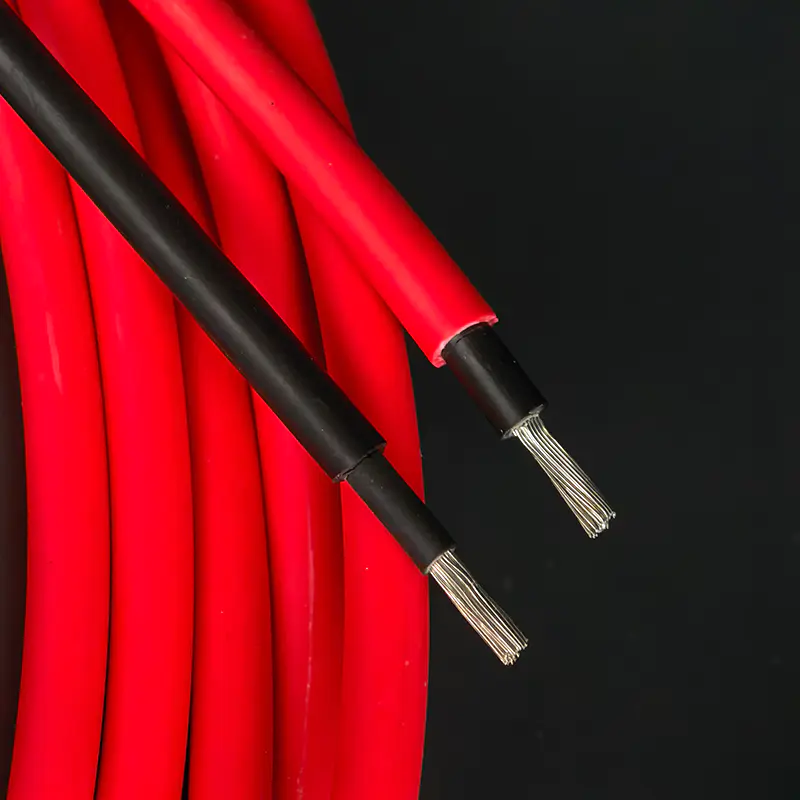
The compound can be used for insulation, sheathing, or both, depending on the selected grade and cable design. In an insulated photovoltaic cable, the compound surrounds the conductor and provides electrical separation. In a sheathed construction, it protects the cable from moisture, abrasion, ultraviolet radiation, chemical contact, and mechanical damage.
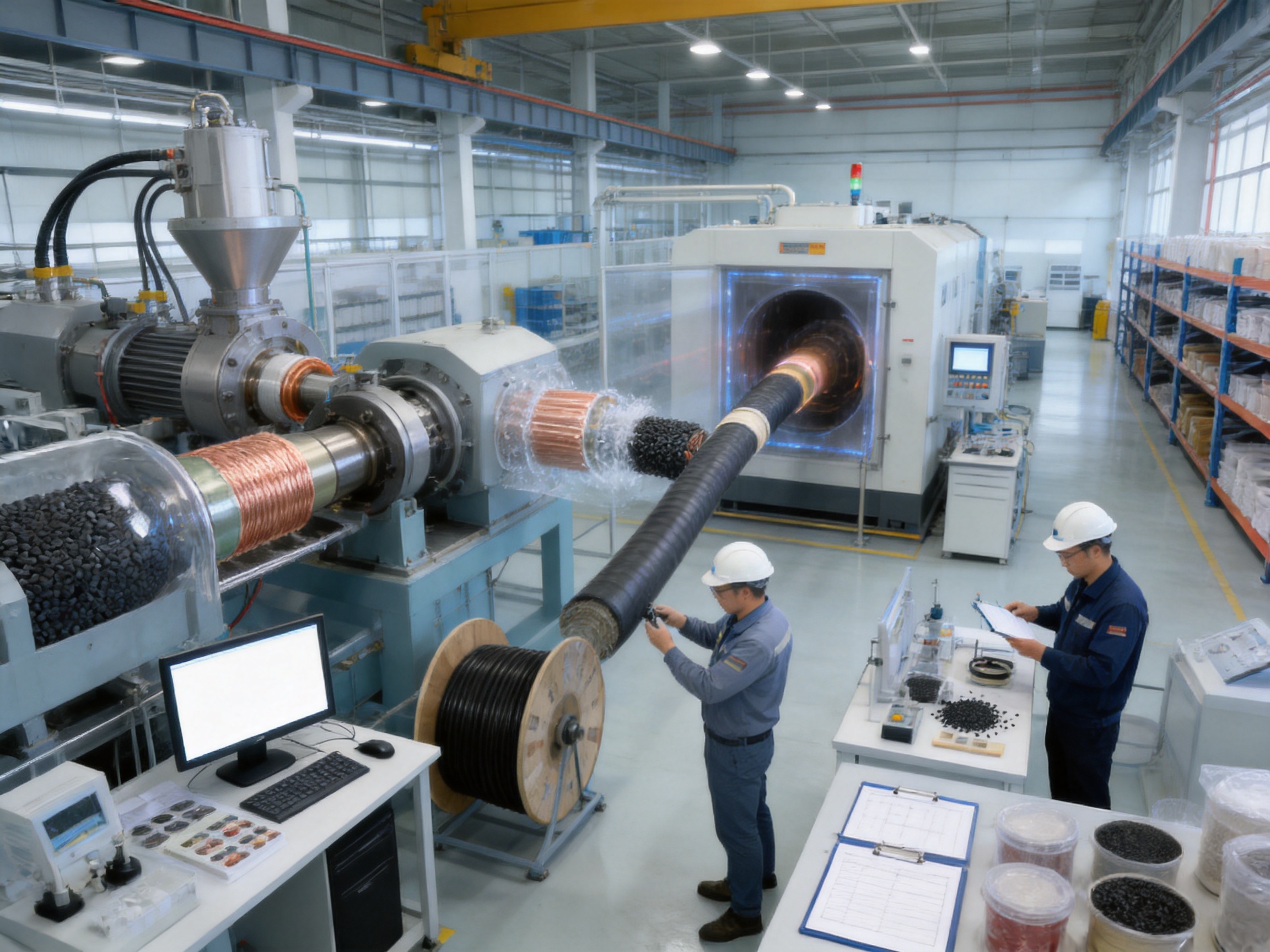
A typical photovoltaic cable production process begins with conductor preparation. Copper or tinned copper conductors are drawn, stranded, compacted, and inspected. The conductor surface must be clean and dimensionally consistent to support stable extrusion and reliable electrical contact. The selected compound is then fed into an extrusion line, melted, homogenized, and applied around the conductor or over the insulated core.
After extrusion, the cable passes through a cooling system. Dimensional control is important at this stage because excessive shrinkage, eccentricity, or surface defects can affect electrical performance and stripping behavior. The extruded cable is then directed to the electron accelerator for controlled irradiation crosslinking.
Following irradiation, the cross-linked cable may undergo dimensional inspection, spark testing, tensile and elongation testing, electrical resistance testing, surface examination, and other quality-control procedures. The finished cable can then be wound, packaged, labeled, and prepared for shipment.
Insulation Performance
For insulation use, high volume resistivity and dielectric strength are essential. The supplied typical volume resistivity values, reaching up to 5.0 × 10¹⁵ Ω·cm, indicate strong resistance to leakage current through the material. Dielectric strength values of 32 to 40 MV/m provide an additional electrical performance margin under the reported test conditions.
Insulation quality also depends on thickness uniformity, conductor centering, absence of voids, surface smoothness, and resistance to water penetration. The compound’s processing behavior must therefore be evaluated together with the cable line configuration and conductor design.
Sheath Performance
As a sheath material, the compound must protect the underlying insulation from the outdoor environment. The combination of weather resistance, chemical resistance, mechanical strength, and low-temperature impact performance is beneficial for this role.
The sheath may be exposed to abrasion during installation or to repeated movement caused by wind and thermal expansion. Its resistance to permanent deformation is also important where cables are secured with clips, ties, or other fastening systems. The reported heat elongation and permanent deformation values indicate that the compound is designed to maintain dimensional stability under elevated-temperature stress.
Manufacturing Strengths of the Supplier
Jiangsu Duoshang New Materials Technology Co., Ltd. is based in Nantong City, Jiangsu Province, China, and specializes in the research, development, production, and sales of polyolefin cable compounds. Its manufacturing and development capabilities are relevant to customers seeking not only a material but also technical support for cable production and product qualification.
The company operates an R&D center of more than 3,000 square meters. According to the supplied company information, the center contains more than RMB 35 million worth of research equipment and is supported by a professional R&D team of more than 30 members. The team includes five doctors and personnel recognized through provincial and municipal talent programs.
This technical structure can support formulation development, test-method adaptation, failure analysis, process optimization, and customized material design. In cable-compound manufacturing, these capabilities are important because a formulation must often be adjusted to meet several requirements at once. For example, increasing flame retardancy can affect flexibility, processing stability, smoke performance, density, or mechanical strength. A strong R&D function helps manage these trade-offs through controlled formulation and testing.
The company operates two production bases covering more than 15,000 square meters, with more than 10 production lines for polyolefin cable compounds. Multiple production lines can provide greater flexibility in scheduling, product-family segregation, capacity planning, and customer-specific production. They can also help support stable supply for customers with recurring project requirements.
Duoshang’s product portfolio contains eight major categories and more than 50 varieties. These include UV-crosslinked compounds, silane cross-linkable compounds, irradiation cross-linked compounds, thermoplastic LSZH flame-retardant compounds, polyethylene sheath compounds, and other specialized materials. This breadth gives customers access to different crosslinking technologies and material solutions from one specialized supplier.
The company reports that its products are used in power, communications, locomotives, photovoltaics, new energy generation, rail transit, marine cables, and other industries. Experience across these sectors can be valuable because each application places different demands on material performance. Rail and marine cables may emphasize fire safety and environmental durability, while communications cables may require precise electrical and processing performance. Photovoltaic cables require a combination of outdoor aging resistance, flexibility, low-temperature performance, and long service life.
Process Control and Consistency
Consistent cable compound quality requires control of raw-material selection, mixing, dispersion, pelletizing, packaging, storage, and batch traceability. Flame-retardant fillers and functional additives must be distributed uniformly throughout the polymer matrix. Poor dispersion can cause weak points, surface roughness, electrical defects, or inconsistent flame performance.
During production, melt temperature, torque, pressure, residence time, and cooling conditions should be monitored. The finished compound should be checked for appearance, moisture, pellet uniformity, density, and key mechanical or electrical properties. For irradiation cross-linked grades, the supplier and cable manufacturer should also establish a suitable radiation-dose range and verify crosslinking performance on the finished cable.
Stable manufacturing is especially important for photovoltaic projects because cable orders may be produced in multiple batches over an extended period. Consistent material properties help maintain extrusion settings, reduce production adjustments, simplify qualification, and improve finished-cable reliability.
Customized Material Support
Different cable manufacturers may use different extruders, screw designs, line speeds, conductor materials, insulation thicknesses, and irradiation equipment. A compound that performs well on one production line may require adjustments on another. The supplier’s application-oriented approach can help customers evaluate processing conditions, optimize extrusion parameters, and select the most suitable grade.
Customization may involve modifying hardness, flexibility, density, color, flame-retardant balance, extrusion behavior, surface appearance, or electrical properties. Any customization should be validated through formal technical documentation and finished-cable testing so that the final product maintains its required performance.
Quality Assurance and Qualification Considerations
Material data are an important starting point, but cable manufacturers should qualify the compound within the complete cable system. The qualification program should include initial type testing, routine production tests, accelerated aging, environmental exposure, electrical testing, flame testing, and mechanical evaluation as required by the target market and cable standard.
Important test areas may include tensile strength and elongation before and after aging, heat deformation, low-temperature impact or bending, dielectric strength, insulation resistance, volume resistivity, water resistance, ozone resistance, ultraviolet aging, abrasion, chemical exposure, and flame propagation. Low-smoke and halogen-free performance should be evaluated using the applicable recognized test methods.
For photovoltaic cables, testing should also consider the relationship between the material and other cable components. These may include conductor plating, separators, fillers, tapes, water-blocking materials, printing inks, connectors, terminals, and sealing compounds. Incompatibility between materials can lead to migration, adhesion loss, discoloration, swelling, or reduced aging performance.
Manufacturers should retain batch records and test certificates for traceability. Each production lot should be identifiable by raw-material batch, compounding date, production line, pelletizing conditions, packaging date, and applicable inspection results. Good traceability allows faster investigation if a field issue or abnormal test result occurs.
Storage conditions are also important. Compound pellets should be kept in clean, dry packaging and protected from excessive heat, moisture, contamination, and prolonged direct sunlight. Before extrusion, the manufacturer should follow the supplier’s recommendations regarding conditioning, drying, and material handling. Improper storage can affect processing stability even when the original material was manufactured correctly.
Processing Guidance for Cable Manufacturers
The compound should be processed using equipment capable of producing stable melt pressure and temperature. The exact extrusion conditions depend on the grade, insulation or sheath thickness, conductor size, screw configuration, die design, cooling system, and line speed. Initial trials should establish a processing window rather than relying on a single fixed temperature setting.
Excessive melt temperature or residence time can lead to polymer degradation, discoloration, gas generation, surface defects, or reduced mechanical performance. Insufficient melting or mixing can produce unmelted particles, poor dispersion, rough surfaces, and electrical weaknesses. A controlled temperature profile and stable feeding system are therefore essential.
Die design influences wall-thickness uniformity, conductor centering, surface finish, and melt draw-down. The cable manufacturer should verify eccentricity continuously or at appropriate inspection intervals. Cooling conditions must be sufficient to stabilize the extruded layer without creating internal stresses or excessive shrinkage.
After extrusion, the irradiation dose must be selected according to the cable construction and the compound grade. Too little irradiation may result in incomplete crosslinking and insufficient thermal deformation resistance. Excessive irradiation may reduce elongation, cause embrittlement, or degrade the polymer. Dose mapping and regular dosimeter verification can help maintain consistent crosslinking.
Finished cables should be evaluated after irradiation rather than relying only on pre-irradiation compound testing. The crosslinking process can change tensile properties, elongation, shrinkage, heat deformation, and surface condition. A qualified process should demonstrate repeatable results across production batches.
Environmental and Safety Value
The low-smoke halogen-free design contributes to safer fire behavior in areas where people, electrical equipment, or valuable infrastructure may be present. Photovoltaic systems are increasingly installed on commercial and industrial roofs, schools, warehouses, transport facilities, data centers, and public buildings. In these environments, cable selection is part of a broader fire-safety strategy.
Reduced smoke can help preserve visibility during emergency response. Halogen-free combustion behavior can reduce corrosive attack on metal components and electronic equipment. Flame retardancy can help limit the spread of fire along cable routes, provided that the complete cable meets the required flame and fire-performance standards.
The material also supports long-term sustainability by targeting extended service life. Longer-lasting cables can reduce replacement frequency, material consumption, labor requirements, and disposal burdens. These advantages are especially important for large-scale solar plants containing many kilometers of cable.
Environmental responsibility should nevertheless be considered across the entire product lifecycle. Responsible cable design includes efficient material use, appropriate conductor sizing, reliable connectors, correct installation, maintenance planning, and end-of-life handling. The LSZH compound is one part of this lifecycle approach.
Competitive Position in the Cable-Materials Market
The material’s competitive value comes from the integration of several properties rather than from one isolated specification. Some compounds may offer high flexibility but limited high-temperature performance. Others may offer strong flame retardancy but higher density, reduced elongation, or less favorable processing behavior. Certain materials may perform well indoors but require additional protection for long-term outdoor use.
The 125°C irradiation cross-linked LSZH compound is designed to address these trade-offs through a combined performance profile. Its key differentiators include high thermal resistance, low-temperature performance below or around -40°C, ultraviolet and ozone resistance, acid and alkali resistance, low smoke, halogen-free flame retardancy, electrical insulation capability, mechanical strength, and long outdoor service-life potential.
The irradiation process also provides a practical alternative to other crosslinking routes. Cable manufacturers that already operate or have access to electron accelerator services may benefit from a clean and controllable post-extrusion crosslinking method. The material can be processed as a compound and then converted into a cross-linked cable after extrusion.
Another competitive advantage is supplier breadth. Duoshang provides multiple polyolefin and LSZH technologies rather than focusing on one material type. This can simplify technical cooperation when a customer has several cable families requiring different temperature classes, flame performance, flexibility levels, or crosslinking methods.
Finally, the company’s R&D facilities, production bases, product range, and technical team can support customers beyond the initial material sale. Application support, customized formulations, testing assistance, documentation, and supply coordination are important factors when cable materials are used in large renewable-energy projects.
Recommended Selection and Purchasing Process
A cable manufacturer evaluating the compound should begin by defining the application requirements. These may include rated voltage, conductor material, conductor temperature, insulation thickness, sheath thickness, minimum bending radius, installation environment, target service life, flame classification, smoke requirements, chemical exposure, and certification market.
The next step is to select the appropriate grade or grades for laboratory extrusion. The trial should reproduce the intended production process as closely as possible. Test samples should be examined before and after irradiation and after accelerated aging. Processing observations should include melt stability, die pressure, surface quality, conductor centering, shrinkage, spark-test performance, and line-speed capability.
Technical buyers should request current documentation covering typical properties, recommended processing conditions, packaging, storage, irradiation guidance, compliance information, and quality-control procedures. The supplier should also clarify whether the listed values represent internal typical data, standard test results, or certification values.
For large photovoltaic projects, a supply agreement may include batch consistency requirements, inspection plans, delivery schedules, emergency supply procedures, change-notification provisions, and technical service responsibilities. Such arrangements can reduce project risk when cable production continues over multiple months or years.
Conclusion
The 125°C accelerator irradiation cross-linked LSZH flame-retardant insulation and sheathing material is designed for the long-term demands of photovoltaic cable systems. Its stable three-dimensional network structure provides a foundation for high-temperature performance, dimensional stability, mechanical durability, and resistance to outdoor aging.
The material combines a 125°C temperature rating with low-temperature impact performance at -40°C, strong electrical insulation properties, low-smoke halogen-free flame retardancy, ultraviolet and ozone resistance, acid and alkali resistance, and substantial mechanical flexibility. Typical data for the four listed grades show tensile strengths from 12.5 MPa to 13.5 MPa, elongation at break from 170% to 280%, dielectric strength from 32 MV/m to 40 MV/m, and low permanent deformation after cooling.
These features make the compound a strong candidate for photovoltaic insulation and sheath applications where safety, reliability, environmental durability, and extended service life are priorities. The stated outdoor service-life potential of up to 25 years is particularly relevant to solar installations designed for long-term energy generation, although final service life must always be confirmed through complete cable-system qualification.
Jiangsu Duoshang New Materials Technology Co., Ltd. strengthens the product offering through specialized R&D resources, more than 15,000 square meters of production bases, over 10 polyolefin cable-compound production lines, a broad product portfolio, and application-oriented technical support. Together, the material technology and manufacturing capabilities provide cable producers with a practical platform for developing reliable LSZH photovoltaic cables.
Questions and Answers
What is the main purpose of this LSZH compound?
The compound is intended for insulation and sheathing in photovoltaic cables. It is formulated to provide electrical insulation, flame retardancy, low-smoke halogen-free behavior, thermal stability, flexibility, and outdoor environmental resistance.
Why is the material called irradiation cross-linked?
After extrusion, the cable is exposed to controlled electron-beam radiation. The irradiation creates connections between polymer chains and forms a three-dimensional network. This network improves heat resistance, dimensional stability, and resistance to deformation.
What is the operating temperature level of the material?
The product is identified as a 125°C irradiation cross-linked LSZH compound. The actual allowable conductor temperature and cable rating depend on the finished cable construction, applicable standard, installation method, and qualification results.
Can the material be used in cold climates?
Yes. The product description states that the low-temperature brittleness temperature can reach below -40°C, and all four listed grades pass the supplied -40°C impact-related test. Final cable installation and bending limits should still be confirmed for the specific project.
What outdoor resistance does the compound provide?
The compound is described as having excellent ultraviolet, ozone, acid, and alkali resistance. These characteristics are important for exposed photovoltaic cables. Specific chemical concentrations and long-term exposure conditions should be reviewed for unusual environments.
What are the main electrical properties?
The supplied typical volume resistivity values range from 6.8 × 10¹³ Ω·cm to 5.0 × 10¹⁵ Ω·cm. Dielectric strength values range from 32 MV/m to 40 MV/m. These values support the use of the compound as an insulation material when processed into a properly designed cable.
Does the compound contain halogens?
The product is identified as a low-smoke halogen-free compound. It is designed to provide flame retardancy while limiting smoke and halogen-related corrosive combustion products. The finished cable should be tested against the required LSZH and fire-performance standards.
What are the listed product grades?
The supplied information lists DS-GFJ-125, DS-GFH-125, DS-ENJ-125, and DS-ENH-125. Their typical properties differ in density, tensile strength, elongation, heat performance, electrical properties, and other test values. The appropriate grade should be selected according to the cable design and processing requirements.
Is the material suitable for long-term solar-farm use?
It is designed for photovoltaic applications and is described as having an outdoor service life of up to 25 years. The actual service life depends on temperature, ultraviolet exposure, mechanical stress, chemical conditions, cable construction, installation quality, and compliance with applicable standards.
What should cable manufacturers verify before mass production?
Manufacturers should verify extrusion behavior, dimensional stability, conductor centering, spark-test performance, irradiation dose, tensile and elongation properties, heat deformation, low-temperature performance, electrical insulation, flame behavior, smoke performance, weathering, and compatibility with all other cable components.
What support can the supplier provide?
The supplier’s capabilities include polyolefin cable-compound R&D, production, testing support, technical documentation, customized material solutions, and application-oriented assistance. Customers should discuss specific processing and qualification requirements directly with the technical team.
References
1. Product technical information for 125°C accelerator irradiation cross-linked LSZH flame-retardant insulation and sheathing material for photovoltaics, supplied by Jiangsu Duoshang New Materials Technology Co., Ltd.
2. Typical performance data for DS-GFJ-125, DS-GFH-125, DS-ENJ-125, and DS-ENH-125, including mechanical, thermal, electrical, low-temperature, pH, and conductivity properties.
3. Internal company information concerning polyolefin cable-compound research, development, production capacity, product categories, and application industries.
4. General technical principles of electron-beam irradiation crosslinking for polymeric cable insulation and sheathing materials.
5. General engineering practices for photovoltaic cable design, outdoor cable aging evaluation, low-smoke halogen-free cable construction, and finished-cable qualification.
6. General materials-science principles concerning polymer crosslinking, thermal deformation, mechanical aging, electrical insulation, and environmental durability.