English
 Français
 Español
 русский
 عربى
Green Ohm
Green Ohm
Green Ohm
Green Ohm
Green Ohm
Green Ohm
Green Ohm
Green Ohm
Green Ohm
Content
- 1 Why Low-Smoke Halogen-Free Cable Materials Matter
- 2 Product Composition and Functional Design
- 3 Compliance with Cable Fire-Classification Requirements
- 4 Typical Technical Performance
- 5 Mechanical Strength and Flexibility
- 6 Thermal Aging and Heat Resistance
- 7 Low-Smoke and Low-Corrosiveness Performance
- 8 Electrical Insulation Performance
- 9 Resistance to Ozone, Low Temperature, and Cracking
- 10 Advantages Compared with Conventional Cable Sheathing Materials
- 11 Advanced Manufacturing Process
- 12 Research and Development Strengths
- 13 Production Capacity and Supply Reliability
- 14 Application Areas
- 15 Guidelines for Cable Manufacturers
- 16 How to Select the Appropriate Grade
- 17 Quality, Customization, and Technical Support
- 18 Environmental and Safety Benefits
- 19 Commercial Advantages for Cable Producers
- 20 Frequently Asked Questions
- 20.1 What are B1 and B2 low-smoke halogen-free sheathing materials?
- 20.2 Which standards are associated with these materials?
- 20.3 What are the main advantages over conventional halogen-containing sheathing materials?
- 20.4 Are the materials suitable for power cables?
- 20.5 Can they be used in communication or optical-fiber cables?
- 20.6 Which grade has the highest typical oxygen index?
- 20.7 Which grade has the lowest typical smoke density?
- 20.8 Do the materials resist cracking?
- 20.9 How are the compounds manufactured?
- 20.10 Can the formulation be customized?
- 20.11 What information should a buyer provide when requesting a quotation?
- 20.12 How should the material be stored?
- 20.13 Does compound compliance automatically certify the finished cable?
- 21 Conclusion
- 22 References
- 23 Product: B1 and B2 low smoke halogen-free sheathing materials
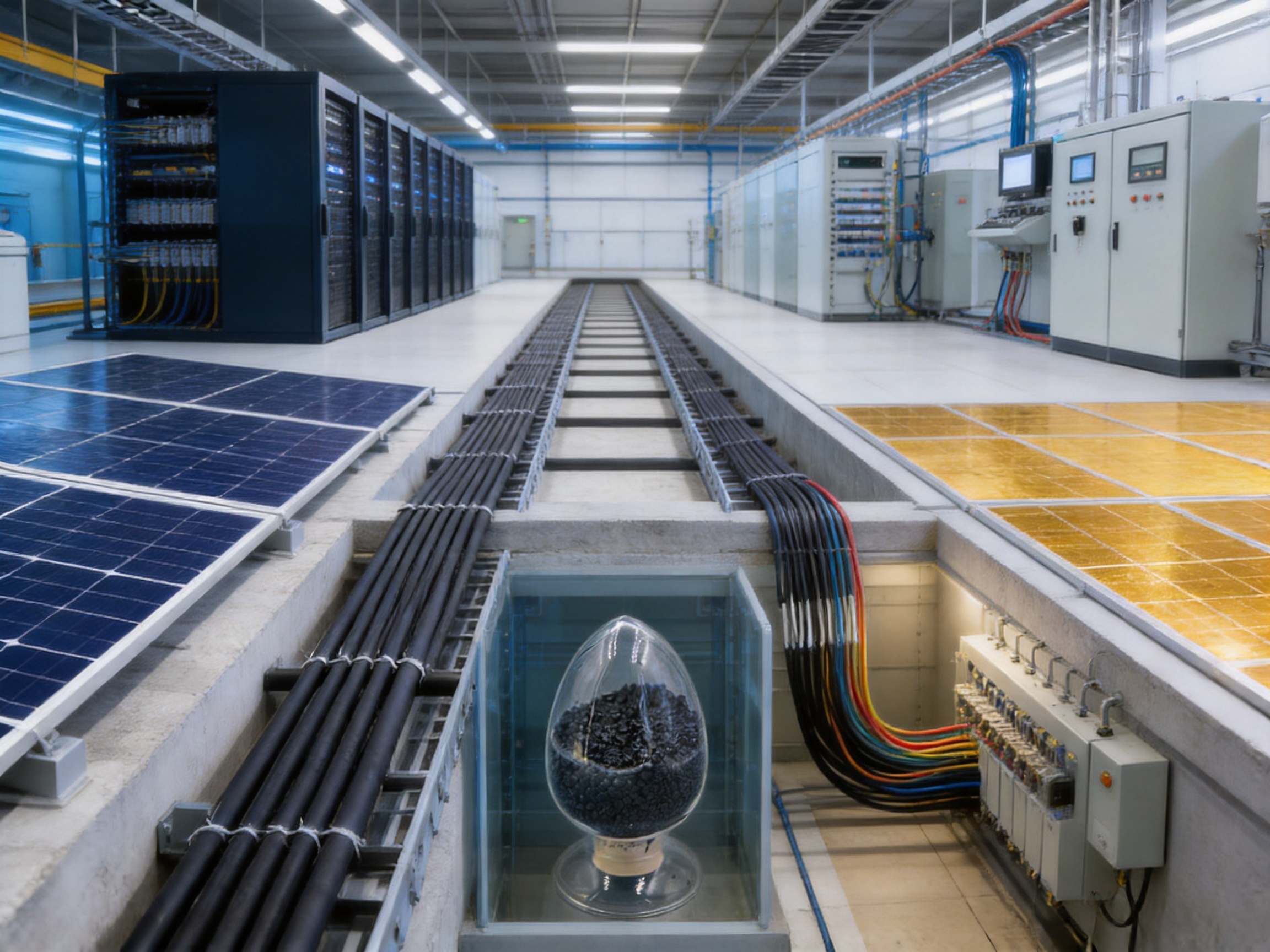
Modern cable systems must do more than transmit electricity or data. They must also support fire safety, low-emission building design, environmental responsibility, mechanical reliability, and long service life. These requirements are especially important in high-occupancy buildings, transportation facilities, data centers, power infrastructure, communications networks, renewable-energy installations, marine environments, and other applications where cable performance can directly affect safety and operational continuity.
B1 and B2 low-smoke halogen-free sheathing materials are designed to respond to these demanding requirements. Developed from polyolefin resin, complex high-efficiency flame retardants, flame-retardant synergists, carbonization agents, antioxidants, and carefully selected additives, these compounds provide a balanced combination of flame resistance, low smoke emission, low corrosiveness, electrical insulation, mechanical strength, and processing stability.
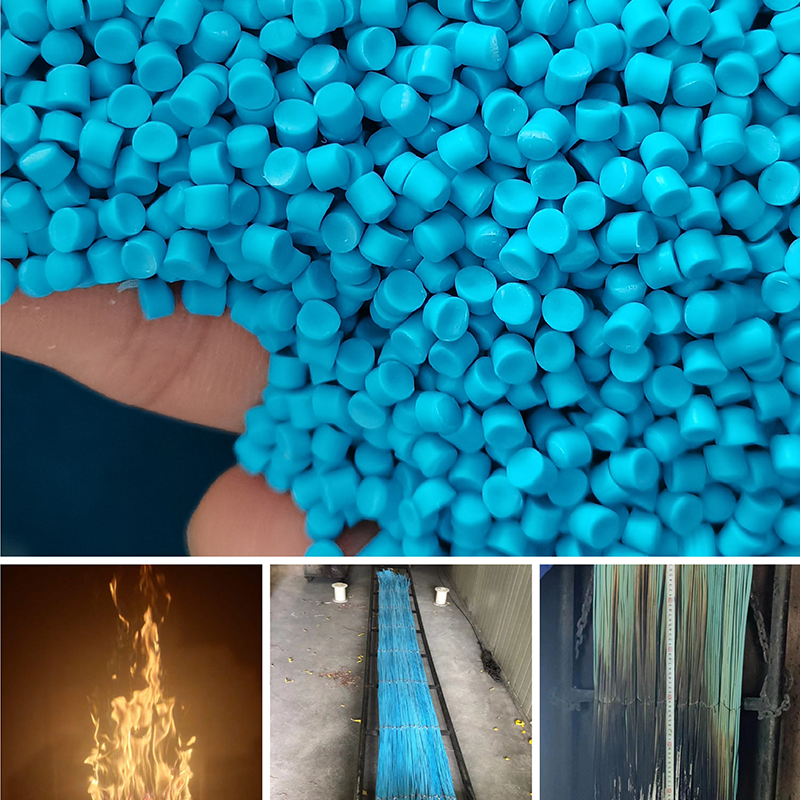
The materials described in this article are thermoplastic cable compounds manufactured through advanced mixing and twin-screw granulation processes. They are suitable for cable sheaths and related applications requiring high flame retardancy, limited smoke generation, reduced acidity and corrosiveness, resistance to dripping, and resistance to cracking under thermal or environmental stress.
Four product grades are included in the product family: DS-WDZH-B1, DS-WDZH-X-B1, DS-WDZH-W-B1, and DS-WDZH-B2. Although the grades share a common performance platform, their typical values provide flexibility for different cable constructions, design priorities, and application conditions.
Why Low-Smoke Halogen-Free Cable Materials Matter
Traditional halogen-containing cable materials can release dense smoke and corrosive acidic gases when exposed to fire. These emissions may reduce visibility, damage sensitive electrical equipment, complicate evacuation, and create additional hazards for people and infrastructure. In contrast, low-smoke halogen-free materials are formulated to limit smoke density and reduce the release of harmful halogen-acid gases during combustion.
Fire performance is not determined by flame retardancy alone. A cable compound must also maintain adequate mechanical integrity, resist thermal deformation, control dripping, and avoid cracking during installation or service. If a sheath burns rapidly, produces excessive smoke, cracks under temperature changes, or loses its insulation capability, the safety benefits of a single flame-retardant additive are insufficient.
The product family combines multiple functional components to create a comprehensive safety system. Polyolefin resin provides the polymeric foundation and contributes to flexibility, insulation, and processability. Flame retardants reduce flame propagation. Synergists improve the efficiency of the flame-retardant system. Carbonization agents promote the formation of a protective char layer. Antioxidants help protect the polymer during processing and long-term thermal exposure. Other additives support dispersion, stability, surface quality, and cable manufacturing performance.
This multi-component approach is important because cable applications require several properties at the same time. Increasing flame retardant loading can sometimes reduce elongation, impair processability, increase brittleness, or negatively affect electrical properties. The formulation objective is therefore not simply to maximize the amount of flame retardant. It is to create a controlled material system in which fire performance and practical cable performance are balanced.
Product Composition and Functional Design
Polyolefin Resin Matrix
The polyolefin resin forms the continuous phase of the compound. It provides the basic mechanical and electrical characteristics required for cable sheathing and insulation-related applications. Polyolefin materials are widely used in cable production because they can offer a favorable balance of flexibility, moisture resistance, chemical stability, and electrical insulation.
The resin selection influences melt flow, surface finish, extrusion behavior, elongation, tensile strength, thermal response, and low-temperature performance. A well-designed resin matrix also helps distribute mineral or reactive flame-retardant components throughout the compound. Uniform dispersion is essential because poorly dispersed additives can create weak points, surface defects, inconsistent flame performance, or unstable extrusion behavior.
High-Efficiency Flame Retardant System
The flame-retardant system is designed to reduce the tendency of the cable sheath to ignite, sustain combustion, or spread flame. High-efficiency flame retardants can support the required oxygen index and contribute to the product’s ability to meet demanding cable fire-classification requirements.
The typical oxygen index values of the listed grades range from 38% to 42%, compared with a minimum listed requirement of 30%. A higher oxygen index generally indicates that a material requires a higher oxygen concentration to sustain combustion. While oxygen index is only one part of a complete fire evaluation, these typical values demonstrate the formulation’s strong flame-retardant orientation.
Flame-Retardant Synergists
Synergists are used to improve the performance of the primary flame retardants. They can help promote protective char formation, increase the efficiency of the flame-retardant mechanism, and support more stable fire behavior at a practical additive concentration.
Using synergistic formulation technology can help preserve mechanical properties and processability while achieving the necessary flame-retardant performance. This is particularly important for cable compounds because excessive filler or additive loading can cause high melt viscosity, poor surface appearance, reduced flexibility, and lower elongation.
Carbonization Agents
Carbonization agents encourage the formation of a protective carbonaceous layer when the material is exposed to heat or flame. This layer can act as a barrier between the underlying polymer and the external heat source. It may also help reduce the release of combustible decomposition products and limit the progression of flame along the cable surface.
Char formation is valuable in cable applications because it contributes to surface protection without relying exclusively on a high concentration of inorganic filler. When properly integrated into the formulation, the carbonization system can support flame retardancy while helping maintain acceptable tensile strength and elongation.
Antioxidants and Processing Additives
Processing and long-term thermal stability are supported by antioxidants and other functional additives. During compounding and extrusion, polymer materials are exposed to heat, shear, and residence time. Antioxidants help reduce unwanted oxidation and protect the resin from excessive degradation.
Additional additives may improve dispersion, melt stability, surface appearance, thermal behavior, and resistance to environmental stress. The combined effect is a material that can be processed into cable sheaths with consistent dimensions and reliable performance.
B1 and B2 low smoke halogen-free sheathing materials
Compliance with Cable Fire-Classification Requirements
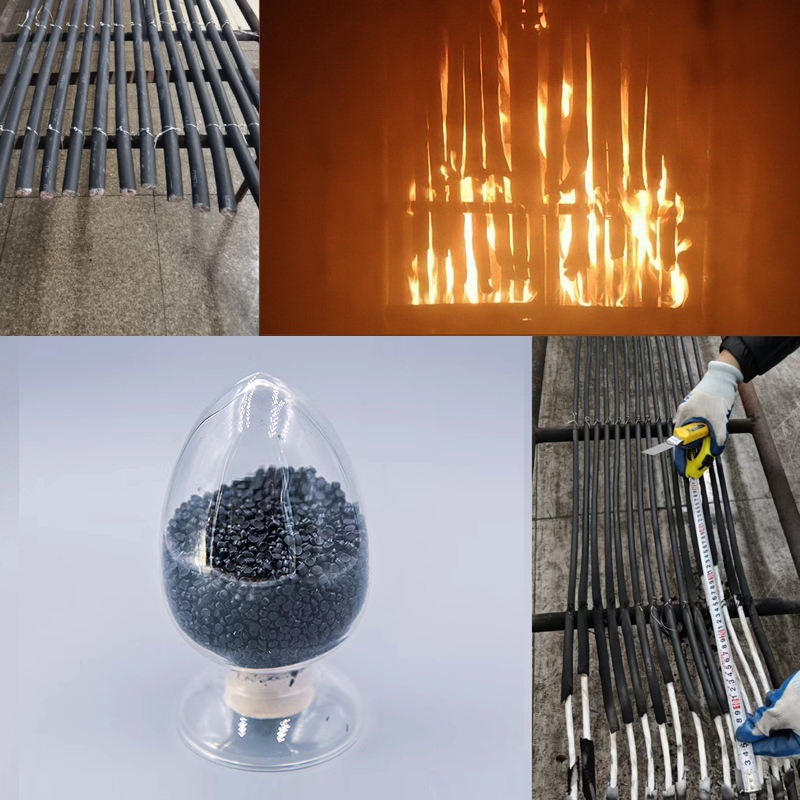
The product description identifies compliance with the B1 and B2 level classification combustion standards in GB 31247-2014. It also identifies applicability to the B1ca, B2ca, and Cca level classification combustion standards in EN 13501-6.
These classifications are important because cable fire performance is evaluated through structured testing rather than by a single material property. Fire classification can involve flame spread, heat release, smoke production, flaming droplets or particles, and other characteristics depending on the standard and classification route.
The B1 and B2 grades are intended for applications where strong flame-retardant performance is required. The specific selection between B1 and B2 should be based on the cable design, installation environment, construction requirements, certification documentation, and the applicable national or project standard.
It is important to distinguish between a compound’s typical laboratory values and the final classification of a finished cable. Cable construction, sheath thickness, conductor arrangement, fillers, insulation materials, metallic screens, installation spacing, and test configuration can all affect final fire performance. Cable manufacturers should therefore validate the complete cable design using the required certification and test procedures.
The low-smoke and low-corrosiveness characteristics of the compound support applications where evacuation visibility, equipment protection, and reduced combustion acidity are priorities. The listed pH values are approximately 5.1 to 5.2, exceeding the stated minimum of 4.3. The listed HCl and HBr content is below 0.5%, and conductivity is approximately 1.1 μS/mm against a stated maximum of 10 μS/mm.
Typical Technical Performance
The following table summarizes the supplied typical values for the four grades. Values are presented for technical reference and should be confirmed against the current product specification, agreed quality standard, and final cable application.
| No. | Item | Unit | Standard or Requirement | DS-WDZH-B1 | DS-WDZH-X-B1 | DS-WDZH-W-B1 | DS-WDZH-B2 |
|---|---|---|---|---|---|---|---|
| 1 | Density | g/cm³ | Reference | 1.56 | 1.57 | 1.56 | 1.54 |
| 2 | Tensile strength | MPa | ≥10.0 | 12 | 12 | 12 | 12 |
| 3 | Elongation at break | % | ≥160 | 170 | 170 | 170 | 170 |
| 4 | Oxygen index | % | ≥30 | 38 | 40 | 42 | 38 |
| 5 | Thermal aging at 100°C for 168 hours: tensile strength change | % | ±25 | +10 | +8 | +7 | +11 |
| 5 | Thermal aging at 100°C for 168 hours: elongation change | % | ±25 | -7 | -6 | -5 | -10 |
| 6 | Thermal deformation | % | ≤50 | 10 | 9 | 9 | 11 |
| 7 | Thermal shock resistance | — | No cracking | No cracking | No cracking | No cracking | No cracking |
| 8 | Smoke density, flaming | — | ≤100 | 70 | 67 | 62 | 75 |
| 8 | Smoke density, flameless | — | ≤350 | 210 | 206 | 198 | 223 |
| 9 | Volume resistivity at 20°C | Ω·cm | Reference: 1.0 × 10¹² | 1.4 × 10¹³ | 1.4 × 10¹³ | 1.3 × 10¹³ | 1.5 × 10¹³ |
| 10 | Ozone resistance | — | No cracking | No cracking | No cracking | No cracking | No cracking |
| 11 | Low-temperature brittleness | °C | -25 | Pass | Pass | Pass | Pass |
| 12 | pH | — | ≥4.3 | 5.2 | 5.1 | 5.2 | 5.1 |
| 13 | HCl and HBr content | % | ≤0.5 | <0.5 | <0.5 | <0.5 | <0.5 |
| 14 | Conductivity | μS/mm | ≤10 | 1.1 | 1.1 | 1.1 | 1.1 |
Mechanical Strength and Flexibility
The listed tensile strength for all four grades is 12 MPa, exceeding the stated minimum requirement of 10.0 MPa. Tensile strength indicates the material’s ability to withstand pulling forces before failure. This is relevant during extrusion, cable handling, installation, bending, pulling, and service.
Elongation at break is listed at 170% for all four grades, compared with a minimum requirement of 160%. High elongation is valuable because cable sheaths may experience stretching, bending, localized deformation, and installation stress. A material with adequate elongation can accommodate these movements more effectively than a brittle compound.
The combination of tensile strength and elongation is more informative than either value alone. A very strong but brittle material may crack during installation, while a highly extensible but weak material may suffer permanent deformation or mechanical damage. The supplied values indicate a balanced mechanical profile suitable for many cable-sheathing applications.
Mechanical performance is also influenced by processing conditions. Extrusion temperature, screw configuration, cooling rate, line speed, die design, and moisture control can affect the final properties of the sheath. Cable manufacturers should optimize these parameters to achieve the intended surface quality, dimensional stability, and mechanical performance.
Thermal Aging and Heat Resistance
Cable sheathing materials are exposed to heat during manufacturing and service. Thermal aging can cause oxidation, embrittlement, loss of tensile strength, reduced elongation, discoloration, or changes in electrical properties. The listed air thermal-aging test is conducted at 100°C for 168 hours.
After this exposure, the typical tensile-strength changes range from +7% to +11%, while elongation changes range from -5% to -10%. These values fall within the stated ±25% requirement. The results indicate that the grades retain a stable mechanical profile after accelerated thermal exposure.
Thermal deformation values range from 9% to 11%, substantially below the stated maximum of 50%. Lower deformation is beneficial for sheath dimensional stability, particularly in installations exposed to elevated temperatures or thermal cycling.
Thermal shock testing shows no cracking for all four grades. This characteristic is important because cable materials can experience rapid temperature changes during production, transportation, installation, and operation. Resistance to thermal shock helps reduce the risk of surface cracking and premature failure.
Thermal performance should always be considered together with the cable’s actual operating temperature, current load, installation method, ambient conditions, and duration of exposure. Product selection should be validated through the relevant cable standard and application-specific testing.
Low-Smoke and Low-Corrosiveness Performance
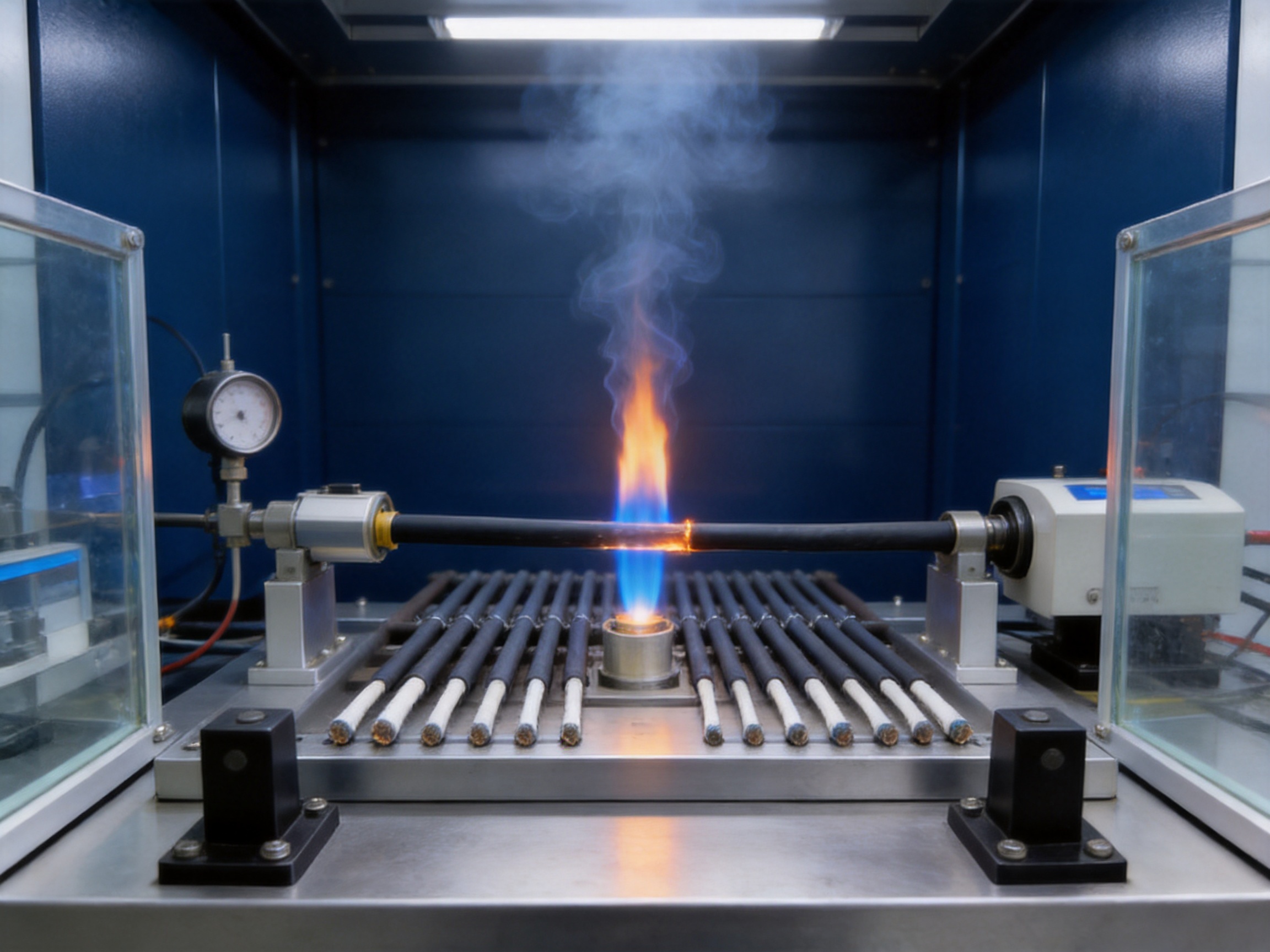
Smoke density is a key safety consideration during a fire. Dense smoke can obscure exit routes, hinder emergency response, and create difficult conditions for occupants. The supplied typical flaming smoke-density values range from 62 to 75, below the stated limit of 100. Flameless smoke-density values range from 198 to 223, below the stated limit of 350.
Among the four grades, DS-WDZH-W-B1 shows the lowest typical smoke density in both listed conditions, with a flaming value of 62 and a flameless value of 198. DS-WDZH-X-B1 also shows low typical smoke values, at 67 under flaming conditions and 206 under flameless conditions. These results demonstrate the flexibility available within the product family for projects that place particular emphasis on smoke control.
Low-smoke performance is supported by the halogen-free formulation and controlled combustion behavior. However, smoke generation can vary with cable construction, test method, oxygen availability, flame exposure, and sample geometry. Finished-cable testing remains necessary when a project requires a formal smoke classification.
Corrosive combustion products can damage metal components, electronic equipment, circuit boards, connectors, and control systems. The listed pH values and low HCl and HBr content indicate a formulation designed to reduce acidic combustion emissions. The low conductivity value further supports the low-corrosiveness profile.
Electrical Insulation Performance
Although the principal focus of these materials is flame-retardant cable sheathing, electrical insulation performance remains essential. Volume resistivity at 20°C is listed between 1.3 × 10¹³ and 1.5 × 10¹³ Ω·cm. These typical values are significantly above the listed reference value of 1.0 × 10¹² Ω·cm.
High volume resistivity helps reduce leakage current through the polymer and supports insulation reliability. It is particularly relevant in power cables, communication cables, control cables, photovoltaic systems, and other installations where stable electrical separation is required.
Electrical behavior can be influenced by moisture, contamination, additive dispersion, temperature, frequency, aging, and the condition of the cable surface. For this reason, the compound should be processed under controlled conditions, and the finished cable should be evaluated using the electrical tests required by the applicable product standard.
Resistance to Ozone, Low Temperature, and Cracking
Ozone can promote surface cracking in certain polymer materials, especially when the cable is exposed to electrical fields, sunlight, air pollutants, or outdoor conditions. All four listed grades pass the ozone-resistance test without cracking.
Low-temperature brittleness testing also shows that all grades pass at -25°C. This performance supports use in applications where cables may be stored, transported, installed, or operated in cold environments. The actual minimum service temperature should be confirmed according to the complete cable construction and project conditions.
Resistance to cracking is a major competitive advantage in cable compounds. Flame-retardant additives and mineral components can sometimes reduce flexibility or create stress-concentration points. The supplied results indicate that the formulation has been engineered to retain flexibility and environmental resistance while maintaining flame-retardant performance.
Advantages Compared with Conventional Cable Sheathing Materials
Reduced Halogen-Related Emissions
Compared with conventional halogen-containing sheathing compounds, low-smoke halogen-free materials are designed to reduce halogen-acid emissions during combustion. This can help protect people, equipment, and building infrastructure in the event of a fire.
Lower Smoke Generation
The typical smoke-density values are below the stated limits under both flaming and flameless conditions. Lower smoke generation can help preserve visibility and facilitate evacuation compared with materials that produce dense smoke.
Improved Fire Safety Balance
The compounds combine high oxygen index values, thermal stability, no-dripping requirements, and resistance to cracking. This multidimensional performance is more useful than relying on flame retardancy alone.
Good Mechanical Retention
The materials provide 12 MPa typical tensile strength and 170% typical elongation at break across the four grades. These properties support reliable extrusion and cable handling while helping resist damage during installation.
Processing Versatility
The materials are supplied as granules produced through twin-screw compounding. Granulated thermoplastic compounds can be handled using established cable-extrusion equipment, subject to suitable temperature, feed, screw, and cooling settings.
Multiple Grade Options
The availability of B1 and B2 grades, along with DS-WDZH-B1, DS-WDZH-X-B1, and DS-WDZH-W-B1 variations, allows cable manufacturers to select a material according to the required fire, smoke, mechanical, and processing priorities.
Advanced Manufacturing Process
The manufacturing process begins with controlled selection and preparation of the raw materials. Polyolefin resin, flame retardants, synergists, carbonization agents, antioxidants, and additives must be measured accurately to maintain formulation consistency. Small variations in additive concentration can affect flame performance, melt behavior, density, smoke generation, and mechanical properties.
After batching, the materials are mixed to promote uniform distribution. Pre-mixing is important because it reduces the risk of additive agglomeration and helps create a stable feed for the compounding line. The exact order of addition can be optimized according to the material’s physical form, moisture sensitivity, bulk density, and dispersion requirements.
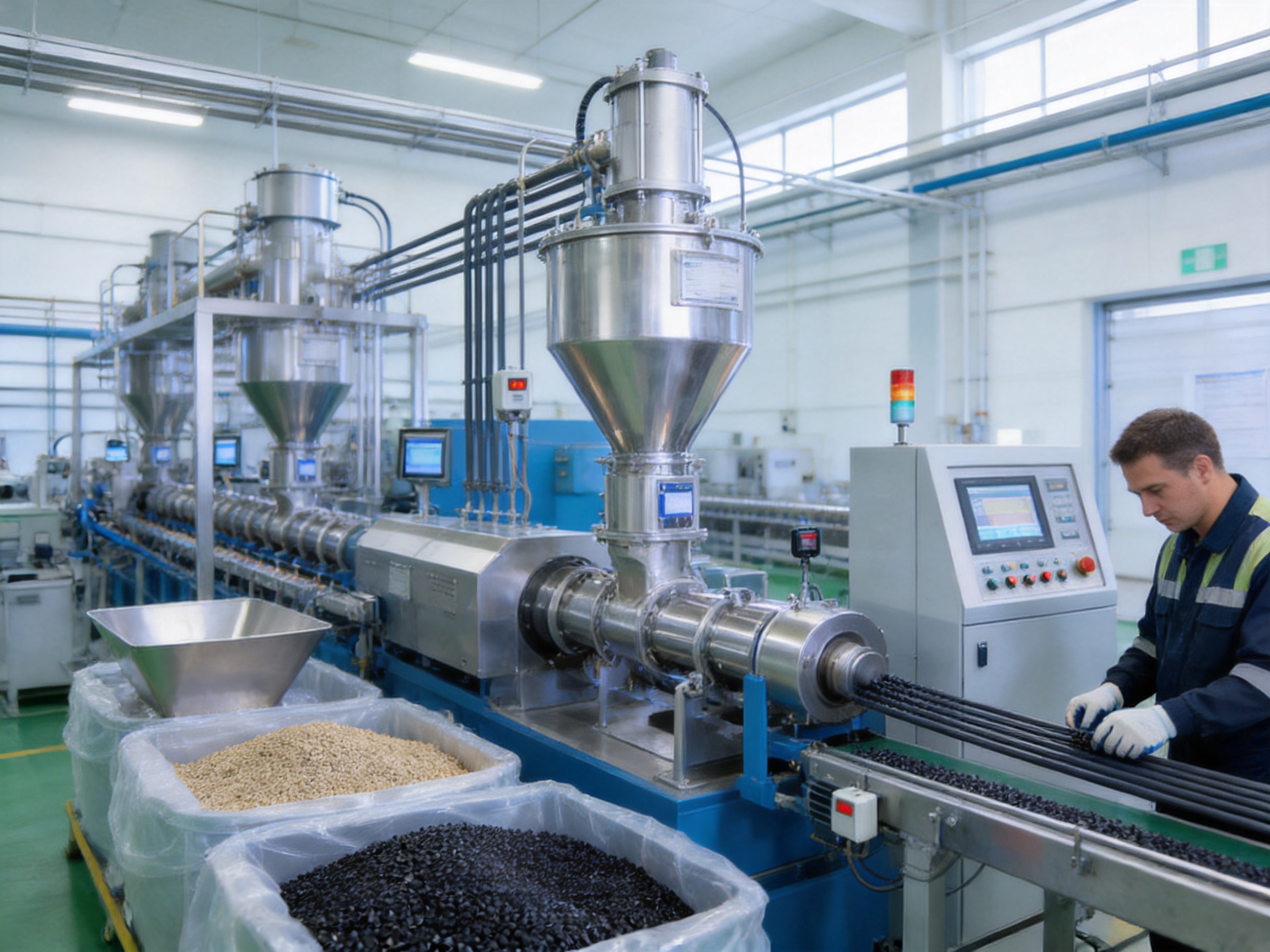
The blended materials are then processed through a twin-screw extruder. Twin-screw compounding offers multiple advantages for technical cable materials. The intermeshing screws provide controlled conveying, distributive mixing, dispersive mixing, melting, and homogenization. Screw elements can be configured to balance mixing intensity and residence time while limiting excessive shear or thermal degradation.
Temperature control is managed across multiple barrel zones. The process must be hot enough to melt and homogenize the polymer matrix, but not so aggressive that it damages the resin or destabilizes sensitive additives. Pressure, torque, melt temperature, feed rate, and motor load can be monitored to identify process variation and maintain consistent output.
After compounding, the homogeneous melt is formed into strands or another suitable intermediate shape and cooled. The material is then pelletized into granules. Uniform granule size supports stable feeding during cable extrusion and reduces fluctuations in melt output.
Quality control continues after pelletizing. Typical checks may include appearance, density, moisture, melt behavior, tensile strength, elongation, oxygen index, thermal aging, smoke density, electrical resistivity, pH, conductivity, and cracking resistance. The supplied technical values indicate that the product family is evaluated across a broad set of mechanical, thermal, electrical, and fire-related characteristics.
Importance of Dispersion Control
Dispersion control is one of the most important elements in flame-retardant cable-compound manufacturing. Flame-retardant particles and synergists must be distributed throughout the polymer matrix. Poor dispersion can create local concentrations of filler, weak mechanical zones, rough extruded surfaces, die buildup, and inconsistent fire behavior.
A well-controlled twin-screw process helps achieve a more uniform compound. This contributes to stable tensile properties, elongation, oxygen index, smoke performance, and extrusion appearance. It also supports batch-to-batch consistency, which is essential for cable manufacturers operating continuous production lines.
Moisture and Storage Management
Moisture management is also important for halogen-free compounds. Some flame-retardant systems can be sensitive to moisture, and excess moisture may lead to voids, surface defects, unstable extrusion, or reduced electrical performance. Proper packaging, storage, transportation, and pre-drying practices should be established according to the product’s technical instructions.
Manufacturers should store the granules in clean, dry conditions and prevent contamination from dust, oils, water, and incompatible polymers. First-in, first-out inventory practices can help maintain predictable material condition and reduce storage-related variability.
Research and Development Strengths
Jiangsu Duoshang New Materials Technology Co., Ltd. specializes in the research, development, production, and sales of polyolefin cable compounds. The company operates an R&D center of more than 3,000 square meters, equipped with research equipment valued at more than RMB 35 million.
The R&D team includes more than 30 professional members, including five doctors and recipients of provincial and municipal talent awards. This technical structure supports formulation development, application testing, process optimization, and customer-specific engineering assistance.
A strong R&D platform is particularly valuable for LSZH materials because performance requirements are interconnected. Increasing flame retardancy can affect flexibility. Changing the resin system can affect smoke generation. Adjusting the additive package can influence electrical properties, thermal stability, or processing behavior. Experienced polymer and cable-compound specialists can evaluate these interactions more effectively through systematic testing and formulation analysis.
The company’s product development approach emphasizes application-oriented solutions. Rather than offering only a generic resin grade, a technical supplier can help customers select or customize a compound according to cable structure, extrusion equipment, fire classification, operating temperature, mechanical requirements, and environmental exposure.
Production Capacity and Supply Reliability
The company operates two production bases covering more than 15,000 square meters, with more than 10 production lines for polyolefin cable compounds. This production structure supports a broad product portfolio and provides capacity for different compound families, including UV-crosslinked materials, silane cross-linkable materials, irradiation cross-linked materials, thermoplastic low-smoke halogen-free flame-retardant compounds, polyethylene sheath compounds, and other specialized materials.
More than 50 varieties across eight major categories allow the company to serve diverse cable markets. A broad product platform can provide practical advantages for customers that use several cable constructions or need different material technologies from one supplier.
Stable supply is especially important for cable manufacturers because production interruptions can affect extrusion schedules, delivery commitments, and qualification programs. Multiple production lines and standardized process controls can support more predictable supply planning, subject to confirmed orders, capacity, and logistics conditions.
Application Areas
Power Cables
Power cables used in buildings, substations, industrial plants, tunnels, and public infrastructure can benefit from flame-retardant, low-smoke, halogen-free sheathing. The material’s electrical resistivity, mechanical strength, and thermal-aging performance support the requirements of many power-cable designs.
Communication and Data Cables
Communication cables and data cables are often installed in offices, data centers, transportation hubs, hospitals, and commercial buildings. Low smoke and reduced corrosiveness are important in these environments because electronic equipment may be concentrated in relatively enclosed spaces.
Optical-Fiber Cables
Optical-fiber cable designs may require LSZH sheathing compounds that combine flexibility, surface quality, low smoke, and fire performance. The appropriate grade depends on the cable structure, fiber protection system, extrusion dimensions, installation method, and required classification.
Railway and Locomotive Cables
Railway applications place strong emphasis on fire safety, smoke control, mechanical durability, vibration resistance, and environmental stability. Low-smoke halogen-free compounds are suitable candidates for cable designs used in locomotives, rail transit systems, stations, and related infrastructure, subject to the relevant railway standards and complete-cable testing.
Photovoltaic and New-Energy Cables
Photovoltaic installations and other renewable-energy systems may be exposed to outdoor temperature changes, ultraviolet radiation, moisture, and electrical stress. The listed ozone resistance, low-temperature performance, thermal-aging behavior, and electrical resistivity provide useful characteristics for material evaluation. For outdoor photovoltaic use, the complete formulation and cable construction should also be validated for ultraviolet and weathering requirements.
Marine and Industrial Cables
Marine, industrial, and process-plant cables can benefit from sheathing materials designed to reduce smoke and corrosive emissions. In enclosed or difficult-to-evacuate environments, the combination of low smoke, low halogen-acid content, flame retardancy, and mechanical integrity can support safer cable systems.
Guidelines for Cable Manufacturers
Before production, cable manufacturers should review the compound specification, required fire classification, cable construction, extrusion equipment, and applicable testing standards. A material that performs well in a laboratory specimen may require process adjustment when used in a particular cable geometry.
Extrusion temperature should be selected to achieve sufficient melting and homogenization without causing degradation. The screw design should provide effective mixing and stable output. Excessive shear may increase melt temperature, while insufficient mixing may create additive dispersion problems.
Line speed, cooling conditions, die dimensions, and haul-off tension influence sheath thickness and surface quality. Stable cooling is particularly important for dimensional control and prevention of residual stress. Excessive tension during take-up can affect the final mechanical properties or cause dimensional variation.
Material handling should prevent contamination and moisture uptake. Granules should be introduced into clean equipment, and any transition between different materials should be managed carefully. Incompatible residues can affect color, surface finish, flame performance, and electrical properties.
Finished cables should be tested for dimensions, tensile strength, elongation, thermal aging, flame propagation, smoke emission, electrical properties, and other requirements defined by the customer or applicable standard. Documentation should identify the compound grade, batch information, processing conditions, and test results where appropriate.
How to Select the Appropriate Grade
DS-WDZH-B1, DS-WDZH-X-B1, and DS-WDZH-W-B1 are B1-oriented grades with typical oxygen index values of 38%, 40%, and 42%, respectively. DS-WDZH-W-B1 has the highest listed oxygen index and the lowest typical smoke-density values among the four grades, making it a candidate for projects that prioritize these characteristics.
DS-WDZH-X-B1 also provides a high typical oxygen index of 40% and low typical smoke values. Its elongation change after thermal aging is listed at -6%, while thermal deformation is 9%.
DS-WDZH-B1 provides a typical oxygen index of 38%, flaming smoke density of 70, flameless smoke density of 210, and thermal deformation of 10%. It may be selected where the standard B1 material profile aligns with the cable design and processing requirements.
DS-WDZH-B2 provides a typical oxygen index of 38%, flaming smoke density of 75, flameless smoke density of 223, and thermal deformation of 11%. It offers the same listed tensile strength and elongation as the B1 grades while supporting B2-level cable applications.
Selection should not be based on one number alone. Buyers should consider the required classification, cable wall thickness, extrusion behavior, flexibility, operating temperature, smoke limits, electrical requirements, environmental exposure, certification route, and total cost of production.
Quality, Customization, and Technical Support
Customers in the cable industry often require more than a standard material data sheet. They may need assistance with extrusion trials, processing windows, flame testing, color matching, mechanical optimization, or adaptation to a particular cable structure.
Duoshang focuses on application-oriented solutions, R&D and testing support, technical documentation, stable supply capability, and customized material solutions for customers worldwide. This service model can help cable manufacturers reduce development time and improve the transition from material selection to mass production.
Customization may involve adjustment of mechanical properties, smoke performance, processing behavior, flexibility, thermal stability, color, or other characteristics. Any customized formulation should be evaluated through a controlled qualification process to confirm that changes do not adversely affect fire classification, electrical performance, or long-term reliability.
Environmental and Safety Benefits
Low-smoke halogen-free cable compounds support safer building and infrastructure design by reducing smoke and corrosive emissions during fire conditions. Their use may help protect occupants, emergency personnel, electronic equipment, and structural systems.
The absence of intentionally added halogen-based flame-retardant chemistry in the described formulation is consistent with the low-smoke halogen-free design objective. The listed HCl and HBr content below 0.5%, pH values above 5.1, and conductivity near 1.1 μS/mm provide supporting evidence of low-corrosiveness performance under the stated test conditions.
Environmental advantages should be assessed across the full product life cycle. Responsible material selection includes raw-material sourcing, manufacturing energy use, product durability, fire safety, installation life, maintenance requirements, and end-of-life handling. A durable cable sheath that maintains performance over a long service period can reduce replacement frequency and associated resource consumption.
Commercial Advantages for Cable Producers
A well-balanced cable compound can reduce the risk of production problems. Stable granules, consistent dispersion, predictable melt behavior, and reliable mechanical properties can support higher line efficiency and lower scrap rates.
Multiple grades allow cable producers to match material performance to the requirements of different markets. A supplier with extensive product categories can also simplify procurement and technical coordination for companies manufacturing power, communications, optical, railway, photovoltaic, marine, and industrial cables.
Technical support can reduce the time required to qualify a new compound. Assistance with trial planning, process adjustment, testing, and documentation may help manufacturers move more efficiently from laboratory evaluation to commercial production.
Supply capacity is another commercial consideration. Two production bases, more than 10 production lines, and a broad product portfolio provide a foundation for serving customers with varied volume and grade requirements. Final delivery capability should be confirmed according to order size, lead time, production scheduling, and transportation conditions.
Frequently Asked Questions
What are B1 and B2 low-smoke halogen-free sheathing materials?
They are polyolefin-based cable compounds formulated with flame retardants, synergists, carbonization agents, antioxidants, and other additives. They are designed to provide flame retardancy, low smoke emission, low corrosiveness, resistance to dripping, mechanical strength, and resistance to cracking.
Which standards are associated with these materials?
The product description identifies compliance with B1 and B2 classification combustion standards in GB 31247-2014 and applicability to B1ca, B2ca, and Cca classification combustion standards in EN 13501-6. Final classification should be confirmed through testing of the complete cable according to the applicable standard.
What are the main advantages over conventional halogen-containing sheathing materials?
The principal advantages include lower smoke generation, reduced halogen-acid emissions, lower corrosiveness, strong flame-retardant performance, and improved suitability for enclosed or high-occupancy environments. The materials also provide useful mechanical, thermal, and electrical properties.
Are the materials suitable for power cables?
They are suitable candidates for various power-cable designs, subject to cable construction, voltage rating, operating temperature, applicable standards, and finished-cable testing. The listed volume resistivity, tensile strength, elongation, thermal-aging performance, and fire-related properties support their evaluation for power-cable applications.
Can they be used in communication or optical-fiber cables?
Yes. The product family is suitable for cable applications including communication and optical-fiber cables, provided that the selected grade meets the required flexibility, extrusion, fire, smoke, mechanical, and dimensional requirements of the final cable.
Which grade has the highest typical oxygen index?
DS-WDZH-W-B1 has the highest listed typical oxygen index at 42%. DS-WDZH-X-B1 is listed at 40%, while DS-WDZH-B1 and DS-WDZH-B2 are listed at 38%.
Which grade has the lowest typical smoke density?
DS-WDZH-W-B1 has the lowest listed typical smoke density, with a flaming value of 62 and a flameless value of 198. DS-WDZH-X-B1 has the next lowest listed values, at 67 and 206, respectively.
Do the materials resist cracking?
All four listed grades show no cracking in the supplied thermal shock and ozone resistance test results. They also pass the listed low-temperature brittleness test at -25°C.
How are the compounds manufactured?
The raw materials are mixed and compounded using a twin-screw process. The homogeneous melt is then cooled and granulated. Process controls are used to support uniform dispersion, stable melt behavior, consistent granule quality, and repeatable product performance.
Can the formulation be customized?
Customized material solutions can be developed according to application requirements. Potential adjustment areas may include flame performance, smoke generation, flexibility, mechanical properties, processing behavior, color, and thermal stability. Any customized grade should undergo appropriate technical validation.
What information should a buyer provide when requesting a quotation?
A buyer should provide the cable type, intended application, required fire classification, conductor and insulation structure, sheath thickness, extrusion equipment, operating temperature, environmental exposure, expected annual volume, packaging requirements, and any required certification or test standard.
How should the material be stored?
The granules should be stored in clean, dry conditions and protected from moisture, contamination, direct weather exposure, and incompatible materials. Storage and drying instructions should be confirmed with the supplier before processing.
Does compound compliance automatically certify the finished cable?
No. Compound performance and finished-cable certification are related but distinct. The final cable must be evaluated using the applicable construction, dimensions, installation configuration, and fire-test method. Cable manufacturers remain responsible for confirming final compliance.
Conclusion
B1 and B2 low-smoke halogen-free sheathing materials provide a comprehensive solution for cable manufacturers seeking enhanced fire safety without sacrificing mechanical, thermal, electrical, and processing performance. The product family combines a polyolefin resin system with high-efficiency flame retardants, synergists, carbonization agents, antioxidants, and specialized additives.
The listed technical results demonstrate a strong performance profile. Tensile strength is typically 12 MPa, elongation at break is typically 170%, oxygen index values reach up to 42%, thermal deformation remains between 9% and 11%, and all four grades show no cracking in the listed thermal shock and ozone tests. Smoke density, pH, HCl and HBr content, conductivity, and volume resistivity values further support the material’s low-smoke, low-corrosiveness, and electrical-insulation objectives.
The manufacturing platform strengthens the product offering. A dedicated R&D center, professional technical team, multiple production bases, more than 10 production lines, and a broad portfolio of polyolefin cable compounds provide the capabilities needed for product development, process optimization, stable supply, and customized technical support.
For power, communication, optical-fiber, railway, photovoltaic, marine, industrial, and new-energy cables, these compounds offer a practical combination of fire performance and service reliability. Proper grade selection, extrusion control, storage management, and finished-cable testing remain essential to achieving the desired results in each application.
References
GB 31247-2014, Classification for Burning Behavior of Cables and Optical Fiber Cables.
EN 13501-6, Fire Classification of Construction Products and Building Elements: Classification Using Data from Reaction to Fire Tests on Power, Control and Communication Cables.
Product technical information for DS-WDZH-B1, DS-WDZH-X-B1, DS-WDZH-W-B1, and DS-WDZH-B2 low-smoke halogen-free cable compounds.
Technical data concerning density, tensile strength, elongation at break, oxygen index, thermal aging, thermal deformation, thermal shock resistance, smoke density, volume resistivity, ozone resistance, low-temperature brittleness, pH, HCl and HBr content, and conductivity.
Polymer Processing and Compounding Principles, reference material for twin-screw extrusion, additive dispersion, melt homogenization, and thermoplastic granulation.
Low-Smoke Halogen-Free Cable Materials: Fire Safety, Smoke Control, Corrosivity, and Application Considerations, technical reference material for cable-compound selection and qualification.
Materials supplied by Jiangsu Duoshang New Materials Technology Co., Ltd., a manufacturer and supplier of polyolefin cable compounds and specialized low-smoke halogen-free materials.