English
 Français
 Español
 русский
 عربى
Green Ohm
Green Ohm
Green Ohm
Green Ohm
Green Ohm
Green Ohm
Green Ohm
Green Ohm
Green Ohm
Content
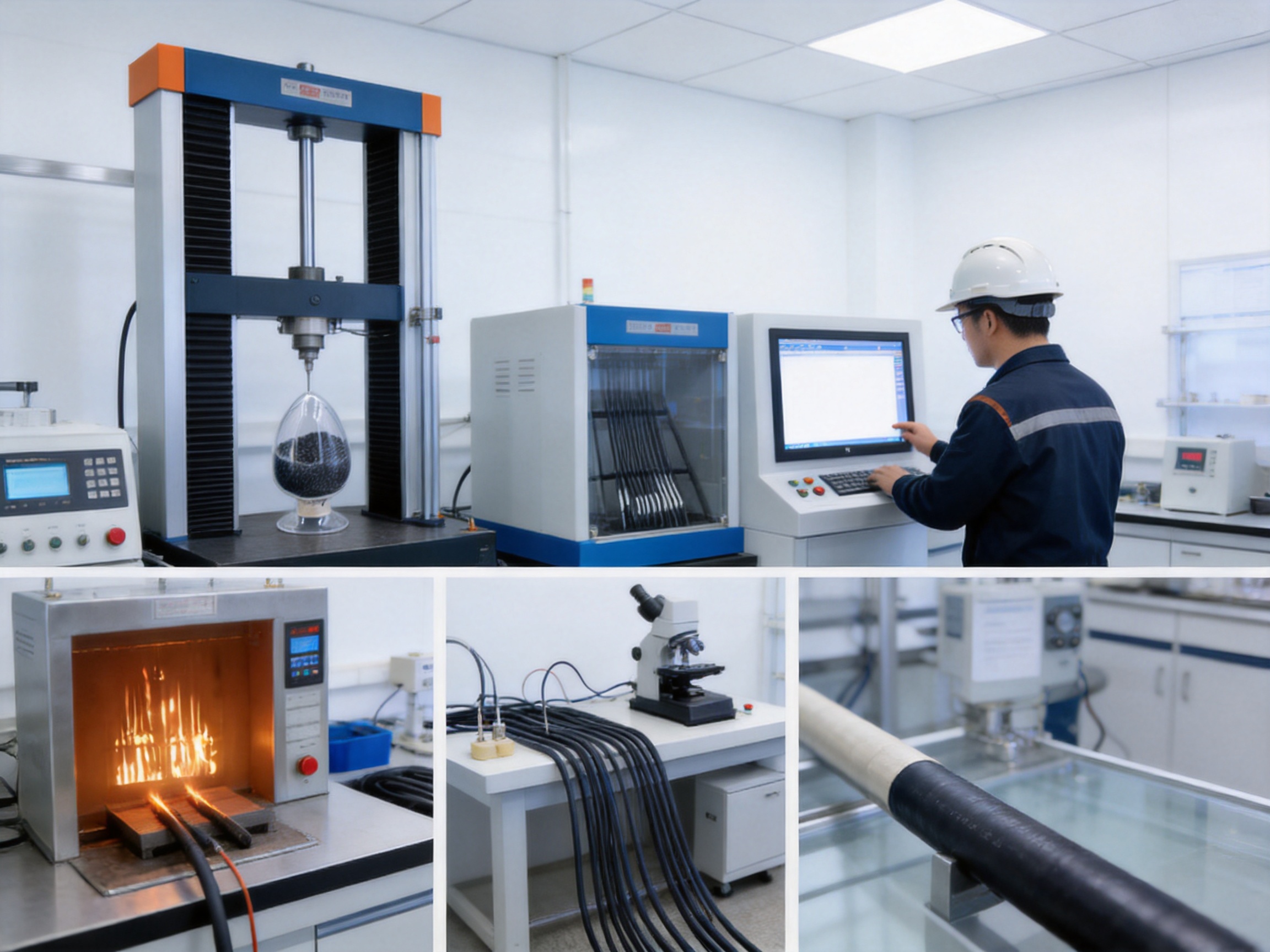
Modern cable systems are expected to deliver reliable electrical performance while also supporting stringent fire-safety requirements. In buildings, transportation networks, data centers, industrial facilities, renewable-energy installations, and public infrastructure, cable materials must do more than provide insulation and mechanical protection. They must help limit flame spread, reduce smoke generation, avoid corrosive halogen-containing emissions, resist cracking, and maintain acceptable performance throughout installation and service.
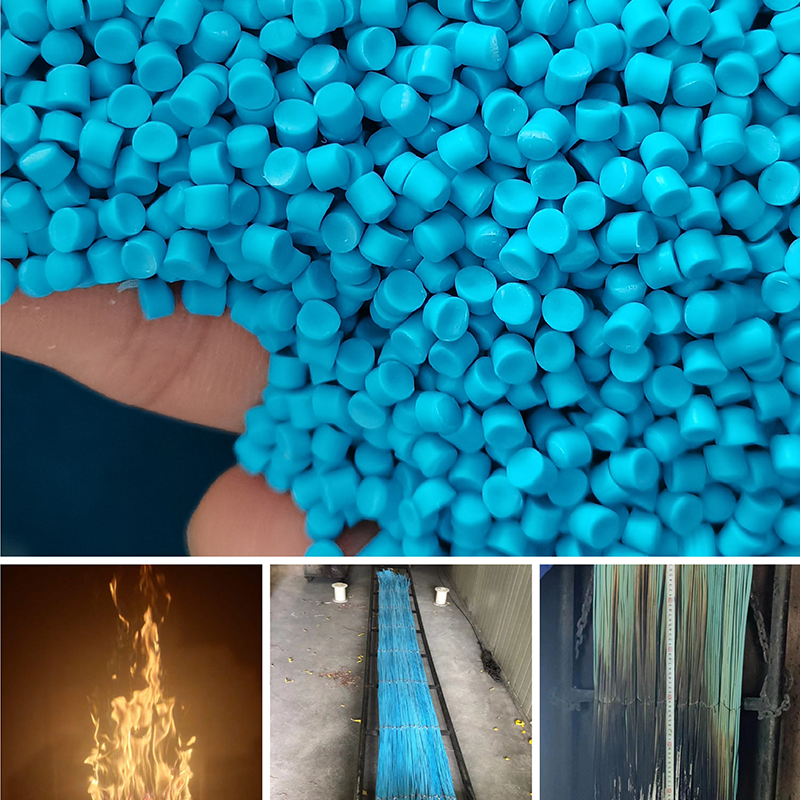
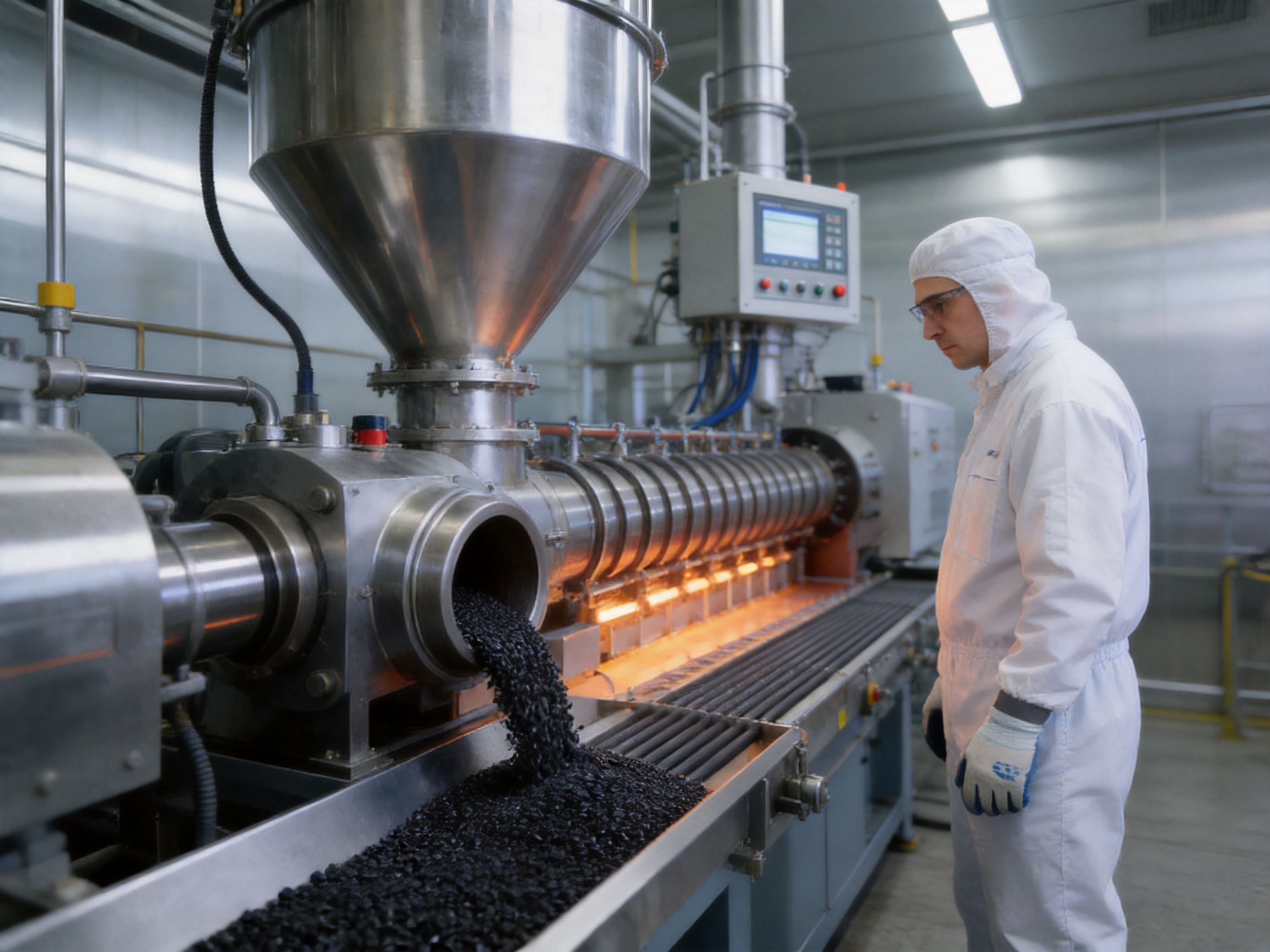
B1 and B2 low-smoke halogen-free sheathing materials are developed for precisely this combination of requirements. These compounds are formulated from polyolefin resin, complex high-efficiency flame retardants, flame-retardant synergists, carbonization agents, antioxidants, and carefully selected processing additives. After compounding and pelletizing through a twin-screw extrusion process, the resulting materials are suitable for cable applications that require high flame retardancy, low smoke toxicity, low corrosiveness, resistance to dripping, and resistance to thermal cracking.
The product range described in this article includes DS-WDZH-B1, DS-WDZH-X-B1, DS-WDZH-W-B1, and DS-WDZH-B2 grades. These materials are designed to support demanding cable constructions and are positioned for applications requiring compliance with B1 and B2 classification requirements under GB 31247-2014, as well as B1ca, B2ca, and Cca classifications under EN 13501-6, subject to the complete cable design, test configuration, and applicable certification requirements.
The compounds are manufactured by Jiangsu Duoshang New Materials Technology Co., Ltd., a specialized producer of polyolefin cable compounds based in Nantong, Jiangsu Province, China. The company combines formulation development, laboratory testing, production-scale compounding, technical support, and customized material solutions for customers in cable and related industries.
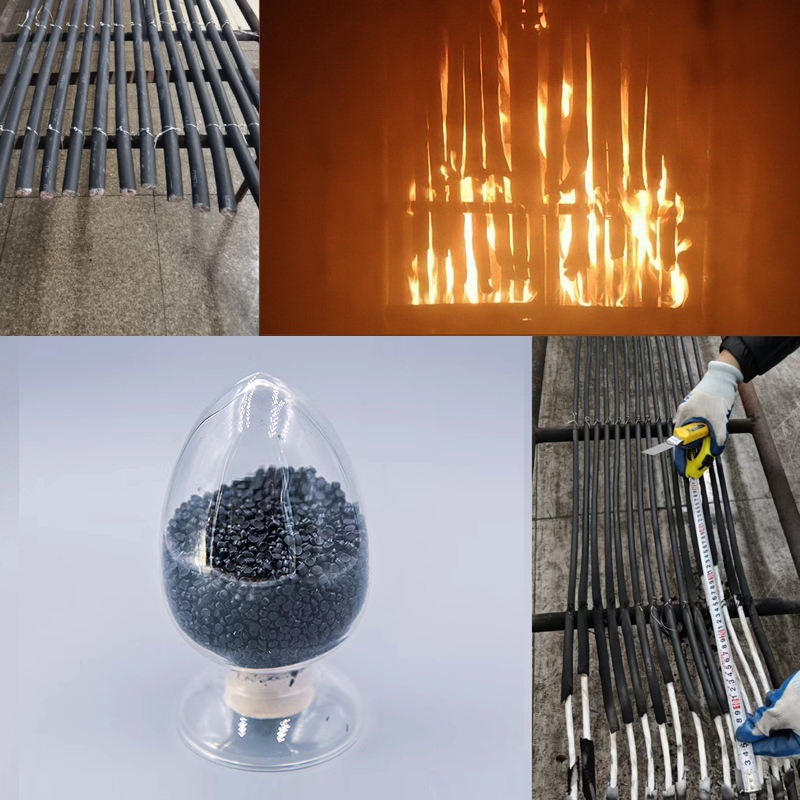
B1 and B2 low smoke halogen-free sheathing materials
Why Low-Smoke Halogen-Free Sheathing Materials Matter
In a cable fire, the polymer sheath is exposed to heat, flames, oxygen, and the surrounding cable materials. Conventional halogen-containing materials may release acidic and corrosive gases when they decompose. Smoke can obscure escape routes, damage sensitive equipment, and create additional hazards for occupants and emergency personnel. For this reason, cable specifications increasingly emphasize smoke density, acidity, conductivity, flame spread, heat release, and resistance to flaming droplets.
Low-smoke halogen-free compounds are designed to reduce these risks. Their formulation avoids the intentional use of halogenated polymer systems as the principal flame-retardant structure. Instead, the material relies on a polyolefin matrix and a coordinated package of mineral or reactive flame-retardant components, synergists, carbonization agents, antioxidants, and processing aids. During combustion or intense heating, the formulation is intended to promote protective char or condensed-phase structures, reduce flame propagation, limit smoke generation, and minimize corrosive emissions.
The term “halogen-free” should not be treated as a single performance value. It is part of a broader performance system that includes acid-gas content, pH, conductivity, smoke density, flame behavior, and mechanical stability. The supplied technical data show HCl and HBr content below 0.5%, a pH value of approximately 5.1 to 5.2, and conductivity of 1.1 μS/mm for the listed grades. These values indicate the product’s focus on low-corrosiveness and reduced acidity in the relevant test system.
Low-smoke performance is also essential. The listed typical flaming smoke-density values range from 62 to 75, while flameless values range from 198 to 223. These results are below the stated limits of 100 for flaming conditions and 350 for flameless conditions. Lower smoke density can help preserve visibility and reduce contamination during a fire event, although final fire performance always depends on the complete cable construction and the required test method.
Product Composition and Functional Design
Polyolefin Resin Base
The polyolefin resin provides the fundamental processing and mechanical framework of the compound. Polyolefin systems are widely used in cable applications because they can offer a useful combination of electrical insulation, flexibility, moisture resistance, chemical stability, and processability. The resin base is selected and modified to accommodate the relatively high loading of flame-retardant ingredients needed for low-smoke halogen-free performance.
A successful cable sheath compound must remain processable even when it contains a substantial quantity of functional additives. Excessive filler loading can reduce elongation, impair surface quality, increase die pressure, and cause instability during extrusion. The formulation therefore requires a balance between flame resistance, mechanical properties, electrical performance, process stability, and long-term aging behavior.
High-Efficiency Flame Retardants
The flame-retardant system is responsible for reducing ignition and slowing flame propagation. High-efficiency flame retardants can function through several mechanisms, including heat absorption, dilution of combustible gases, formation of a protective barrier, promotion of char, and interruption of combustion reactions. The choice and proportion of these components strongly influence oxygen index, smoke density, mechanical properties, and processing behavior.
The reported oxygen index values are 38, 40, 42, and 38 for the four listed grades. All exceed the stated minimum requirement of 30%. A higher oxygen index generally indicates that a material requires a higher oxygen concentration to sustain combustion under the applicable test conditions. This provides an important indication of flame resistance, although oxygen index results should be interpreted together with the complete cable flame test and classification results.
Flame-Retardant Synergists
Synergists are included to improve the effectiveness of the primary flame-retardant package. They may support char formation, improve barrier strength, reinforce the condensed phase, or influence the release of combustible decomposition products. By combining components with complementary mechanisms, the formulation can achieve a more efficient balance between flame resistance and physical properties.
Synergistic formulation is especially important for B1 and B2 cable materials because demanding flame classifications cannot normally be achieved through a single additive. The compound must perform under severe flame exposure while also preserving tensile strength, elongation, surface integrity, and dimensional stability during cable manufacture.
Carbonization Agents
Carbonization agents promote the formation of a protective carbonaceous layer when the material is exposed to high heat. This layer can act as a physical barrier between the underlying polymer and the flame. It may reduce heat transfer, limit the escape of combustible gases, and restrict oxygen access to the decomposing material.
For a cable sheath, the quality of the protective layer is important. A weak or discontinuous char may crack, fall away, or allow flame to reach fresh polymer. A well-designed carbonization system can help maintain barrier continuity and contribute to the product’s resistance to dripping and cracking under thermal stress.
Antioxidants and Processing Additives
Antioxidants help protect the polymer during compounding, extrusion, thermal aging, and service. Cable compounds pass through elevated-temperature processing equipment, and they may experience long-term exposure to heat, oxygen, sunlight, electrical stress, or environmental contaminants. Antioxidant selection must therefore support both processing stability and service-life performance.
Processing additives help improve melt flow, dispersion, surface finish, die release, and manufacturing consistency. Their use is particularly important in halogen-free flame-retardant compounds because the high additive content can otherwise make extrusion more difficult. Proper additive selection helps the compound pass through cable equipment with stable pressure and uniform coating quality.
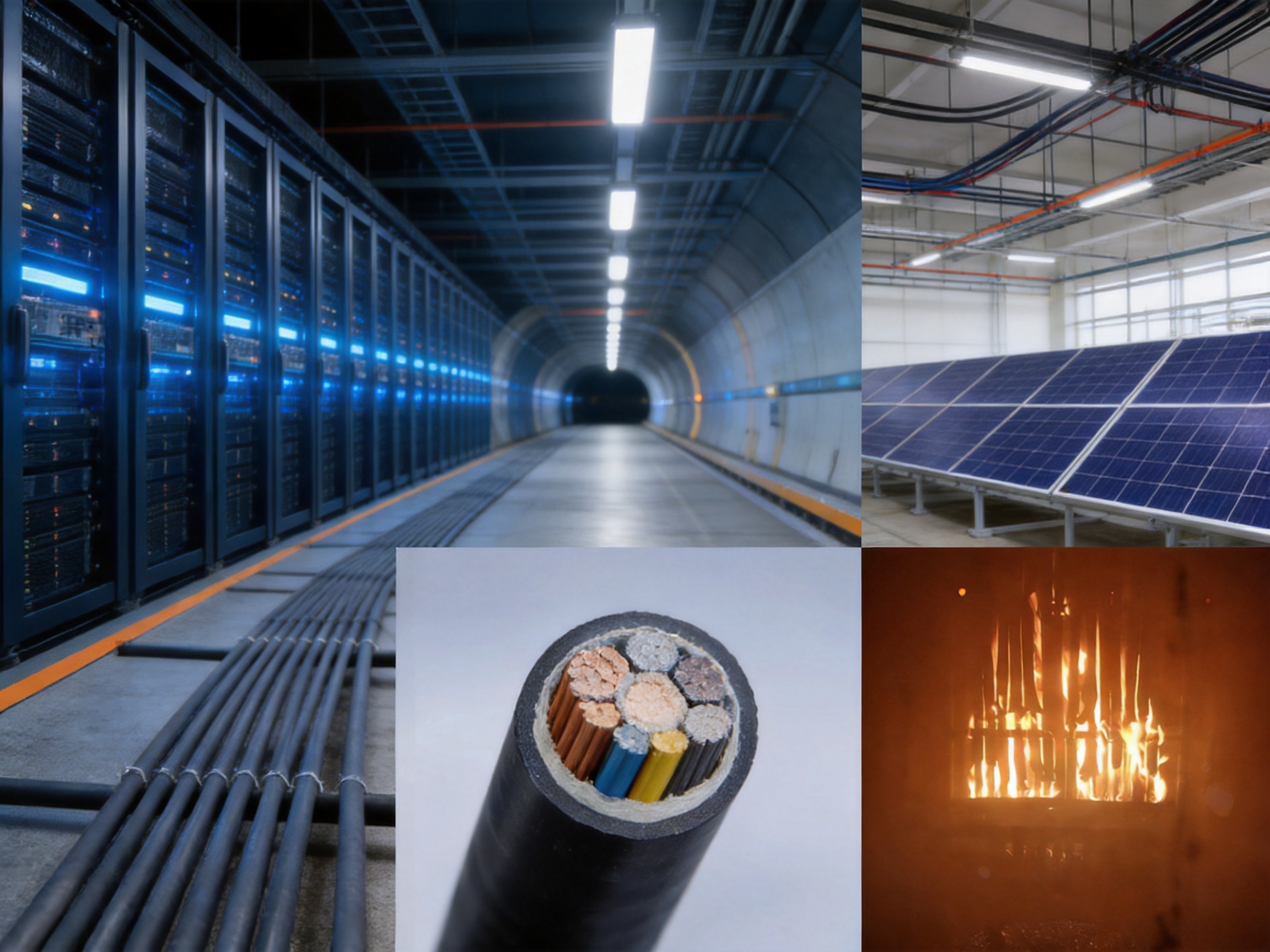
Manufacturing Process and Quality Control
Raw-Material Preparation
Consistent cable compound production begins with controlled raw-material preparation. Polyolefin resin, flame retardants, synergists, carbonization agents, antioxidants, and additives must be received, identified, stored, and measured according to formulation requirements. Moisture control is particularly important for many mineral-based flame-retardant ingredients because excessive moisture can affect dispersion, surface quality, electrical properties, and extrusion stability.
Raw materials should be checked for batch identity, appearance, particle condition, moisture content where applicable, and conformity with internal specifications. Accurate weighing is essential because even small formulation variations can influence oxygen index, smoke density, tensile properties, pH, conductivity, and melt behavior. A controlled batching system helps reduce operator variability and supports repeatable product quality.
High-Shear Mixing and Dispersion
The ingredients are blended before entering the compounding equipment. The objective is to create a reasonably uniform premix so that each portion of the material receives a consistent proportion of resin and functional additives. Uniform premixing reduces the risk of localized additive concentration, incomplete flame-retardant dispersion, or inconsistent mechanical performance.
During compounding, the twin-screw extruder provides controlled conveying, melting, mixing, dispersive action, and distributive blending. Screw configuration, barrel temperature, residence time, feed rate, screw speed, and vacuum-venting conditions can all affect the final compound. The process must be adjusted to disperse the flame-retardant package without causing excessive thermal degradation of the polymer or additives.
Twin-Screw Extrusion
Twin-screw extrusion is well suited to complex cable compounds because it provides multiple stages of material transport and mixing. Solid ingredients can be fed into the system, incorporated into the molten polymer, and dispersed through carefully designed kneading and conveying sections. The process can also support controlled venting of moisture or volatile substances before the melt reaches the die.
Temperature management is a key consideration. If the melt temperature is too low, resin melting and additive dispersion may be incomplete. If it is too high, the polymer may degrade, additives may react prematurely, or the compound may develop unstable color and odor. A controlled temperature profile helps maintain material integrity while achieving the mixing energy needed for a uniform product.
After extrusion, the compound is formed into strands or another suitable intermediate shape, cooled, and pelletized. Uniform pellet size supports consistent feeding during cable extrusion. Clean cutting, controlled cooling, and effective removal of fines help improve production efficiency and reduce contamination risks.
Testing and Release Procedures
Quality control for low-smoke halogen-free cable compounds should combine physical, mechanical, electrical, thermal, and combustion-related testing. The supplied data include density, tensile strength, elongation at break, oxygen index, air thermal aging, thermal deformation, thermal shock resistance, smoke density, volume resistivity, ozone resistance, low-temperature brittleness, pH, HCl and HBr content, and conductivity.
Testing each of these properties helps confirm that the compound is balanced rather than optimized for only one performance characteristic. For example, a material with high flame resistance but poor elongation may create installation problems. A material with good tensile strength but excessive smoke may fail the intended fire-safety objective. A material with acceptable flame behavior but weak thermal aging may not provide dependable service life.
Batch-release testing and periodic type testing can be used together. Routine tests help verify everyday production consistency, while more extensive validation tests confirm that the formulation continues to meet broader technical requirements. Test specimens should be prepared using controlled methods because sample thickness, conditioning, molding, extrusion history, and orientation can influence results.
Technical Performance Overview
The following table reorganizes the supplied typical values for the four product grades. The standard column reflects the stated requirement or reference value. Actual acceptance should be based on the applicable technical agreement, test method, cable construction, and certification documentation.
| No. | Property | Unit or condition | Stated standard | DS-WDZH-B1 | DS-WDZH-X-B1 | DS-WDZH-W-B1 | DS-WDZH-B2 |
|---|---|---|---|---|---|---|---|
| 1 | Density | g/cm³ | Not specified | 1.56 | 1.57 | 1.56 | 1.54 |
| 2 | Tensile strength | MPa | ≥10.0 | 12 | 12 | 12 | 12 |
| 3 | Elongation at break | % | ≥160 | 170 | 170 | 170 | 170 |
| 4 | Oxygen index | % | ≥30 | 38 | 40 | 42 | 38 |
| 5 | Thermal aging at 100°C for 168 hours: tensile-strength change | % | ±25 | +10 | +8 | +7 | +11 |
| 5 | Thermal aging at 100°C for 168 hours: elongation change | % | ±25 | -7 | -6 | -5 | -10 |
| 6 | Thermal deformation | % | ≤50 | 10 | 9 | 9 | 11 |
| 7 | Thermal shock resistance | Visual result | No cracking | No cracking | No cracking | No cracking | No cracking |
| 8 | Smoke density under flaming conditions | Test value | ≤100 | 70 | 67 | 62 | 75 |
| 8 | Smoke density under flameless conditions | Test value | ≤350 | 210 | 206 | 198 | 223 |
| 9 | Volume resistivity at 20°C | Ω·cm | ≥1.0×10¹² | 1.4×10¹³ | 1.4×10¹³ | 1.3×10¹³ | 1.5×10¹³ |
| 10 | Ozone resistance | Visual result | No cracking | No cracking | No cracking | No cracking | No cracking |
| 11 | Low-temperature brittleness | °C | -25 | Pass | Pass | Pass | Pass |
| 12 | pH | Test value | ≥4.3 | 5.2 | 5.1 | 5.2 | 5.1 |
| 13 | HCl and HBr content | % | ≤0.5 | <0.5 | <0.5 | <0.5 | <0.5 |
| 14 | Conductivity | μS/mm | ≤10 | 1.1 | 1.1 | 1.1 | 1.1 |
Mechanical Strength and Flexibility
Mechanical performance is fundamental to cable installation. A sheath may be pulled, bent, compressed, stripped, passed through guides, or exposed to movement during installation. It must also protect the cable core from abrasion, moisture, impact, and environmental exposure. The four listed grades have a typical tensile strength of 12 MPa, exceeding the stated minimum of 10.0 MPa.
The typical elongation at break is 170%, compared with a stated minimum of 160%. This level of elongation provides a useful