English
 Français
 Español
 русский
 عربى
Green Ohm
Green Ohm
Green Ohm
Green Ohm
Green Ohm
Green Ohm
Green Ohm
Green Ohm
Green Ohm
Content
- 1 1. Why Photovoltaic Cables Require Specialized LSZH Compounds
- 2 2. Product Overview and Intended Application
- 3 3. How Electron Accelerator Irradiation Crosslinking Works
- 4 4. Key Mechanical Performance
- 5 5. Heat Elongation and Permanent Deformation
- 6 6. Electrical Insulation Performance
- 7 7. Flame Retardancy and LSZH Advantages
- 8 8. Resistance to Ultraviolet Radiation, Ozone, and Chemicals
- 9 9. Product Grades and Selection Considerations
- 10 10. Manufacturing Process Strengths
- 11 11. Advantages Compared with General-Purpose Cable Compounds
- 12 12. Processing Guidance for Cable Manufacturers
- 13 13. Quality Assurance and Technical Support
- 14 14. Applications Beyond Photovoltaic Cables
- 15 15. Sustainability and Lifecycle Considerations
- 16 16. Recommended Evaluation Checklist
- 17 17. Frequently Asked Questions
- 17.1 What does LSZH mean?
- 17.2 Why is the product rated at 125°C?
- 17.3 How is the material crosslinked?
- 17.4 Is the material suitable for outdoor photovoltaic installations?
- 17.5 What are the main differences among the four grades?
- 17.6 Can the material be used for both insulation and sheathing?
- 17.7 What standards are associated with the product?
- 17.8 What is the expected outdoor service life?
- 17.9 Does irradiation crosslinking replace cable testing?
- 17.10 What support can a compound supplier provide?
- 17.11 How should the product be stored?
- 17.12 Why is company manufacturing capability important when choosing a cable compound?
- 18 18. Conclusion
- 19 References
- 20 Product: 125°C Accelerator Irradiation Cross-linked LSZH Flame Retardant Insulation and Sheathing Material for Photovoltaics
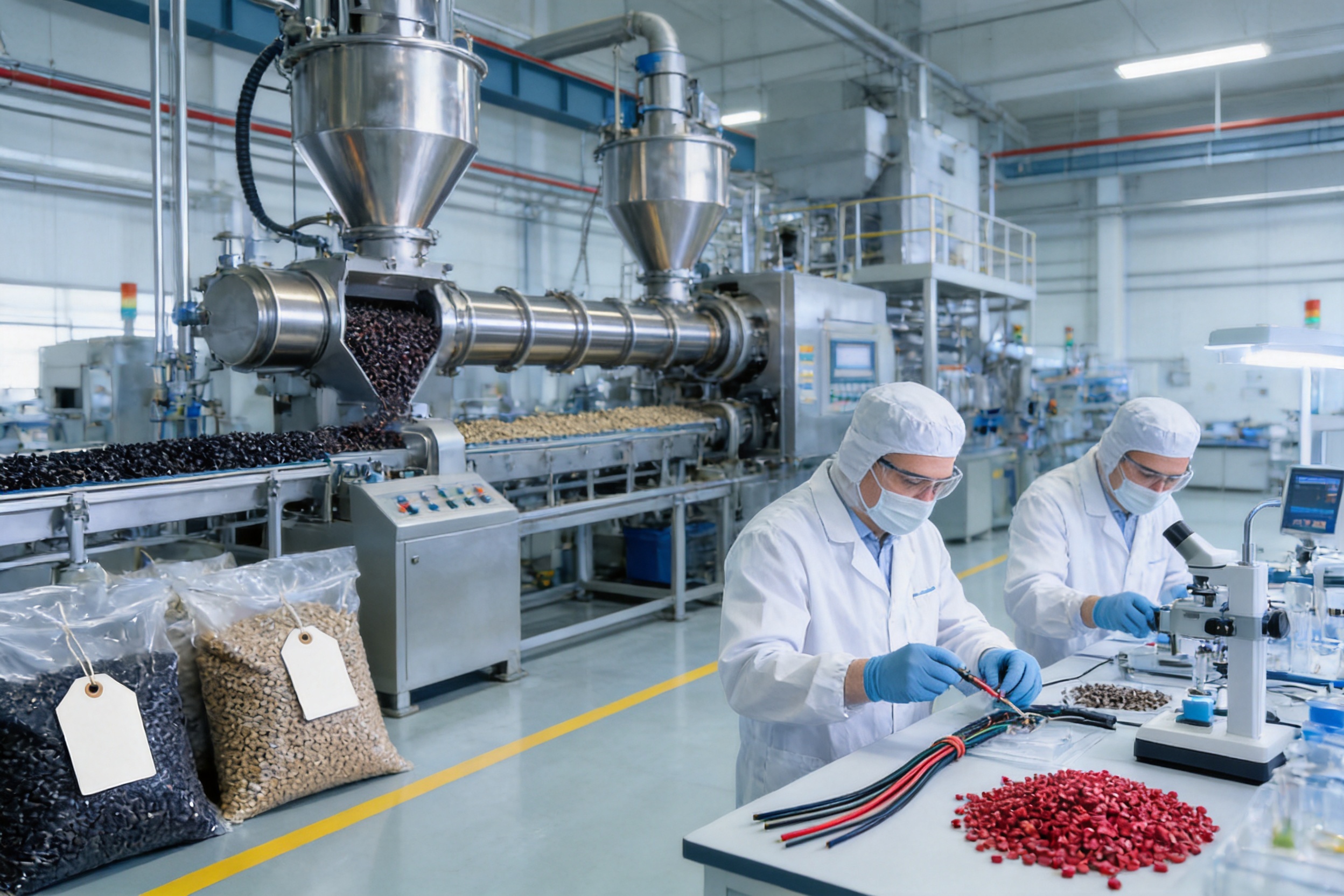
Photovoltaic cable systems operate in demanding environments. Conductors and insulation materials are exposed to sunlight, elevated temperatures, temperature cycling, moisture, ozone, acids, alkalis, mechanical stress, and long periods of continuous electrical loading. A cable compound used in this field must therefore provide more than basic insulation. It must maintain mechanical integrity, electrical performance, flame-retardant behavior, and environmental resistance throughout an extended outdoor service life.
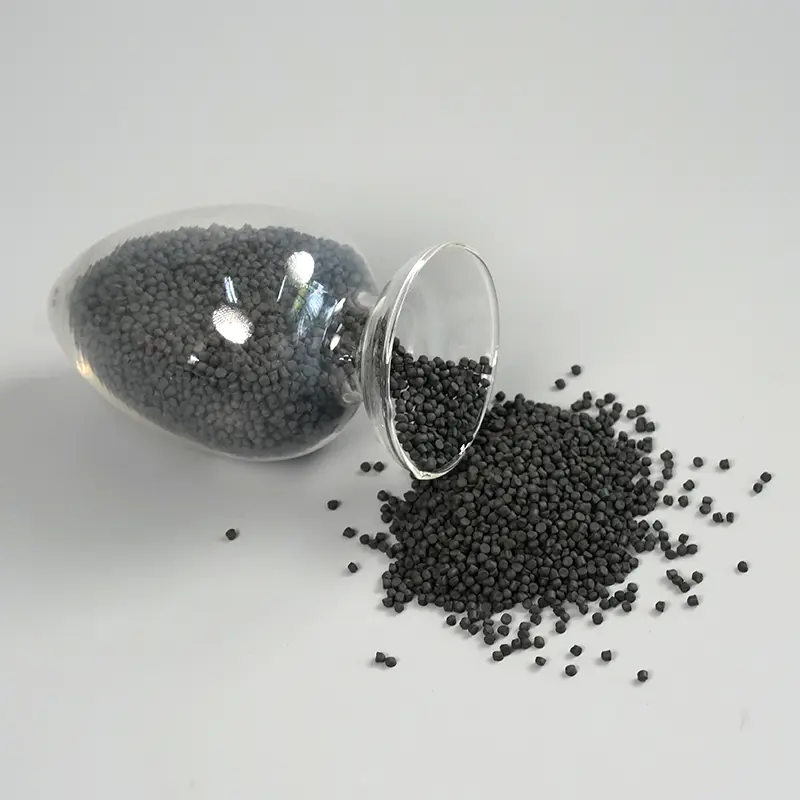
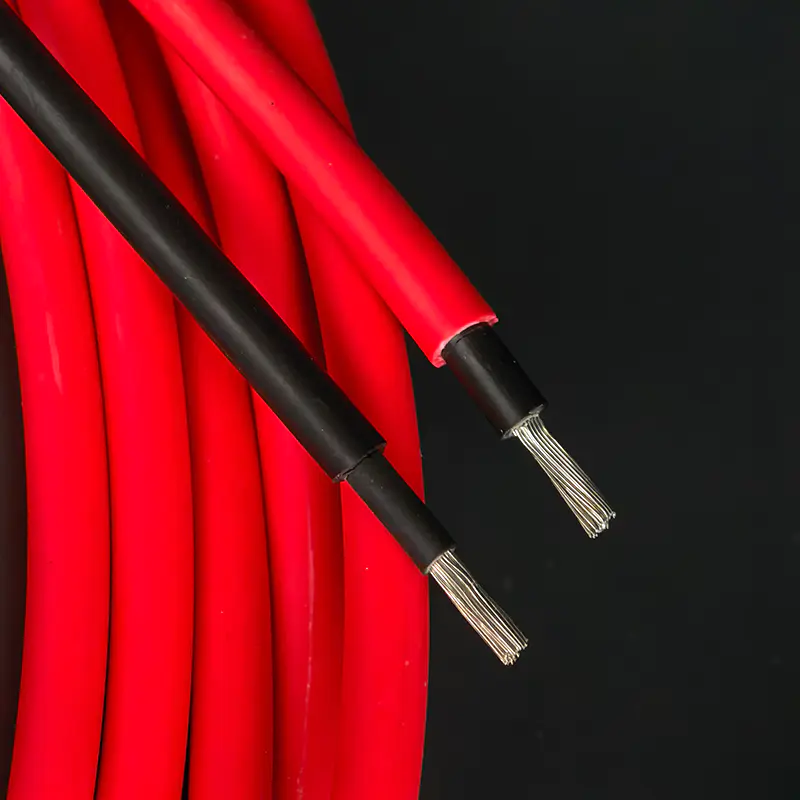
The 125°C accelerator irradiation-crosslinked low-smoke zero-halogen, or LSZH, flame-retardant insulation and sheathing material described in this article is designed for that purpose. It is developed for photovoltaic cables and other applications requiring durable halogen-free insulation and protective sheathing. The compound uses electron accelerator irradiation to create a crosslinked polymer structure after cable extrusion. According to the supplied product information, the material offers a temperature resistance level of up to 125°C, a low-temperature brittleness temperature of approximately -40°C, strong resistance to ultraviolet radiation and ozone, and resistance to acids and alkalis.
The material is designed to satisfy or support compliance with TUV 2 PfG 1169/08.2007, EN 50618:2014, and UL 4703 requirements. It is available in insulation and sheathing grades identified as DS-GFJ-125, DS-GFH-125, DS-ENJ-125, and DS-ENH-125. These grades provide different combinations of density, tensile strength, elongation, electrical resistivity, and other characteristics, enabling cable manufacturers to select a suitable material combination for their construction and processing conditions.
Beyond the product itself, the manufacturing and development capabilities of Jiangsu Duoshang New Materials Technology Co., Ltd. contribute to the compound’s value. The company focuses on polyolefin cable compounds and related new materials, operates dedicated research and production facilities, and provides technical documentation, application support, testing assistance, and customized material solutions.
1. Why Photovoltaic Cables Require Specialized LSZH Compounds
Photovoltaic cables are installed in locations where conventional indoor cable materials may not provide adequate durability. Solar cable routes can run beneath photovoltaic modules, along support structures, across rooftops, through outdoor conduits, and within utility-scale solar fields. These locations expose cables to sunlight and weather for many years. The cable material must remain flexible enough for installation while resisting degradation caused by heat, radiation, moisture, and chemical contamination.
During normal operation, photovoltaic modules can create cable temperatures substantially above ambient conditions. Dark cable surfaces and confined spaces beneath panels can increase thermal stress. Repeated daily heating and nighttime cooling also create expansion and contraction cycles. A compound that softens excessively, loses tensile strength, or becomes brittle after long-term exposure may contribute to cracking, insulation failure, or premature cable replacement.
Photovoltaic systems also require reliable electrical insulation. The cable compound must maintain high volume resistivity and dielectric strength while exposed to humidity, thermal stress, and contaminants. At the same time, the material should limit flame propagation and reduce the generation of dense smoke and corrosive halogen-containing gases in the event of fire.
LSZH materials are particularly valuable in installations where personnel safety, equipment protection, and environmental considerations are important. Unlike traditional halogen-containing materials, halogen-free formulations are designed to minimize corrosive acid gases during combustion. This characteristic can reduce damage to electrical equipment and improve conditions for evacuation and firefighting.
The photovoltaic industry therefore needs a balanced formulation. High flame retardancy alone is not sufficient. A suitable cable compound must combine flame-retardant performance with thermal stability, mechanical strength, electrical insulation, weather resistance, processability, and long service life. The 125°C irradiation-crosslinked LSZH material is formulated around this integrated requirement.
2. Product Overview and Intended Application
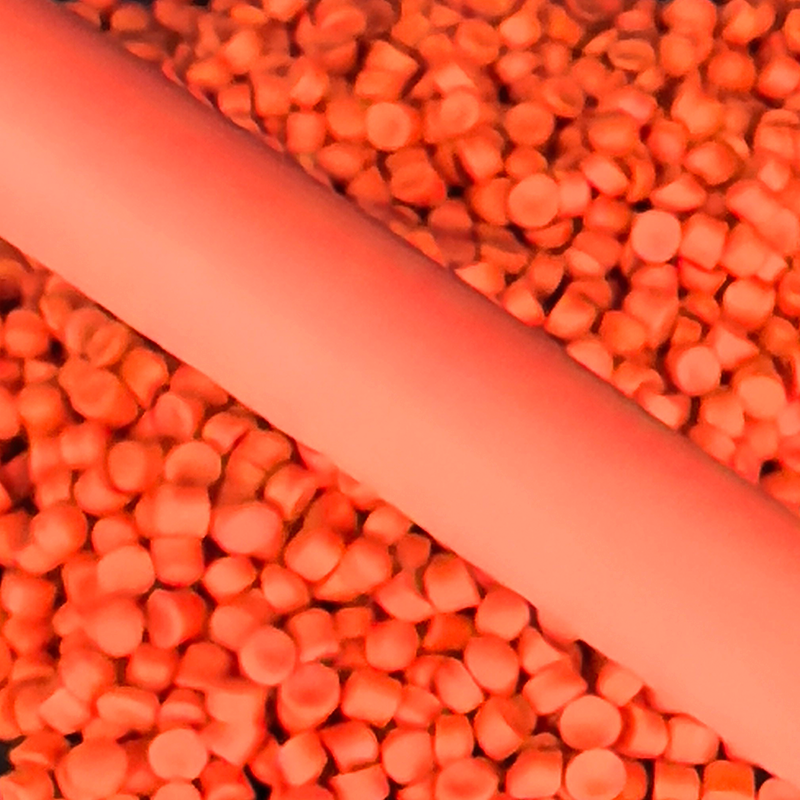
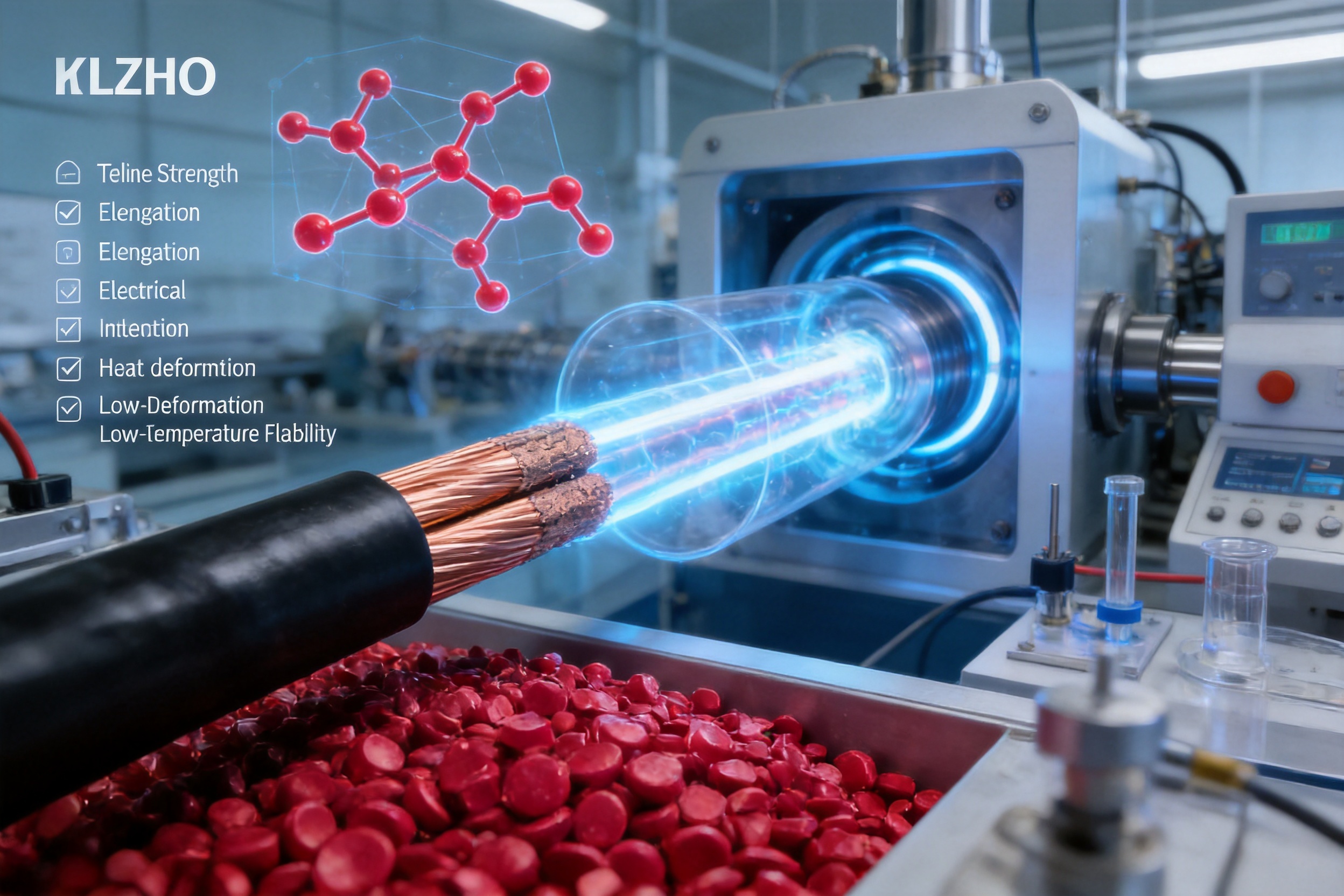
The product is a 125°C accelerator irradiation-crosslinked LSZH flame-retardant material for photovoltaic cable insulation and sheathing. It is based on a polyolefin-oriented compound system and is processed into the cable before the crosslinking stage. After extrusion, electron accelerator irradiation promotes crosslinking within the polymer matrix. This changes the molecular structure from a primarily thermoplastic form into a network with improved resistance to heat, deformation, and environmental aging.
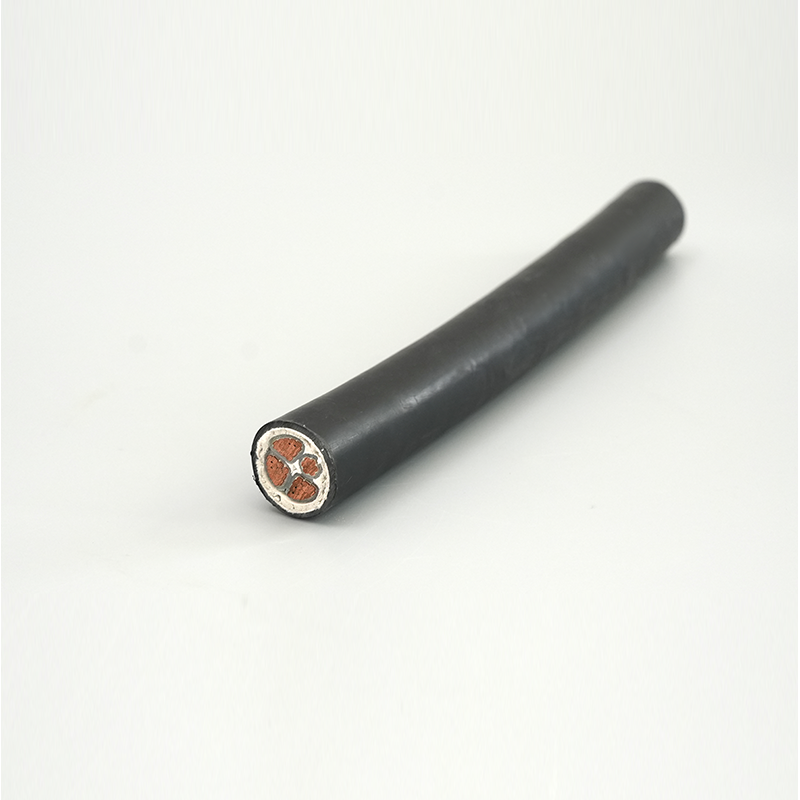
The material is intended for photovoltaic cables, including cable constructions that require a durable insulation layer, an external protective sheath, or both. The listed grades include insulation-oriented and sheathing-oriented options. The final selection depends on the cable design, conductor size, extrusion equipment, color, wall thickness, electrical requirements, and targeted certification route.
The product information identifies the following principal characteristics:
• Temperature resistance up to 125°C.
• Low-temperature brittleness performance down to approximately -40°C.
• Resistance to ultraviolet radiation.
• Resistance to ozone exposure.
• Resistance to acids and alkalis.
• Outdoor service life of up to 25 years under suitable application conditions.
• Low-smoke, zero-halogen formulation characteristics.
• Compatibility with irradiation crosslinking using an electron accelerator.
• Application relevance to photovoltaic cable standards and certification requirements.
The stated performance is based on typical values and test conditions supplied for the product. Cable manufacturers should verify the material in their own extrusion, irradiation, aging, and finished-cable qualification programs before commercial production.
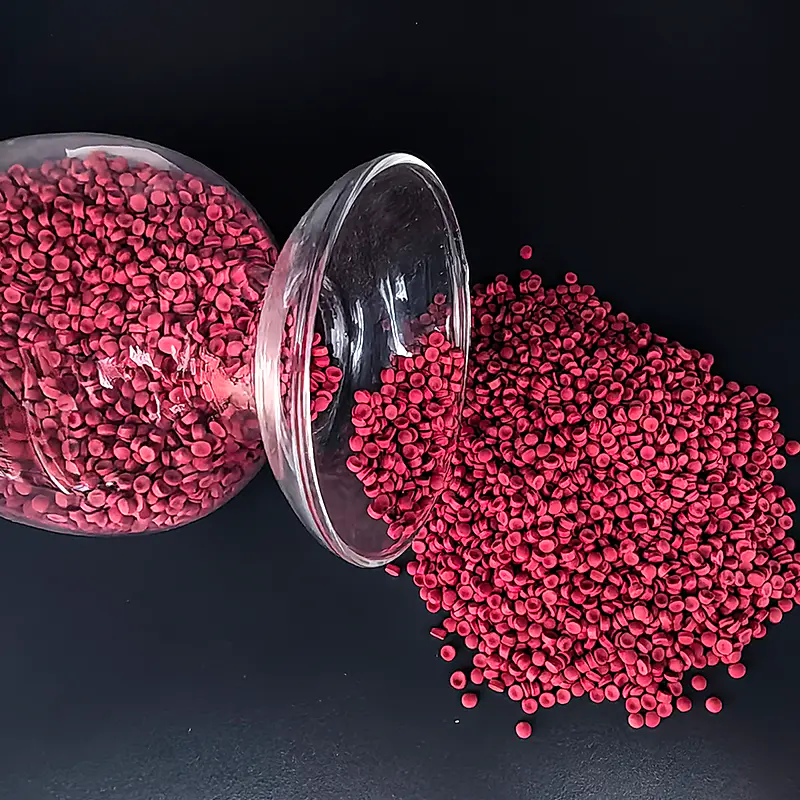
125°C Accelerator Irradiation Cross-linked LSZH Flame Retardant Insulation and Sheathing Material for Photovoltaics
3. How Electron Accelerator Irradiation Crosslinking Works
Irradiation crosslinking is a post-extrusion process. The compound is first melted and shaped through a cable extrusion line. After the insulation or sheath has been applied, the finished cable passes through an electron accelerator or is treated under controlled irradiation conditions. High-energy electrons interact with the polymer structure and generate active sites that promote the formation of molecular bonds between polymer chains.
In an uncrosslinked thermoplastic material, polymer chains can move more freely when temperature rises. This may result in softening, deformation, or loss of dimensional stability. Crosslinking introduces a three-dimensional network. The resulting structure restricts excessive chain movement and improves resistance to thermal deformation, creep, and stress-related dimensional change.
The irradiation process offers several practical advantages for cable manufacturers. It does not require a long steam tube or chemical moisture-curing process. The cable can be extruded, cooled, tested, and then crosslinked through a separately controlled irradiation step. This arrangement can provide production flexibility, especially for cable designs requiring precise wall thickness, smooth surfaces, or rapid changeovers.
Electron accelerator processing also allows the crosslinking dose to be controlled according to the material, cable construction, and production requirements. Dose control is important because insufficient irradiation may result in incomplete crosslinking, while excessive irradiation may affect elongation, color, surface quality, or other properties. A qualified process window should therefore be established for every cable design.
The finished compound benefits from the combination of a carefully formulated LSZH base and the irradiation-induced network structure. Flame-retardant additives contribute to fire performance, while the crosslinked polymer framework helps the insulation and sheath maintain shape and mechanical properties during thermal exposure. The result is a material system designed for long-term outdoor cable service rather than short-term indoor use.
3.1 Thermal Stability After Crosslinking
The listed 125°C temperature rating reflects the material’s ability to withstand elevated operating conditions when processed and used appropriately. Crosslinking helps reduce softening and deformation under heat. This is important for photovoltaic cables because cable surfaces can become significantly warmer than the surrounding air, especially beneath modules or in poorly ventilated arrangements.
A crosslinked cable compound can also provide greater dimensional stability during overload events and short-duration temperature excursions. Although the cable system must always be designed according to the applicable standard and electrical load, improved thermal stability gives manufacturers a wider engineering margin than many general-purpose thermoplastic compounds.
3.2 Low-Temperature Performance
Outdoor photovoltaic cables can be installed and operated in cold climates. Low-temperature brittleness is therefore a significant concern. A material that becomes too rigid or brittle may crack during installation, impact, bending, or temperature cycling. The stated low-temperature performance of approximately -40°C indicates suitability for demanding cold-weather applications, subject to finished-cable testing and installation requirements.
Low-temperature flexibility is especially important when cables are routed around module frames, connectors, junction boxes, and support structures. The compound should retain sufficient elongation and resistance to cracking during handling. The product’s reported impact performance at -40°C, shown as passing for the listed grades, supports its positioning for cold outdoor environments.
4. Key Mechanical Performance
Mechanical properties determine whether an insulation or sheath can tolerate installation, cable handling, thermal cycling, vibration, and long-term outdoor exposure. The supplied test data show that the listed grades provide tensile strengths ranging from approximately 12.5 to 13.5 MPa. All listed typical values are above the stated minimum requirement of 10.0 MPa.
Elongation at break ranges from approximately 170% to 280% among the four grades. These values are above the stated minimum requirement of 150%. The different values allow material selection according to whether the grade is intended primarily for insulation or for a more robust protective sheath.
High elongation is useful during cable bending and installation. It allows the material to accommodate deformation without immediately cracking. Tensile strength, meanwhile, supports resistance to pulling, abrasion, and localized mechanical stress. A balanced combination of tensile strength and elongation is generally more useful than maximizing only one property.
| Property | Requirement or Reference | DS-GFJ-125 | DS-GFH-125 | DS-ENJ-125 | DS-ENH-125 |
|---|---|---|---|---|---|
| Specific gravity | Reference value | 1.29 g/cm³ | 1.42 g/cm³ | 1.35 g/cm³ | 1.45 g/cm³ |
| Tensile strength | At least 10.0 MPa | 13 MPa | 12.5 MPa | 13.5 MPa | 12.8 MPa |
| Elongation at break | At least 150% | 280% | 180% | 240% | 170% |
| Dielectric strength | At least 20 MV/m | 40 MV/m | 32 MV/m | 40 MV/m | 32 MV/m |
| Impact performance | At -40°C | Pass | Pass | Pass | Pass |
The two grades with lower elongation and higher density appear suited to applications where greater sheath robustness and filler loading are required, while the grades with higher elongation may be suitable where flexibility and processing tolerance are prioritized. The exact application should be confirmed through the supplier’s technical data sheet and the cable manufacturer’s qualification process.
5. Heat Elongation and Permanent Deformation
Heat elongation is an important indicator of how an insulation or sheath behaves under elevated temperature and mechanical load. The supplied data report heat elongation values of 50% to 55% under the listed test condition, with a requirement of no more than 100%. Permanent deformation after cooling is reported at 0% to 5%, compared with a stated maximum of 25%.
These results indicate that the material maintains comparatively good dimensional recovery after heat exposure. Low permanent deformation is valuable in photovoltaic cables because it helps the insulation remain centered around the conductor and the sheath retain its protective geometry. Excessive permanent deformation could reduce wall thickness at specific points, affect electrical clearances, or create stress concentrations.
Crosslinking is central to this performance. The molecular network formed during irradiation limits irreversible movement of the polymer chains. When a heated cable is subjected to tension or pressure, the crosslinked material is less likely to flow permanently than a conventional non-crosslinked thermoplastic compound.
For production control, cable manufacturers should monitor extrusion temperature, line speed, cooling conditions, wall thickness, irradiation dose, and post-irradiation test results. These variables work together. A material may perform well in laboratory testing but require process optimization to achieve consistent results in high-speed commercial cable production.
6. Electrical Insulation Performance
Photovoltaic cables must maintain stable electrical insulation over long periods. The product data report volume resistivity at 20°C in the approximate range of 4.5 × 10¹⁵ to 7.2 × 10¹³ ohm-centimeters, depending on grade and the formatting of the original test table. The listed standard reference is 1.0 × 10¹³ ohm-centimeters.
High volume resistivity helps limit leakage current through the insulation. It is particularly important in photovoltaic systems because cables may operate at high direct-current voltages for long durations. Insulation resistance must remain reliable despite moisture, heat, ultraviolet exposure, and surface contamination.
The reported dielectric strength values range from 32 to 40 MV/m, above the listed minimum of 20 MV/m. Dielectric strength indicates the electric field that the material can withstand before electrical breakdown occurs under a defined test method. Actual cable voltage performance depends on insulation thickness, conductor geometry, defects, voids, processing quality, and finished-cable testing.
Consistent dispersion of flame-retardant and mineral components is essential to maintaining electrical properties. Poorly dispersed additives can create weak points, surface defects, or localized electrical irregularities. Advanced compounding equipment and process controls are therefore necessary to achieve a stable balance between flame retardancy and insulation performance.
7. Flame Retardancy and LSZH Advantages
The LSZH formulation is designed to reduce smoke generation and eliminate the intentional use of halogens as the primary flame-retardant mechanism. This is valuable in photovoltaic installations located near buildings, transportation infrastructure, industrial facilities, and other areas where fire emissions are a safety concern.
During combustion, traditional halogen-containing cable materials can generate acidic gases that may corrode metal components and electronic equipment. A halogen-free formulation is intended to reduce this risk. It can also help create a less corrosive fire environment, although the specific smoke density, toxicity, oxygen index, flame spread, and acid gas results must be verified against the applicable finished-cable standard.
LSZH flame-retardant systems are technically challenging because many flame-retardant additives can reduce flexibility, lower elongation, increase density, or affect processability. A high-quality formulation must distribute these additives evenly while preserving mechanical and electrical performance. The data supplied for the 125°C material show that the listed grades maintain tensile strength and elongation values suitable for demanding cable applications.
The product’s LSZH design is especially relevant to photovoltaic systems installed on rooftops and near occupied buildings. Fire safety considerations extend beyond the cable itself. Smoke and corrosive gases can affect photovoltaic inverters, energy storage equipment, monitoring systems, and other electronic components. A halogen-free cable construction can support a broader fire-safety strategy when combined with appropriate system design and installation practices.
8. Resistance to Ultraviolet Radiation, Ozone, and Chemicals
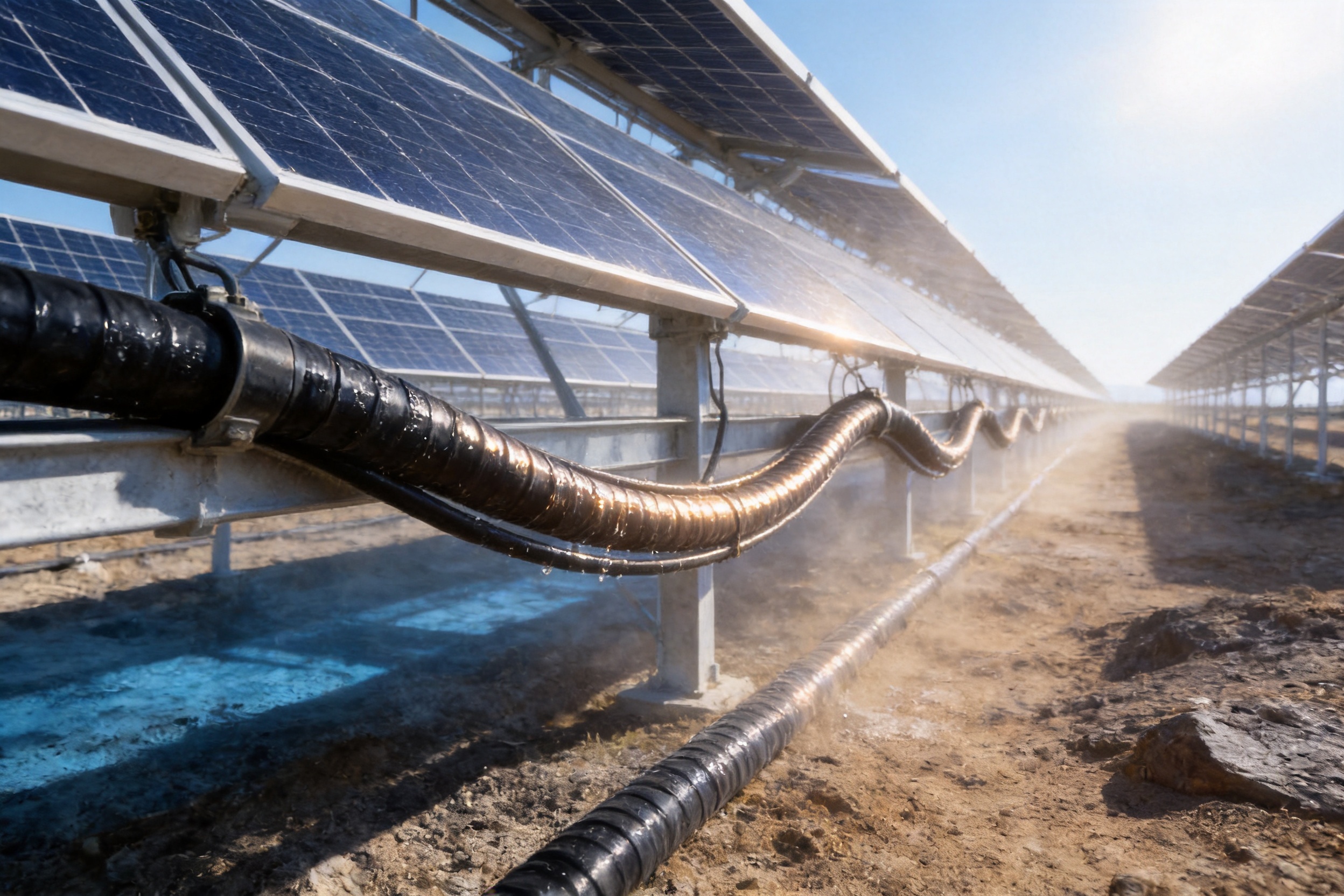
Outdoor durability is one of the most important differentiators for photovoltaic cable materials. Ultraviolet radiation can initiate polymer degradation at the cable surface. Over time, this may lead to discoloration, chalking, embrittlement, cracking, and loss of mechanical properties. The product is designed with UV resistance for long-term outdoor service.
Ozone resistance is also important. Ozone can attack certain polymer structures and accelerate surface cracking, especially when the material is simultaneously exposed to tensile stress. A compound with improved ozone resistance helps reduce the likelihood of premature surface deterioration in outdoor cable routes.
Photovoltaic cables may encounter acidic or alkaline substances from atmospheric pollution, construction materials, cleaning chemicals, agricultural environments, or industrial surroundings. The stated resistance to acids and alkalis supports use in a broad range of outdoor conditions. However, chemical resistance depends on concentration, temperature, exposure duration, and the specific chemical involved. End users should request compatibility testing for unusually aggressive environments.
The stated outdoor service life of up to 25 years is a major value proposition for solar cable applications. Long service life can reduce maintenance, replacement labor, system downtime, and the environmental impact associated with premature cable disposal. The actual service period depends on the cable design, installation quality, operating temperature, irradiation intensity, mechanical loading, and local climate.
9. Product Grades and Selection Considerations
The four listed product designations provide options for different cable components and performance priorities. The “GFJ” and “GFH” designations are presented alongside “ENJ” and “ENH” designations. Based on the supplied data, the grades show meaningful differences in density, elongation, electrical resistivity, dielectric strength, and heat-related performance.
DS-GFJ-125 has a reported density of 1.29 g/cm³, tensile strength of 13 MPa, elongation at break of 280%, dielectric strength of 40 MV/m, and volume resistivity of approximately 4.5 × 10¹⁵ ohm-centimeters. Its high elongation may be useful where flexibility and installation tolerance are important.
DS-GFH-125 has a reported density of 1.42 g/cm³, tensile strength of 12.5 MPa, elongation at break of 180%, dielectric strength of 32 MV/m, and volume resistivity of approximately 6.8 × 10¹³ ohm-centimeters. This grade may be considered where a denser, more highly filled material is required for a sheath application.
DS-ENJ-125 has a reported density of 1.35 g/cm³, tensile strength of 13.5 MPa, elongation at break of 240%, dielectric strength of 40 MV/m, and volume resistivity of approximately 5.0 × 10¹⁵ ohm-centimeters. Its combination of strength, elongation, and electrical performance offers a balanced profile.
DS-ENH-125 has a reported density of 1.45 g/cm³, tensile strength of 12.8 MPa, elongation at break of 170%, dielectric strength of 32 MV/m, and volume resistivity of approximately 7.2 × 10¹³ ohm-centimeters. Its higher density and lower elongation may suit a robust sheathing construction, subject to processing and finished-cable validation.
| Grade | Potential selection emphasis | Reported elongation | Reported dielectric strength | Typical application direction |
|---|---|---|---|---|
| DS-GFJ-125 | Flexibility and high elongation | 280% | 40 MV/m | Insulation-oriented designs |
| DS-GFH-125 | Higher density and sheath robustness | 180% | 32 MV/m | Sheathing-oriented designs |
| DS-ENJ-125 | Balanced strength and electrical performance | 240% | 40 MV/m | Insulation-oriented designs |
| DS-ENH-125 | Dense protective compound structure | 170% | 32 MV/m | Sheathing-oriented designs |
This comparison is intended as a preliminary guide rather than a replacement for a formal technical data sheet. The best grade depends on conductor material, cable voltage class, extrusion die, wall thickness, irradiation dose, color requirements, weathering conditions, and the target certification program.
10. Manufacturing Process Strengths
The compound’s performance depends on more than its recipe. Manufacturing consistency is equally important. LSZH cable compounds typically contain several polymeric components, flame-retardant additives, stabilizers, processing aids, pigments, and other functional ingredients. Each component must be accurately weighed, uniformly compounded, and controlled throughout production.
Jiangsu Duoshang New Materials Technology Co., Ltd. specializes in the research, production, and sale of polyolefin cable compounds. The company operates a research and development center of more than 3,000 square meters, with research equipment valued at more than RMB 35 million. The supplied company information states that the research team includes more than 30 professional members, including five doctors and personnel recognized through provincial and municipal talent programs.
This technical organization supports formulation development, performance optimization, failure analysis, and customer-specific material adaptation. For cable compound customers, an experienced research team can be valuable when a material must be adjusted for a particular extrusion line, cable size, color, certification requirement, or climate.
The company also operates two production bases covering more than 15,000 square meters, with more than 10 production lines for polyolefin cable compounds. Multiple production lines can support different product families and provide additional capacity for insulation compounds, sheath compounds, crosslinkable materials, thermoplastic materials, and specialty grades.
Manufacturing control begins with raw material inspection. Polymer carriers, flame-retardant fillers, stabilizers, pigments, and processing aids should be checked for identity, moisture, particle size, purity, and compatibility. Moisture management is particularly important for extrusion quality and electrical performance. Inconsistent raw materials can cause surface defects, bubbles, fluctuations in density, or changes in mechanical properties.
During compounding, controlled feeding and high-shear mixing help distribute additives throughout the polymer matrix. Temperature must be managed carefully. Excessive heat may initiate unwanted degradation, while insufficient melting or mixing may leave agglomerates. A stable pelletizing and cooling process then produces material suitable for packaging, storage, and cable extrusion.
Quality control should include batch traceability, melt-flow or processing checks, density testing, tensile testing, elongation testing, electrical testing, heat-aging evaluation, and visual inspection. For irradiation-crosslinked applications, the material producer and cable manufacturer must also coordinate on dose requirements and post-irradiation performance.
10.1 Research and Development Capability
The company’s research capability is relevant to customers that need more than an off-the-shelf compound. Photovoltaic cable markets continue to evolve, with requirements related to higher voltage, thinner insulation, improved flexibility, lower smoke, greater flame retardancy, longer service life, and better process efficiency. A dedicated R&D team can help translate these requirements into formulation and production changes.
Application-oriented development is particularly important for LSZH materials because performance targets can conflict. Increasing mineral flame-retardant loading may improve fire performance but reduce elongation. Modifying the polymer blend may improve flexibility but affect heat resistance. Changing stabilizer packages may improve weathering but influence color or irradiation response. Systematic laboratory testing is required to identify a practical balance.
10.2 Production Capacity and Supply Stability
Solar cable production often involves long-term projects and strict delivery schedules. Material supply interruptions can affect cable manufacturing plans, installation schedules, and system commissioning. The company’s two production bases and multiple polyolefin compound lines are intended to support stable supply capacity.
Supply stability also includes consistent batch quality. A cable manufacturer needs material that behaves predictably from one lot to the next. Consistent density, melt behavior, tensile performance, and additive dispersion reduce extrusion adjustments and limit production waste. Technical documentation and lot-based inspection records can further support quality assurance.
11. Advantages Compared with General-Purpose Cable Compounds
The 125°C irradiation-crosslinked LSZH material offers several advantages compared with ordinary non-crosslinked thermoplastic compounds. Its crosslinked structure is designed to improve resistance to heat deformation and permanent set. This is particularly useful for photovoltaic cables operating in hot outdoor locations.
Compared with many conventional halogen-containing flame-retardant materials, the LSZH formulation is positioned to reduce smoke and halogen-related corrosive emissions. This can support improved fire safety around sensitive electronic equipment and occupied structures.
Compared with materials intended mainly for indoor use, the product is formulated for outdoor exposure. UV resistance, ozone resistance, chemical resistance, and low-temperature performance are central to its application profile. These characteristics help address the combined environmental stresses found in solar installations.
Compared with compounds designed only for short-term compliance testing, the product is presented as a long-service-life material. The stated outdoor service life of up to 25 years corresponds with the expected operational horizon of many photovoltaic systems. Long-term durability can reduce total ownership costs, even if the initial material price is higher than that of a general-purpose compound.
Another advantage is the availability of multiple grades. A single compound may not provide the ideal balance for both insulation and sheathing. The listed GFJ, GFH, ENJ, and ENH grades enable a cable producer to evaluate different density and performance profiles rather than using one formulation for every component.
12. Processing Guidance for Cable Manufacturers
The compound should be stored in clean, dry conditions and protected from excessive heat, moisture, and contamination. Packaging should remain sealed until the material is ready for use. Storage conditions can affect processing behavior, particularly when additives or polymer components are sensitive to moisture.
Before production, cable manufacturers should verify the material identification, batch number, packaging condition, and recommended processing window. Trial extrusion is advisable when changing material grades, equipment, conductor size, color, or cable construction.
Extrusion conditions should be adjusted to achieve stable melting, uniform additive dispersion, smooth surface appearance, and consistent wall thickness. Excessive shear or temperature may damage the compound, while inadequate mixing may cause roughness, weak points, or electrical defects. Die design, compression ratio, screw configuration, and cooling conditions all influence final cable quality.
After extrusion, the cable must be irradiated at a controlled dose suitable for the selected grade and construction. The irradiation process should be validated through gel content or equivalent crosslinking assessment, heat deformation testing, tensile testing, elongation testing, and electrical performance verification. The cable manufacturer should confirm that the selected irradiation conditions do not negatively affect color, surface finish, flexibility, or long-term aging behavior.
Finished-cable testing should include dimensional inspection, conductor resistance, insulation resistance, voltage withstand, tensile and elongation testing, heat aging, thermal deformation, low-temperature impact or bending, UV aging, ozone exposure, and relevant flame-retardant tests. Certification-specific testing should be performed according to the current edition of the applicable standard.
13. Quality Assurance and Technical Support
Material selection is more reliable when supported by complete technical documentation. Customers should request the current technical data sheet, safety information, recommended extrusion conditions, irradiation guidance, packaging details, storage requirements, and typical test reports.
Technical support can also assist with grade selection. For example, a cable producer may need a highly flexible insulation grade for small-diameter photovoltaic leads but a denser sheath grade for a mechanically exposed cable. The appropriate selection may depend on conductor size, cable voltage, installation method, and the balance between flexibility and abrasion resistance.
Application support is especially valuable during the first production trial. The supplier can help analyze surface roughness, extrusion pressure, die swell, color variation, crosslinking response, heat deformation, or failed electrical tests. A collaborative approach can shorten qualification time and reduce material waste.
The company describes its service approach as including application-oriented solutions, research and testing support, stable supply capacity, technical documentation, and customized material solutions for customers worldwide. These capabilities are relevant to photovoltaic cable producers that serve different geographic markets and certification systems.
14. Applications Beyond Photovoltaic Cables
Although the product is specifically positioned for photovoltaic insulation and sheathing, its performance profile may be relevant to other cable applications requiring halogen-free flame retardancy, outdoor durability, and irradiation crosslinking.
Potential areas include new energy generation, energy storage-related cabling, industrial control cables, rail transit, marine cables, power cables, and selected communication or equipment wiring applications. The suitability of the material for each application must be determined through technical evaluation and the relevant industry standards.
Outdoor power distribution systems can benefit from compounds with resistance to UV radiation, ozone, moisture, and temperature variation. Rail and marine applications may place greater emphasis on smoke toxicity, flame spread, and corrosion. Industrial cable applications may require chemical resistance, abrasion resistance, or compatibility with specific connectors and installation systems.
The company’s broader product portfolio includes UV-crosslinked compounds, silane cross-linkable materials, irradiation-crosslinked materials, thermoplastic LSZH flame-retardant compounds, polyethylene sheath compounds, and other specialized materials. This range allows customers to compare technologies rather than forcing every cable design into one processing method.
15. Sustainability and Lifecycle Considerations
Longer cable service life can contribute to improved lifecycle performance. If a cable remains functional for decades, fewer replacement materials, transport operations, installation activities, and disposal processes may be required. This is particularly important for large solar farms, where replacing long cable runs can be expensive and disruptive.
The LSZH design also supports environmental and safety objectives by reducing reliance on halogen-containing flame-retardant systems. During a fire, lower corrosive emissions may help protect equipment and reduce secondary damage. However, environmental performance should be evaluated across the entire product lifecycle, including raw material sourcing, manufacturing energy, transportation, installation, and end-of-life treatment.
Manufacturers can improve the overall sustainability of cable production by reducing extrusion waste, controlling batch variation, optimizing wall thickness, recycling clean production scrap where technically appropriate, and using accurate process settings. Stable material quality supports these objectives by reducing rejected cable and off-specification production.
16. Recommended Evaluation Checklist
Before approving the compound for commercial photovoltaic cable production, a manufacturer should evaluate the following areas:
• Compatibility with the intended conductor and cable construction.
• Extrusion stability, surface appearance, and dimensional consistency.
• Tensile strength and elongation before and after aging.
• Heat elongation and permanent deformation after cooling.
• Volume resistivity, insulation resistance, and dielectric strength.
• Low-temperature impact, bending, and brittleness performance.
• Ultraviolet, ozone, humidity, and chemical resistance.
• Flame retardancy, smoke performance, and halogen-free characteristics.
• Irradiation dose response and crosslinking uniformity.
• Finished-cable compliance with the intended standard.
• Long-term batch consistency and supply capacity.
• Packaging, storage, technical documentation, and after-sales support.
This checklist helps distinguish between a material that merely meets a short laboratory test and one that can support reliable commercial cable production.
17. Frequently Asked Questions
What does LSZH mean?
LSZH means low smoke zero halogen. LSZH cable materials are formulated to limit smoke generation and avoid halogen-containing components as the primary material system. In a fire, they are intended to reduce corrosive halogen acid gas emissions compared with many traditional halogen-containing cable compounds. Specific fire and smoke performance must be confirmed through the applicable test standards.
Why is the product rated at 125°C?
The 125°C rating indicates that the material is designed for elevated-temperature cable applications when properly extruded, irradiated, and used within the relevant design limits. The crosslinked structure helps the insulation and sheath resist heat-related deformation and maintain mechanical performance.
How is the material crosslinked?
The cable is first extruded, and the finished insulation or sheath is then exposed to controlled electron accelerator irradiation. The high-energy electrons promote molecular bonding between polymer chains, creating a crosslinked network that improves thermal and dimensional stability.
Is the material suitable for outdoor photovoltaic installations?
Yes. The product is designed for photovoltaic cable insulation and sheathing and is described as having UV resistance, ozone resistance, acid and alkali resistance, low-temperature performance to approximately -40°C, and an outdoor service life of up to 25 years. Finished-cable qualification remains necessary for each design and market.
What are the main differences among the four grades?
The grades differ in density, tensile strength, elongation, volume resistivity, dielectric strength, and other typical values. The GFJ and ENJ grades show higher elongation and dielectric strength in the supplied data, while the GFH and ENH grades show higher density and lower elongation. The suitable grade depends on whether the material is used for insulation or sheathing and on the required cable performance.
Can the material be used for both insulation and sheathing?
The product family includes grades presented for insulation and sheathing applications. The exact grade should be selected according to the cable design, wall thickness, processing conditions, required flexibility, mechanical exposure, and certification requirements.
What standards are associated with the product?
The supplied product information identifies TUV 2 PfG 1169/08.2007, EN 50618:2014, and UL 4703. The current editions, test methods, certification scope, and finished-cable construction should be confirmed with the supplier and the relevant certification body.
What is the expected outdoor service life?
The product information states an outdoor service life of up to 25 years. Actual service life depends on temperature, ultraviolet intensity, moisture, chemicals, mechanical stress, cable design, installation quality, and operating conditions.
Does irradiation crosslinking replace cable testing?
No. Irradiation is a processing step, not a substitute for finished-cable qualification. Manufacturers must verify the correct irradiation dose and test the final cable for mechanical, electrical, thermal, environmental, and flame-retardant performance.
What support can a compound supplier provide?
Support may include grade selection, processing guidance, irradiation recommendations, technical documentation, test reports, troubleshooting, application development, and customized material formulation. The level of support should be confirmed for each project.
How should the product be stored?
The material should generally be kept sealed in a clean and dry environment, protected from moisture, contamination, and excessive heat. The supplier’s current storage instructions and shelf-life recommendations should be followed.
Why is company manufacturing capability important when choosing a cable compound?
Compound quality depends on formulation accuracy, additive dispersion, equipment control, batch traceability, laboratory testing, and supply consistency. A supplier with dedicated R&D facilities, multiple production lines, and technical support can help reduce qualification risk and maintain stable quality during long-term production.
18. Conclusion
The 125°C accelerator irradiation-crosslinked LSZH flame-retardant material is designed to address the combined demands of modern photovoltaic cable systems. It offers a high-temperature rating, low-temperature performance to approximately -40°C, UV and ozone resistance, chemical resistance, low-smoke halogen-free characteristics, and a stated outdoor service life of up to 25 years.
Its reported mechanical properties include tensile strength values above 12 MPa and elongation values from 170% to 280% across the listed grades. Heat elongation and permanent deformation results indicate useful resistance to thermal distortion. Volume resistivity and dielectric strength values support the material’s role as an electrical insulation compound, while irradiation crosslinking improves dimensional stability under heat.
The product’s competitive advantages arise from the combination of material design, irradiation processing, environmental durability, multiple grade options, and support for photovoltaic cable standards. Compared with general-purpose thermoplastic or halogen-containing materials, it is better aligned with the long-term outdoor, fire-safety, and electrical requirements of solar applications.
Jiangsu Duoshang New Materials Technology Co., Ltd. strengthens this offering through specialized polyolefin compound development, substantial R&D resources, professional technical personnel, multiple production bases, more than 10 production lines, application support, and customized material capabilities. These strengths can help cable manufacturers develop reliable insulation and sheathing constructions for photovoltaic, energy, power, transportation, marine, and industrial applications.
For the best results, customers should evaluate the material through a structured qualification program covering extrusion, irradiation, finished-cable testing, environmental aging, and certification. When matched with an appropriate cable design and controlled production process, the 125°C irradiation-crosslinked LSZH compound provides a practical foundation for durable, safer, and long-service-life photovoltaic cables.
References
1. EN 50618:2014, Electric Cables for Photovoltaic Systems.
2. UL 4703, Photovoltaic Wire.
3. TUV 2 PfG 1169/08.2007, Requirements for Photovoltaic Cables and Related Cable Systems.
4. Product performance information for 125°C accelerator irradiation-crosslinked LSZH flame-retardant insulation and sheathing material.
5. Manufacturer-provided technical information on polyolefin cable compounds, production facilities, research capabilities, and application support.
6. General principles of polymer irradiation crosslinking and halogen-free flame-retardant cable compound technology.